 Pocket Botanist
Guide botanique
Coriandre.
Coriandrum sativum
Prononciation kor-ee-AN-drum sah-TEE-vum
Aussi appelée Chinese parsley, Chinese-parsley, Coriandre


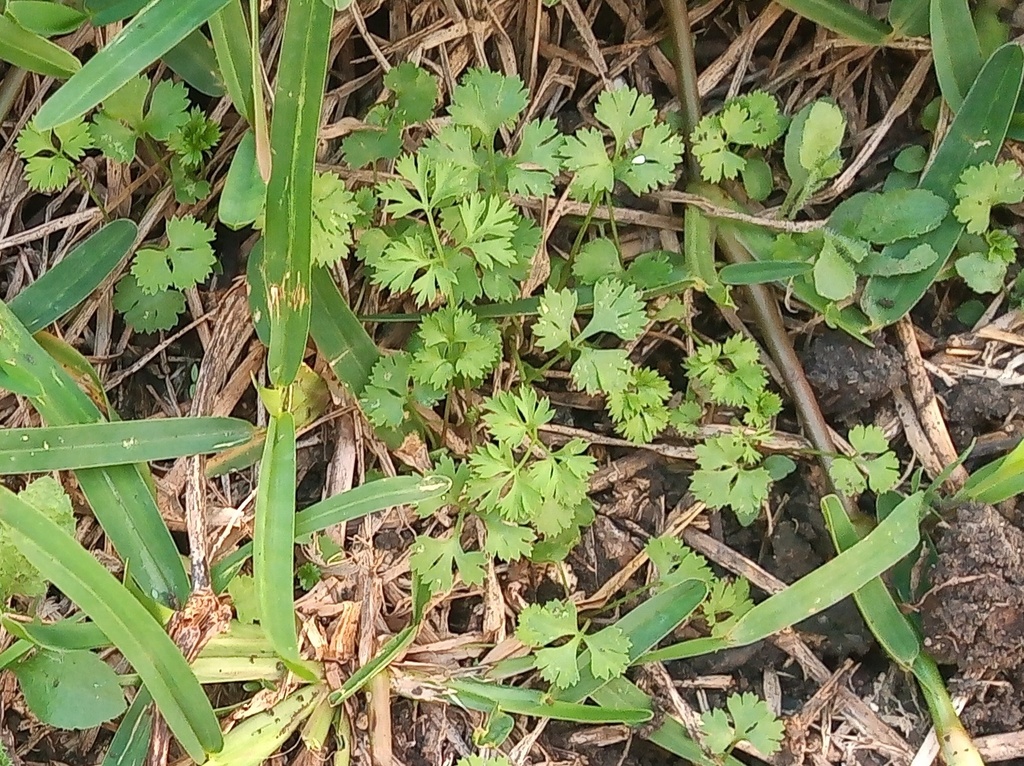
La coriandre est une herbe annuelle à croissance rapide, appréciée pour ses feuilles fraîches et citronnées. C'est une culture de saison fraîche qui a tendance à monter rapidement une fois que les températures augmentent. Vous pouvez récolter les feuilles pour une utilisation fraîche ou la laisser monter en graines pour collecter de la coriandre.
En un coup d'œil
- Care level
- Easy
- Plant type
- Herbe annuelle
- Light
- Plein soleil à mi-ombre
- Indoor light
- direct
- Water
- Every 2 to 4 days
- Mature size
- 60 cm de haut
- Growth rate
- fast
- Hardiness
- USDA 2 to 11
- Bloom time
- Fin du printemps au début de l'été
Entretien
Gardez le sol constamment humide pour éviter une montée prématurée en graines. Surveillez le jaunissement des feuilles, qui peut indiquer un arrosage excessif ou un stress thermique. Si la plante commence à produire de hautes tiges florales, il est temps de récolter les graines.
- Watering
- Gardez le sol uniformément humide mais jamais détrempé.
- Feeding
- Appliquez un engrais liquide équilibré une fois par mois pendant la saison de croissance.
- Pruning
- Pincez régulièrement les extrémités pour encourager une croissance plus touffue et retarder la floraison.
- Repotting
- En tant qu'annuelle, cette plante est généralement cultivée à partir de graines et n'est pas rempotée.
- Soil
- Terre franche fertile bien drainée
- Soil pH
- 6.2 à 6.8
- Temperature
- 10 to 25°C
- Humidity
- 40 to 60%
- Drought tolerance
- low
- Lifespan
- Annual, typically 4 to 6 months.
- Fragrance
- strong
- Deer and rabbits
- moderate
Signes qu'il faut rempoter
- Roots growing out of the drainage holes.
- Stunted growth despite regular watering.
Sécurité
- People
- Cilantro is non-toxic to humans and is widely used in cooking.
- Children
- The plant is safe for children, though the tiny seeds could pose a minor choking hazard if ingested in large amounts.
- Contact allergens
- Some people may experience mild skin irritation from handling the fresh stems.
- Airborne allergens
- Pollen from the flowers can trigger seasonal allergies in sensitive individuals.
- Edibility
- While the leaves and seeds are culinary staples, ensure you are not allergic to the plant before consuming large quantities.
Comment l'identifier
- Feuilles composées, découpées, vert vif
- Petites ombelles de fleurs blanches ou rosées
- Arôme puissant et distinct d'agrume
- Tiges élancées, dressées et ramifiées
- Height
- 0.3 to 0.6m
- Spread
- 0.2 to 0.3m
- Leaves
- vert vif, caduc
- Flowers
- blanc, rose pâle, 0.5 to 1cm
- Fruit
- brun, Été
Problèmes courants
- Aphids — Small insects that cluster on new growth and suck plant sap.
- Bolting — The plant prematurely flowers and goes to seed due to heat stress.
La cultiver
- Propagation
- graines
- When to plant
- Printemps, Automne
- Overwintering
- It is an annual and will die back after setting seed, so there is no need to overwinter it.
- In containers
- It grows well in pots at least 6 inches deep with good drainage.
Direct Sowing
- 1. Prepare a spot with well-draining soil.
- 2. Sow seeds 0.5 inches deep.
- 3. Space seeds 2 to 4 inches apart.
- 4. Keep the soil consistently moist until germination.
Plant cilantro near leafy greens to attract hoverflies, which help manage aphid populations.
Bonnes associations
- Dill — They share similar growing requirements and attract beneficial insects.
- Spinach — Both prefer cooler weather and can be grown together in early spring.
À éloigner de
- Fennel — Fennel produces allelopathic compounds that can inhibit the growth of many neighboring herbs.
Espèces similaires
- Parsley — It has a similar growth habit and is often used in the same culinary applications.
- Chervil — It shares a delicate texture and preference for cooler growing conditions.
Science
- Family
- Apiaceae
- Genus
- Coriandrum
- Order
- Apiales
- Class
- Magnoliopsida
- Native range
- Southern Europe and Northern Africa to Southwestern Asia.
- Conservation
- This species is common and not of conservation concern.
It is an annual that thrives in cool, moist conditions and spreads easily through self-seeding.
- Value to wildlife
- nectar source, beneficial insect habitat
- Pollinators
- bees, beetles
- Uses
- culinary herb, spice production, companion planting
Au fil des saisons
Repères écologiques
- Salinity
- 2/9
- Soil reaction
- 7/9
- Light
- 7/9
- Temperature
- 5/9
- Moisture
- 6/9
- Nutrients
- 6/9
Taxonomie vérifiée avec le GBIF.
Ce qu'on demande souvent
- Why does my cilantro keep flowering?
- It is a cool-season plant that bolts quickly when temperatures rise.
- Can I grow it in a pot?
- Yes, it thrives in containers at least 6 inches deep.
D'où vient le nom
The name Coriandrum comes from the Greek word koris, meaning bedbug, likely due to the scent of the unripe fruit.
Bon à savoir
- The leaves are called cilantro, while the dried seeds are known as coriander.
- A genetic variation makes some people think cilantro tastes like soap.
- It grows very quickly, often ready to harvest in just 4 to 6 weeks.
Ton coriandre a mauvaise mine ?
Cette page est un guide général. Pocket Botanist diagnostique les problèmes directement à partir d'une photo de ta plante, adapte l'arrosage à sa luminosité et te prévient quand il faut t'en occuper.
Ce guide a été généré par IA et vérifié avec la taxonomie du GBIF. Il s'agit d'informations générales, et non de conseils horticoles ou vétérinaires. Découvre comment nous concevons ces guides.