 Pocket Botanist
Symptoms by part
Leaves
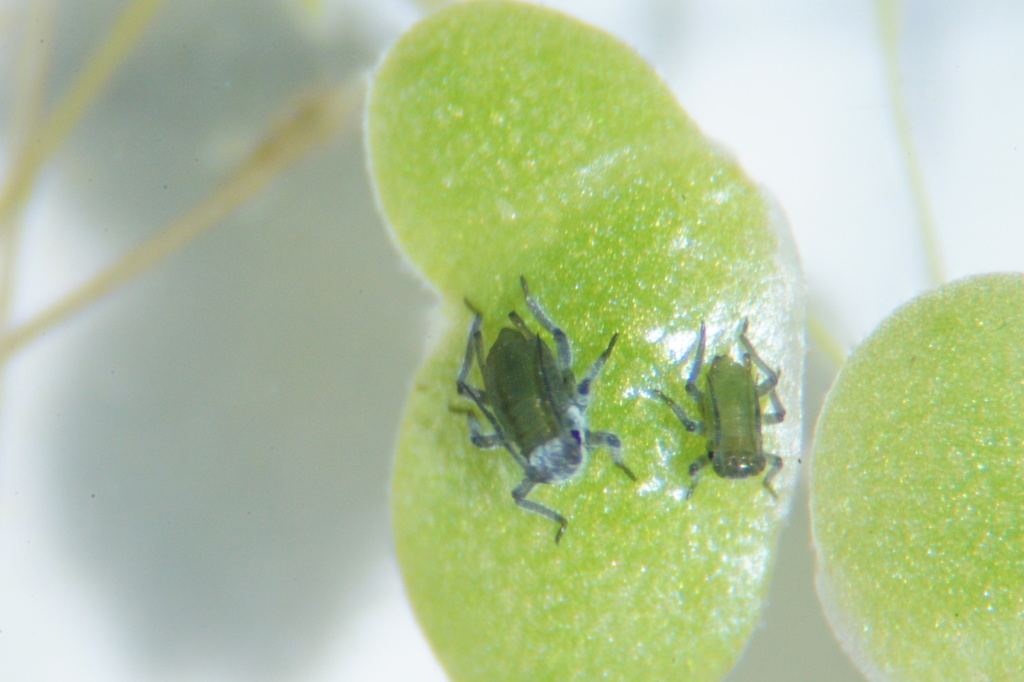
Clusters of tiny, dark colored insects on the upper leaf surface, accompanied by yellowing, curling, or distorted growth.
Causes
- Warm temperatures that speed up insect reproduction.
- Lack of natural predators like ladybugs or lacewings in the pond environment.
- Overcrowded aquatic plants that provide easy bridges for aphids to move between leaves.
Could be confused with
- Water lily beetle · The beetle causes distinct, windowpane like feeding holes in the leaves rather than just sucking sap.
- General leaf yellowing · Nutrient deficiencies cause uniform yellowing without the presence of visible insect colonies.
Find out what's really wrong with your plant
Problems that look alike are easy to mix up. Pocket Botanist looks at a photo of your actual plant and tells you what's going on, how serious it is, and what to try first. Identification and a health check are free.



Scan with your phone's camera to get the app
Or go to pocketbotanist.app/get on your phone
Treatment
- Gently spray the infested leaves with a strong stream of water from a garden hose to knock the aphids into the water where fish can eat them.
- Submerge the infested leaves completely under the water surface for a few minutes to drown the aphids.
- Prune away and dispose of heavily infested leaves that are severely curled or dying to reduce the population.
Without chemicals
- Introduce or encourage natural predators like ladybugs or damsel flies near the pond.
- Keep the pond area tidy by removing dead plant debris where aphids might hide.
- Use a fine mesh net to physically remove floating colonies from the water surface.
Chemical options
- Fatty acids, spray directly on the aphids while ensuring the product is labeled as safe for aquatic environments, follow the label.
Preventing it
- Maintain a healthy balance of fish in the pond to help keep insect populations in check.
- Avoid over fertilizing your aquatic plants, as soft, rapid growth is very attractive to aphids.
- Regularly inspect the upper surfaces of floating leaves during the warm growing season to catch small groups before they multiply.
Season
The warm growing season.
Spread risk
High
Severity
Moderate
When to act
Act as soon as you see the first clusters of aphids to prevent a full scale infestation. If the plant is completely covered and showing signs of severe rot, remove the affected foliage immediately.
Keep your plants healthy from here
Save your plants in Pocket Botanist and you get care reminders timed for each one, plus a care history that shows what worked. Identification and a health check are free.
Questions people ask
- Will these aphids kill my water lily?
- They rarely kill a healthy, established plant, but they can significantly weaken it and make it look ragged.
- Can I use any soap to kill them?
- No, you must use products specifically formulated for aquatic use, as standard household soaps can be toxic to fish and other pond life.
- Do these aphids bite humans?
- No, they are strictly plant feeders and have no interest in people or pets.
Plants it affects
Answers plant by plant
This guide was generated with AI on and is general information, not horticultural advice. Read about how we build these guides.