 Pocket Botanist
Plant guide
Pickerelweed.
Pontederia cordata
Pronounced pon-te-DEER-ee-uh kor-DAY-tuh
Also known as Pickerel-weed, Pickerelweed, heart-leaved pickerelweed



Scan with your phone's camera to get the app
Or go to pocketbotanist.app/get on your phone
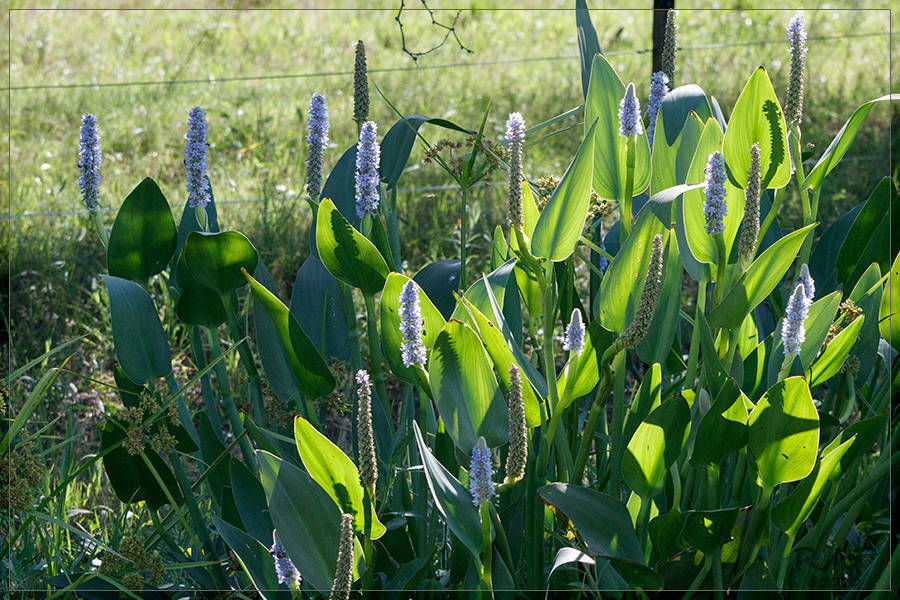
Pickerelweed is a lovely aquatic perennial that thrives in shallow water or wet soil. It features heart shaped leaves and tall spikes of blue flowers that attract pollinators. It is a perfect choice for pond edges or bog gardens.

At a glance
- Care level
- Easy
- Plant type
- Aquatic perennial
- Light
- Full sun to partial shade
- Indoor light
- Direct sun
- Water
- Every day
- Mature size
- 120 cm tall and 90 cm wide
- Growth rate
- Fast
- Hardiness
- USDA 3 to 10
- Bloom time
- Late spring to early autumn
Care
Keep the soil consistently saturated or submerge the pot in shallow water. Watch for yellowing leaves which may indicate the water level is too low or the plant needs more nutrients. Trim back dead foliage in late autumn to keep the area tidy.
- Watering
- Keep the soil constantly wet or submerged in up to 30 centimeters of water.
- Feeding
- Use an aquatic plant fertilizer tablet pushed into the soil during the growing season.
- Pruning
- Cut back all foliage to the base after the first hard frost in autumn.
- Repotting
- Divide the rhizomes every few years to prevent the plant from becoming overcrowded.
- Soil
- Loamy, clay, or aquatic soil
- Soil pH
- Acidic to neutral
- Temperature
- -20 to 35°C
- Humidity
- 60 to 100%
- Drought tolerance
- Low
- Lifespan
- Perennial, typically 5 to 10 years
- Deer and rabbits
- Moderate
Signs it needs repotting
- Roots growing out of the pot drainage holes.
- The plant becomes crowded and stops flowering.
- The soil medium has broken down.
Safety
- People
- There is no significant toxicity reported for humans.
- Children
- The plant is generally safe, but keep children away from deep water edges where it grows.
- Contact allergens
- The foliage can cause mild skin irritation in sensitive individuals.
- Airborne allergens
- Pollen may cause mild reactions in those with severe hay fever.
- Edibility
- While seeds are historically edible when roasted, they should not be consumed without expert identification and preparation.
How to identify it
- Heart shaped glossy green leaves
- Tall spikes of blue flowers
- Grows in shallow water
- Spreads via creeping rhizomes
- Height
- 0.6 to 1.2m
- Spread
- 0.45 to 0.9m
- Leaves
- bright green, deciduous
- Flowers
- blue, violet, 1 to 2cm
- Fruit
- brown, Autumn
Problems to watch for
- AphidsCommon
- Water Lily AphidCommon
- Leaf SpotUncommon
- Slugs and SnailsUncommon
Check your pickerelweed from a photo
Pocket Botanist looks at a photo of your plant and tells you what's wrong and what to try first.
Scan with your phone's camera to get the app
Or go to pocketbotanist.app/get on your phone
Growing it
- Propagation
- division, seed
- When to plant
- spring, summer
- Overwintering
- In cold climates, move the container to the bottom of the pond where the water does not freeze solid. If the pond freezes completely, move the plant to a cool, frost free garage in a bucket of water.
- In containers
- It grows very well in containers placed in ponds, provided the pot is submerged at the correct depth.
Division
- 1. Remove the plant from the water in spring.
- 2. Use a sharp spade to divide the rhizome into sections.
- 3. Ensure each section has roots and leaves.
- 4. Replant immediately in aquatic soil.
Group with other marginal aquatic plants to create a balanced ecosystem that shades the water and discourages algae.
Grows well with
- Yellow Flag Iris · They share similar moisture requirements and create a nice color contrast.
- Cattail · They provide a naturalistic look in larger water features.
Similar species
- Arrowhead · It is another common marginal aquatic plant with distinct foliage.
Science
- Family
- Pontederiaceae
- Genus
- Pontederia
- Order
- Commelinales
- Class
- Liliopsida
- Native range
- North and South America
- Conservation
- It is widespread and not of conservation concern.
It grows in shallow margins of ponds and slow moving streams, helping to stabilize banks.
- Value to wildlife
- nectar source, provides shelter for aquatic life
- Pollinators
- bees, butterflies
- Uses
- water gardens, wetland restoration, pond filtration
Through the year
Ecological indicators
- Salinity
- 1/9
- Soil reaction
- 5/9
- Light
- 7/9
- Temperature
- 5/9
- Moisture
- 9/9
- Nutrients
- 6/9
Taxonomy resolved against GBIF.
Questions people ask
- Can I grow this in a regular garden bed?
- No, it requires consistently wet soil or standing water to survive.
- How deep should I plant it?
- Place the crown in shallow water, ideally 5 to 30 centimeters deep.
Where the name comes from
The genus honors Italian botanist Giulio Pontedera, while the species name refers to the heart shaped leaves.
Good to know
- It is commonly known as pickerelweed because pickerel fish often hide among its stems.
- The flowers open in the morning and close by evening.
- It thrives in shallow water up to 30 centimeters deep.
Keep your pickerelweed growing
This page is a general guide. Save your plant in Pocket Botanist and you get care reminders timed for this plant, plus a care history that shows what worked.
Scan with your phone's camera to get the app
Or go to pocketbotanist.app/get on your phone
This guide was generated with AI on and checked against GBIF taxonomy. It is general information, not horticultural or veterinary advice. Read about how we build these guides.