 Pocket Botanist
Plant guide
Broadleaf cattail.
Typha latifolia
Pronounced TY-fuh lat-ih-FOH-lee-uh
Also known as Broad-leaf Cattail, Broadleaf Cattail, Bulrush, Cattail, Common Bulrush, Common Cattail, Cooper's-reed, False Bulrush



Scan with your phone's camera to get the app
Or go to pocketbotanist.app/get on your phone

The broadleaf cattail is a hardy perennial that thrives in wetlands and along pond edges. It is a classic plant for naturalizing water features. You will love how its iconic brown flower spikes add texture to your landscape.
At a glance
- Care level
- Easy
- Plant type
- Emergent aquatic perennial
- Light
- Full sun
- Indoor light
- Direct sun
- Water
- Every day
- Mature size
- 9 feet
- Growth rate
- Fast
- Hardiness
- USDA 2 to 11
- Bloom time
- Mid to late summer
Care
Keep the soil consistently saturated or submerged in shallow water. Watch for invasive spreading, as this plant can quickly take over small ponds. Trim back dead foliage in late autumn to keep your water feature tidy.
- Watering
- The soil must remain constantly wet or submerged.
- Feeding
- Usually does not need extra food if growing in a natural pond.
- Pruning
- Cut back dead stalks to the water line in late fall.
- Repotting
- Divide the rhizomes if the plant becomes too crowded in its container.
- Soil
- Wet, heavy clay or muck
- Soil pH
- 6.0 to 8.0
- Temperature
- -30 to 35°C
- Humidity
- 60 to 100%
- Drought tolerance
- Low
- Lifespan
- Perennial, typically lives indefinitely through rhizomatous spread.
- Deer and rabbits
- High
Signs it needs repotting
- Roots growing out of the drainage holes
- Stunted growth
- The container begins to bulge or crack
Safety
- People
- The plant is generally considered non-toxic, but raw consumption is not recommended due to potential contaminants in its habitat.
- Children
- The sharp, stiff leaves can cause cuts, and the fluffy seed heads may pose a minor inhalation risk if played with indoors.
- Contact allergens
- The stiff leaves can cause minor skin abrasions if handled without gloves.
- Airborne allergens
- The mature brown seed heads release massive amounts of windborne pollen and fluff that can irritate sensitive airways.
- Edibility
- Young shoots and rhizomes are edible when properly prepared, but avoid plants from polluted water as they accumulate heavy metals.
How to identify it
- Tall, grass like green leaves
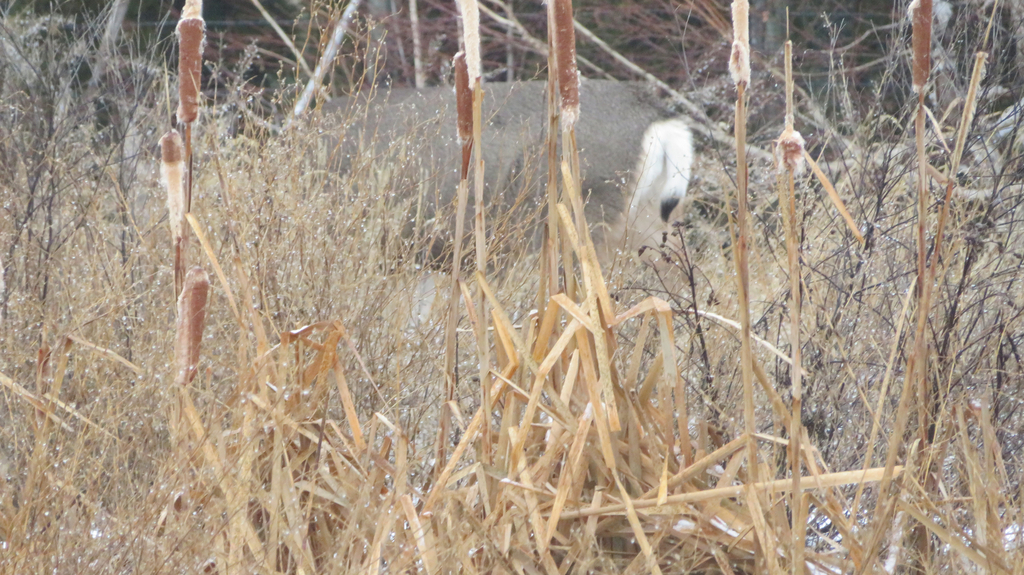
- Cylindrical brown flower spikes
- Spreads via underground rhizomes
- Grows in shallow water
- Height
- 1.5 to 3m
- Spread
- 0.6 to 3m
- Leaves
- green, deciduous
- Flowers
- brown, 1 to 3cm
- Fruit
- brown, Autumn
Problems to watch for
- Aphids · Small insects that may cluster on the stems during dry spells.
Check your broadleaf cattail from a photo
Pocket Botanist looks at a photo of your plant and tells you what's wrong and what to try first.
Scan with your phone's camera to get the app
Or go to pocketbotanist.app/get on your phone
Growing it
- Propagation
- division, seed
- When to plant
- spring, autumn
- Overwintering
- The foliage will die back in winter, so you can cut the brown stalks down to the water line once they turn dry and brittle.
- In containers
- They grow well in containers, but use a large, heavy pot to prevent it from tipping over in the wind.
Rhizome Division
- 1. Carefully dig up a section of the rhizome in early spring.
- 2. Use a sharp knife to cut a piece with at least one healthy bud.
- 3. Replant the division immediately into wet soil or a submerged container.
Always plant in containers if you have a small space, as the rhizomes will quickly fill any available area.
Grows well with
- Pickerelweed · It shares similar water depth requirements and provides a nice contrast in leaf shape.
- Yellow Flag Iris · This plant thrives in the same wet conditions and adds bright color to the water edge.
Similar species
- Narrow-leaf Cattail · It is very similar but has narrower leaves and a distinct gap between the male and female flower spikes.
Science
- Family
- Typhaceae
- Genus
- Typha
- Order
- Poales
- Class
- Liliopsida
- Native range
- Widespread across temperate and tropical regions of the Northern Hemisphere.
- Conservation
- This is a common and widespread species that is not currently of conservation concern.
It thrives in shallow, nutrient-rich wetlands where it spreads rapidly via underground rhizomes to form dense colonies.
- Value to wildlife
- nesting material for birds, larval host plant, shelter for aquatic insects
- Pollinators
- bees, butterflies
- Uses
- wetland restoration, erosion control, ornamental water gardens, basket weaving
Through the year
Ecological indicators
- Salinity
- 3/9
- Soil reaction
- 6/9
- Light
- 8/9
- Temperature
- 5/9
- Moisture
- 9/9
- Nutrients
- 7/9
Taxonomy resolved against GBIF.
Questions people ask
- Can I grow cattails in a small pond?
- They are very aggressive spreaders, so it is best to plant them in submerged containers to keep them from taking over.
- Do they need deep water?
- They prefer shallow water, typically ranging from 0 to 30 centimeters deep.
Where the name comes from
The genus name Typha comes from the Greek word for marsh, while the specific epithet latifolia means broad-leaved.
Good to know
- Cattails are often called nature's water filter because they absorb excess nutrients and pollutants.
- The brown, sausage-shaped flower spike is actually a dense cluster of thousands of tiny flowers.
- Indigenous peoples traditionally used almost every part of the plant for food, medicine, and construction.
Also in
Keep your broadleaf cattail growing
This page is a general guide. Save your plant in Pocket Botanist and you get care reminders timed for this plant, plus a care history that shows what worked.
Scan with your phone's camera to get the app
Or go to pocketbotanist.app/get on your phone
This guide was generated with AI on and checked against GBIF taxonomy. It is general information, not horticultural or veterinary advice. Read about how we build these guides.