 Pocket Botanist
Pflanzenratgeber
Corn Salad.
Valerianella locusta
Aussprache va-lee-ree-ah-NEL-lah lo-KUS-tah
Auch bekannt als Common Cornsalad, Cornsalad, Cornsalad, Lamb's Lettuce, European cornsalad


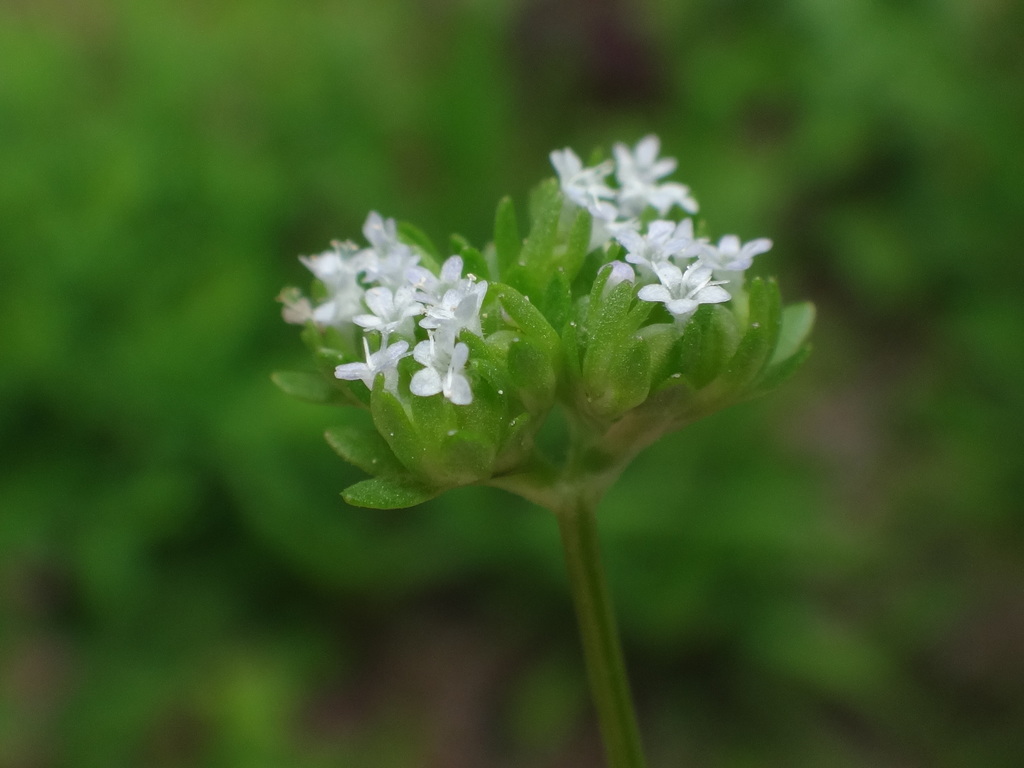
Corn salad is a delightful, cool weather green that grows in small, tender rosettes. It is perfect for adding a mild, nutty flavor to your winter and spring salads. You will love how easily it thrives when other greens struggle in the chill.
Auf einen Blick
- Pflegestufe
- Einfach
- Pflanzenart
- Annual vegetable
- Licht
- Full sun to partial shade
- Licht im Innenraum
- Hell, indirekt
- Gießen
- Alle 2 bis 4 Tage
- Endgröße
- 6 inches
- Wachstum
- Schnell
- Winterhärte
- USDA 5 bis 9
- Blütezeit
- Mid to late spring
Pflege
Keep the soil consistently moist to prevent the leaves from turning bitter. Watch for signs of bolting as temperatures rise, which signals it is time to harvest the entire plant. It prefers cooler temperatures and will grow best in the shoulder seasons.
- Gießen
- Keep the soil evenly moist but never waterlogged to ensure the best leaf quality.
- Düngen
- A light application of balanced organic fertilizer helps keep the leaves growing quickly.
- Schneiden
- Harvest individual outer leaves as needed or cut the entire rosette at the base.
- Umtopfen
- This is an annual plant typically grown directly in garden beds or containers from seed.
- Boden
- Well draining, fertile soil
- Boden-pH
- 6.0 to 7.0
- Temperatur
- -10 bis 25°C
- Luftfeuchtigkeit
- 40 bis 70%
- Trockenheitstoleranz
- Gering
- Lebensdauer
- Annual, typically 6 to 9 months.
- Wildverbiss-Resistenz
- Mittel
Sicherheit
- Menschen
- None known.
- Kinder
- No specific concerns, though small children should be supervised around any garden plants.
- Essbarkeit
- Wash leaves thoroughly to remove soil particles that often cling to the low growing rosettes.
So erkennst du die Pflanze
- Small spoon shaped leaves
- Forms compact basal rosettes
- Bright green succulent foliage
- Tiny pale blue flowers
- Höhe
- 0,1 bis 0,3m
- Breite
- 0,1 bis 0,2m
- Blätter
- green, deciduous
- Blüten
- white, pale blue, 0,2 bis 0,5cm
- Früchte
- brown, Spring
Häufige Probleme
- Powdery mildew — A fungal growth that appears as white dust on leaves during humid conditions.
- Slugs — These mollusks feed on the tender foliage, leaving large holes.
Standort und Pflege
- Vermehrung
- seed
- Pflanzzeit
- early spring, late summer, early autumn
- Überwinterung
- In mild climates, it stays green all winter. In colder areas, cover with a light row cover to protect leaves from severe frost.
- Im Kübel
- It grows very well in shallow containers or window boxes, requiring a minimum depth of 15 centimeters.
Direct Sowing
- Prepare a fine seedbed in cool soil.
- Sow seeds 1 centimeter deep in rows.
- Keep soil consistently moist until germination.
Plant in succession every few weeks to ensure a continuous supply of fresh leaves throughout the cool season.
Gute Pflanzpartner
Ähnliche Arten
- Winter Purslane — Another hardy salad green that thrives in similar cool conditions.
Botanisches
- Familie
- Caprifoliaceae
- Gattung
- Valerianella
- Ordnung
- Dipsacales
- Klasse
- Magnoliopsida
- Ursprüngliche Heimat
- Europe, Western Asia, and Northern Africa.
- Artenschutz
- Not of conservation concern.
It thrives in cool, moist conditions and often colonizes disturbed soil or grain fields.
- Nutzen für Wildtiere
- early season nectar source
- Bestäuber
- Bienen
- Verwendung
- culinary salad green, winter vegetable crop
Im Jahresverlauf
Ökologische Zeigerwerte
- Salzgehalt
- 2/9
- Bodenreaktion
- 6/9
- Licht
- 6/9
- Temperatur
- 4/9
- Feuchtigkeit
- 5/9
- Nährstoffe
- 5/9
Taxonomie abgeglichen mit GBIF.
Häufige Fragen
- When should I harvest?
- Harvest the entire rosette when leaves are about 10 to 15 centimeters long.
- Does it bolt?
- Yes, it will quickly go to seed once temperatures rise in late spring.
Woher der Name kommt
Valerianella is a diminutive of Valeriana, referring to its resemblance to valerian plants, while locusta refers to its historical association with locusts or grain fields.
Gut zu wissen
- It is incredibly cold hardy and can often be harvested through winter.
- The leaves have a mild, nutty flavor.
- It was historically considered a weed in grain fields, hence the name corn salad.
Probleme mit Corn Salad?
Diese Seite bietet allgemeine Infos. Pocket Botanist erkennt Probleme anhand eines Fotos deiner echten Pflanze, passt das Gießen an dein Licht und deinen Standort an und erinnert dich an die Pflege.
Dieser Ratgeber wurde mit KI erstellt und mit der GBIF-Taxonomie abgeglichen. Er dient zur allgemeinen Information und ersetzt keine gärtnerische oder tierärztliche Beratung. Hier erfährst du, wie wir diese Ratgeber erstellen.