 Pocket Botanist
Guide botanique
Corn Salad.
Valerianella locusta
Prononciation va-lee-ree-ah-NEL-lah lo-KUS-tah
Aussi appelée Common Cornsalad, Cornsalad, Cornsalad, Lamb's Lettuce, European cornsalad


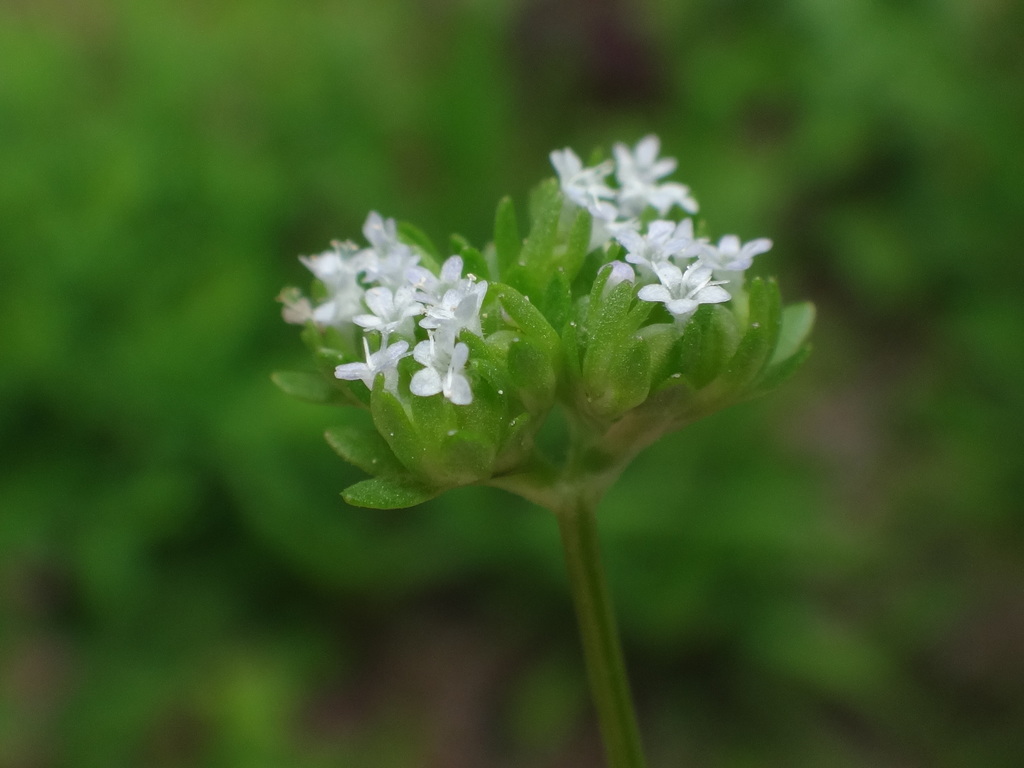
Corn salad is a delightful, cool weather green that grows in small, tender rosettes. It is perfect for adding a mild, nutty flavor to your winter and spring salads. You will love how easily it thrives when other greens struggle in the chill.
En un coup d'œil
- Niveau d'entretien
- Facile
- Type de plante
- Annual vegetable
- Lumière
- Full sun to partial shade
- Lumière en intérieur
- Lumière vive indirecte
- Arrosage
- Tous les 2 à 4 jours
- Taille adulte
- 6 inches
- Croissance
- Rapide
- Rusticité
- USDA 5 à 9
- Floraison
- Mid to late spring
Entretien
Keep the soil consistently moist to prevent the leaves from turning bitter. Watch for signs of bolting as temperatures rise, which signals it is time to harvest the entire plant. It prefers cooler temperatures and will grow best in the shoulder seasons.
- Arrosage
- Keep the soil evenly moist but never waterlogged to ensure the best leaf quality.
- Engrais
- A light application of balanced organic fertilizer helps keep the leaves growing quickly.
- Taille
- Harvest individual outer leaves as needed or cut the entire rosette at the base.
- Rempotage
- This is an annual plant typically grown directly in garden beds or containers from seed.
- Sol
- Well draining, fertile soil
- pH du sol
- 6.0 to 7.0
- Température
- -10 à 25°C
- Humidité
- 40 à 70%
- Résistance à la sécheresse
- Faible
- Durée de vie
- Annual, typically 6 to 9 months.
- Résistance aux chevreuils et lapins
- Moyenne
Sécurité
- Humains
- None known.
- Enfants
- No specific concerns, though small children should be supervised around any garden plants.
- Comestibilité
- Wash leaves thoroughly to remove soil particles that often cling to the low growing rosettes.
Comment l'identifier
- Small spoon shaped leaves
- Forms compact basal rosettes
- Bright green succulent foliage
- Tiny pale blue flowers
- Hauteur
- 0,1 à 0,3m
- Envergure
- 0,1 à 0,2m
- Feuilles
- green, deciduous
- Fleurs
- white, pale blue, 0,2 à 0,5cm
- Fruits
- brown, Spring
Problèmes courants
- Powdery mildew — A fungal growth that appears as white dust on leaves during humid conditions.
- Slugs — These mollusks feed on the tender foliage, leaving large holes.
La cultiver
- Multiplication
- seed
- Quand planter
- early spring, late summer, early autumn
- Hivernage
- In mild climates, it stays green all winter. In colder areas, cover with a light row cover to protect leaves from severe frost.
- En pot
- It grows very well in shallow containers or window boxes, requiring a minimum depth of 15 centimeters.
Direct Sowing
- Prepare a fine seedbed in cool soil.
- Sow seeds 1 centimeter deep in rows.
- Keep soil consistently moist until germination.
Plant in succession every few weeks to ensure a continuous supply of fresh leaves throughout the cool season.
Bonnes associations
Espèces similaires
- Winter Purslane — Another hardy salad green that thrives in similar cool conditions.
Science
- Famille
- Caprifoliaceae
- Genre
- Valerianella
- Ordre
- Dipsacales
- Classe
- Magnoliopsida
- Région d'origine
- Europe, Western Asia, and Northern Africa.
- Préservation
- Not of conservation concern.
It thrives in cool, moist conditions and often colonizes disturbed soil or grain fields.
- Intérêt pour la faune
- early season nectar source
- Pollinisateurs
- abeilles
- Utilisations
- culinary salad green, winter vegetable crop
Au fil des saisons
Repères écologiques
- Salinité
- 2/9
- Réaction du sol
- 6/9
- Lumière
- 6/9
- Température
- 4/9
- Humidité
- 5/9
- Nutriments
- 5/9
Taxonomie vérifiée avec le GBIF.
Ce qu'on demande souvent
- When should I harvest?
- Harvest the entire rosette when leaves are about 10 to 15 centimeters long.
- Does it bolt?
- Yes, it will quickly go to seed once temperatures rise in late spring.
D'où vient le nom
Valerianella is a diminutive of Valeriana, referring to its resemblance to valerian plants, while locusta refers to its historical association with locusts or grain fields.
Bon à savoir
- It is incredibly cold hardy and can often be harvested through winter.
- The leaves have a mild, nutty flavor.
- It was historically considered a weed in grain fields, hence the name corn salad.
Ta plante a mauvaise mine ?
Cette page est un guide général. Pocket Botanist diagnostique les problèmes directement à partir d'une photo de ta plante, adapte l'arrosage à sa luminosité et te prévient quand il faut t'en occuper.
Ce guide a été généré par IA et vérifié avec la taxonomie du GBIF. Il s'agit d'informations générales, et non de conseils horticoles ou vétérinaires. Découvre comment nous concevons ces guides.