 Pocket Botanist
Plant guide
Multiflora rose.
Rosa multiflora
Pronounced RO-zuh mul-tee-FLOR-uh
Also known as Baby Rose, Japanese Rose, Many-Flowered Rose, Many-flower Rose, Multiflora Rose, Seven-sisters Rose, multiflower rose


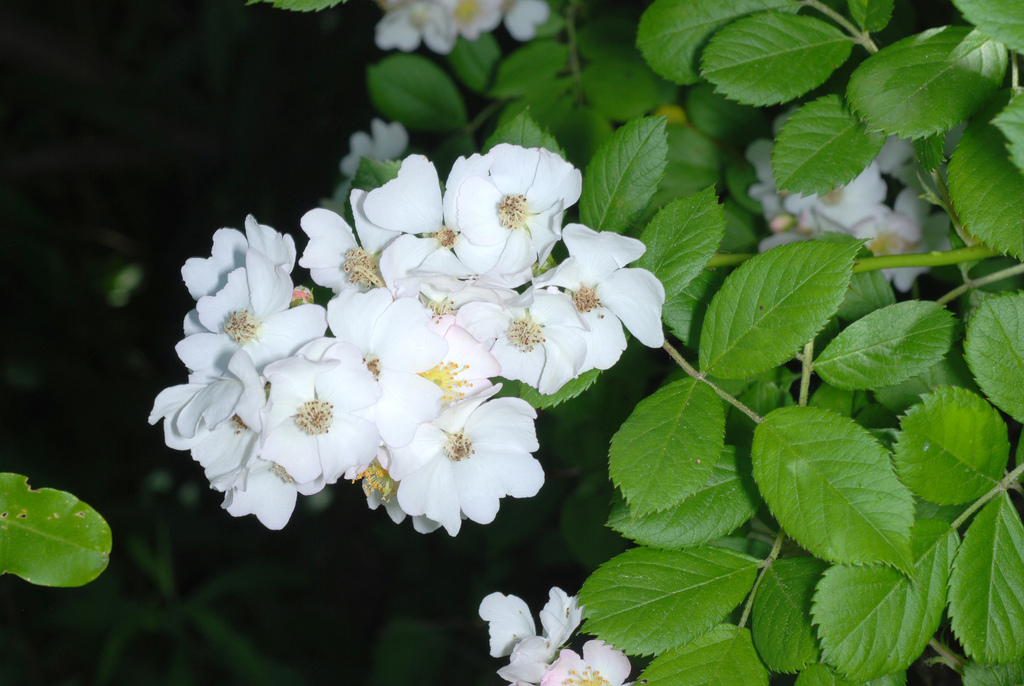
The multiflora rose is a vigorous climbing shrub known for its clusters of small, fragrant white flowers. It is widely recognized for its arching canes and ability to spread quickly in various environments. While pretty, it is considered an invasive species in many parts of North America.

At a glance
- Care level
- Easy
- Plant type
- Deciduous shrub
- Light
- Full sun to partial shade
- Indoor light
- Direct sun
- Water
- Every 7 to 14 days
- Mature size
- 10 to 15 feet
- Growth rate
- Fast
- Hardiness
- USDA 5 to 9
- Bloom time
- Late spring to early summer
Care
This plant is extremely hardy and thrives with minimal intervention in full sun. Keep an eye on its rapid spread, as it can quickly overtake nearby garden spaces if not managed. Watch for signs of powdery mildew on the foliage during humid weather.
- Watering
- Water deeply once the top few inches of soil feel dry to the touch.
- Feeding
- Apply a balanced fertilizer during the active growing season in spring and summer.
- Pruning
- Prune in late winter or early spring to control size and remove dead wood.
- Repotting
- Repot only if the plant becomes rootbound or needs a larger container for stability.
- Soil
- Well draining, fertile soil
- Soil pH
- 6.0 to 7.0
- Temperature
- -30 to 35°C
- Humidity
- 40 to 70%
Safety
- People
- The plant is not considered toxic to humans.
- Children
- The dense, thorny stems pose a significant injury risk to children playing nearby.
- Contact allergens
- The sharp, curved thorns can cause significant skin scratches and irritation.
- Airborne allergens
- The pollen can trigger mild seasonal allergies in sensitive individuals.
- Edibility
- While the hips are technically edible, they are often small and hairy inside, making them poor for consumption.
How to identify it
- Clusters of small white flowers
- Fringed stipules at leaf base
- Arching, thorny, green canes
- Small red rose hips in autumn
- Height
- 2 to 5m
- Spread
- 2 to 5m
- Leaves
- green, deciduous
- Flowers
- white, 1 to 2cm
- Fruit
- red, Autumn
Common problems
- Rose Rosette Disease — A viral disease spread by eriophyid mites that causes distorted, red, witch's broom growth.
- Powdery Mildew — A fungal infection that leaves a white, dusty coating on the leaves.
Growing it
- Propagation
- seed, cuttings, layering
- When to plant
- Spring, Autumn
Because this plant is invasive, it is best to avoid planting it near natural areas where it can spread.
Grows well with
- Goldenrod — They share similar habitat requirements and bloom times.
- Aster — These plants often grow together in wild, unmanaged thickets.
Similar species
- Sweetbriar Rose — It is another invasive rose species with similar growth habits.
Science
- Family
- Rosaceae
- Genus
- Rosa
- Order
- Rosales
- Class
- Magnoliopsida
- Native range
- Eastern Asia
- Conservation
- It is listed as a noxious weed in many states and should not be planted in the wild.
It thrives in disturbed areas and forest edges, where it forms dense thickets that shade out competing plants.
- Value to wildlife
- nectar source, provides nesting cover, winter food for birds
- Pollinators
- bees, butterflies, beetles
- Uses
- hedgerow, wildlife habitat, rootstock for grafting
Through the year
Ecological indicators
- Salinity
- 2/9
- Soil reaction
- 5/9
- Light
- 7/9
- Temperature
- 5/9
- Moisture
- 5/9
- Nutrients
- 5/9
Taxonomy resolved against GBIF.
Questions people ask
- Is it a good garden plant?
- No, it is highly invasive and difficult to remove once established.
- How do I get rid of it?
- Repeated mowing or digging out the entire root system is required for control.
Where the name comes from
The name multiflora refers to the many flowers produced in clusters, while Rosa is the Latin name for rose.
Good to know
- It was originally introduced to North America for erosion control and as a living fence.
- A single plant can produce over a million seeds in a year.
- The flowers are highly fragrant and attract a wide variety of insects.
Is your multiflora rose looking unwell?
This page is a general guide. Pocket Botanist diagnoses problems from a photo of your actual plant, works out watering for your light and conditions, and reminds you when care is due.
This guide was generated with AI and checked against GBIF taxonomy. It is general information, not horticultural or veterinary advice. Read about how we build these guides.