 Pocket Botanist
Symptoms by part
Leaves
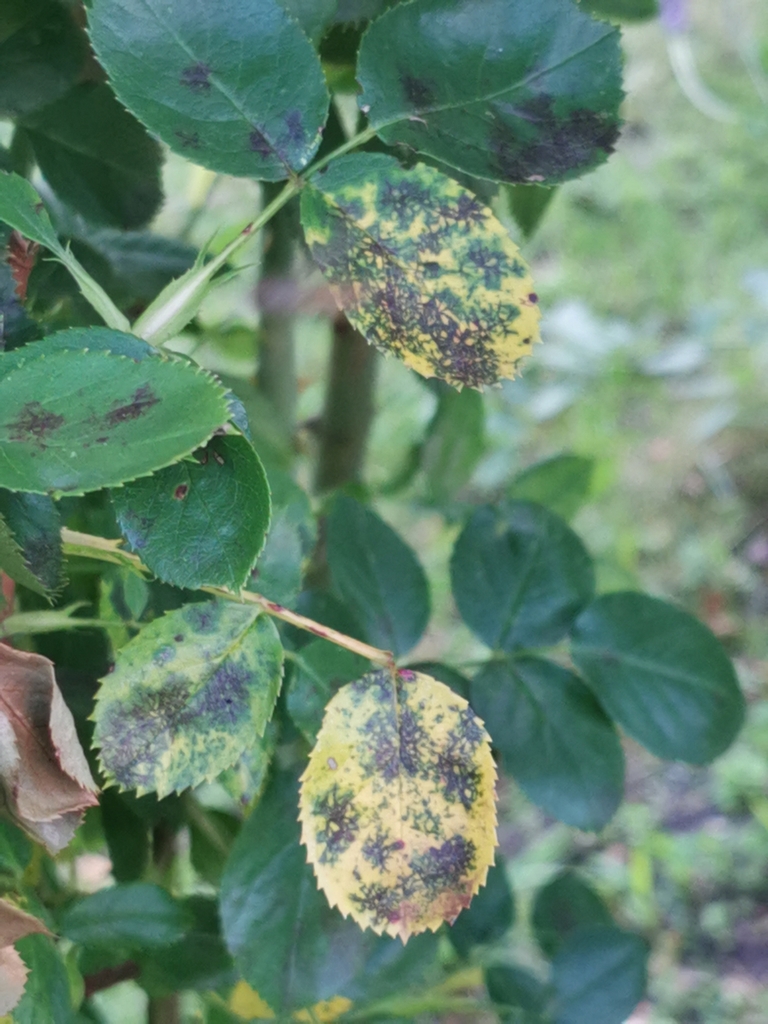
Circular black spots with fringed, feathery edges appear on the upper surface, often surrounded by a yellow halo as the leaf tissue dies.
Causes
- Prolonged periods of leaf wetness from rain, dew, or overhead watering.
- Poor air circulation around the plant foliage.
- High humidity levels during the growing season.
- Splashing water from the soil surface onto lower leaves.
Could be confused with
- Downy Mildew · Downy mildew causes angular, purple or reddish spots that are often limited by leaf veins, whereas black spot is circular and feathery.
- Rose Rust · Rust appears as bright orange or yellow pustules on the undersides of leaves, which look very different from the flat, dark spots of black spot.
Find out what's really wrong with your plant
Problems that look alike are easy to mix up. Pocket Botanist looks at a photo of your actual plant and tells you what's going on, how serious it is, and what to try first. Identification and a health check are free.



Scan with your phone's camera to get the app
Or go to pocketbotanist.app/get on your phone
Treatment
- Prune away and destroy all infected leaves as soon as you see them to stop the spread.
- Clean up and dispose of all fallen leaves from the ground beneath the plant to remove fungal spores.
- Apply potassium bicarbonate to the foliage to alter the pH and inhibit fungal growth, follow the label.
Without chemicals
- Prune the plant to open up the center and improve airflow.
- Water only at the base of the plant to keep the foliage dry.
- Apply a layer of mulch around the base to prevent soil-borne spores from splashing onto the leaves.
- Space plants further apart to ensure good air movement.
Chemical options
- Potassium bicarbonate, spray onto leaves when conditions are humid, follow the label.
Preventing it
- Choose rose varieties that are bred for resistance to black spot.
- Always water early in the morning so the sun can dry the leaves quickly.
- Remove and destroy all dead leaves at the end of the season to prevent spores from overwintering.
- Avoid overhead irrigation that wets the leaves.
Season
The warm growing season, especially during periods of frequent rain or high humidity.
Spread risk
High
Severity
Moderate
When to act
Act as soon as you notice the first spots to prevent a widespread outbreak. If a plant is chronically infected every year despite your best efforts, it is best to remove it and replace it with a more resistant variety.
Keep your plants healthy from here
Save your plants in Pocket Botanist and you get care reminders timed for each one, plus a care history that shows what worked. Identification and a health check are free.
Questions people ask
- Will my rose die if it gets black spot?
- It rarely kills a healthy rose outright, but it will make the plant look ragged and significantly reduce its vigor and flowering over time.
- Can I compost the infected leaves?
- No, you should not compost them. The fungal spores can survive in many home compost piles, so it is safer to bag them and put them in the trash.
- Does black spot go away on its own?
- No, the fungus will persist on the plant and in the soil debris, so active management is required to keep it under control.
Plants it affects
Answers plant by plant
This guide was generated with AI on and is general information, not horticultural advice. Read about how we build these guides.