 Pocket Botanist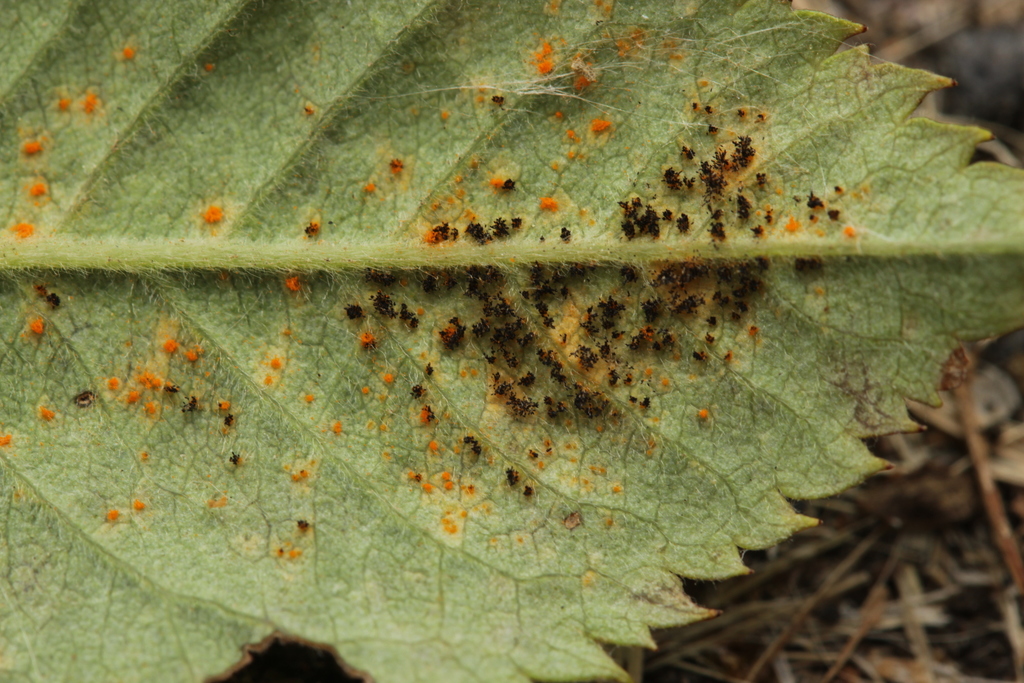
Symptoms by part
Leaves
Small yellow or white flecks appear on the upper surface, while the undersides develop raised, bright orange or rust colored pustules that release powdery spores.
Causes
- High humidity levels
- Cool to moderate temperatures
- Poor air circulation around the plant
- Extended periods of leaf wetness from overhead watering or rain
Could be confused with
- Black Spot · Black spot creates dark, circular lesions with feathery edges rather than raised, orange, powdery pustules.
- Rose Leaf Miner · Leaf miners leave winding, translucent trails or tunnels inside the leaf tissue instead of external orange spores.
Treatment
- Prune away and destroy all infected leaves as soon as you spot them to stop the spread of spores.
- Clean up and dispose of all fallen leaves from the ground beneath the rose bush to prevent reinfection.
- Apply potassium bicarbonate to the foliage to alter the pH on the leaf surface, follow the label.
- Apply sulfur to the leaves during the early stages of infection to inhibit fungal growth, follow the label.
Without chemicals
- Prune the rose bush to improve airflow through the center of the plant.
- Water only at the base of the plant to keep the foliage dry.
- Remove and destroy all infected plant debris at the end of the season.
- Ensure the plant is not overcrowded by other shrubs.
Chemical options
- Potassium bicarbonate, mix with water and spray onto all leaf surfaces, follow the label.
- Sulfur, apply as a dust or spray to the foliage, follow the label.
Preventing it
- Select rose varieties known for their resistance to rust.
- Space plants far enough apart to allow for good air movement.
- Mulch beneath the plants to prevent soil borne spores from splashing onto the lower leaves during rain.
- Water early in the morning so any accidental moisture on the leaves dries quickly in the sun.
Season
The warm growing season, particularly during periods of high humidity and mild temperatures.
Spread risk
High
Severity
Moderate
When to act
Act as soon as you see the first orange pustules to prevent a widespread outbreak. If a plant remains heavily infected despite consistent care over two seasons, it is best to remove it to protect the rest of your garden.
Think it's Rose Rust?
This guide covers the general picture. Pocket Botanist looks at your actual plant from a photo and tells you what's really going on, how serious it is, and what to try first. Identification and a health check are free.


Questions people ask
- Will Rose Rust kill my plant?
- It rarely kills a healthy rose outright, but it significantly weakens the plant by causing it to lose its leaves before the season ends.
- Can I compost the infected leaves?
- No, do not compost infected leaves because home compost piles rarely get hot enough to kill the fungal spores.
- Does overhead watering cause Rose Rust?
- Yes, overhead watering keeps the leaves wet for too long, which provides the perfect environment for rust spores to germinate.
This guide was generated with AI and is general information, not horticultural advice. Read about how we build these guides.