 Pocket Botanist
Plant guide
Common Purslane.
Portulaca oleracea
Pronounced por-tyoo-LAH-kuh oh-ler-AY-see-uh
Also known as Akulikuli-kula, Common Purslane, Duckweed, Garden Purslane, Little Hogweed, Munyeroo


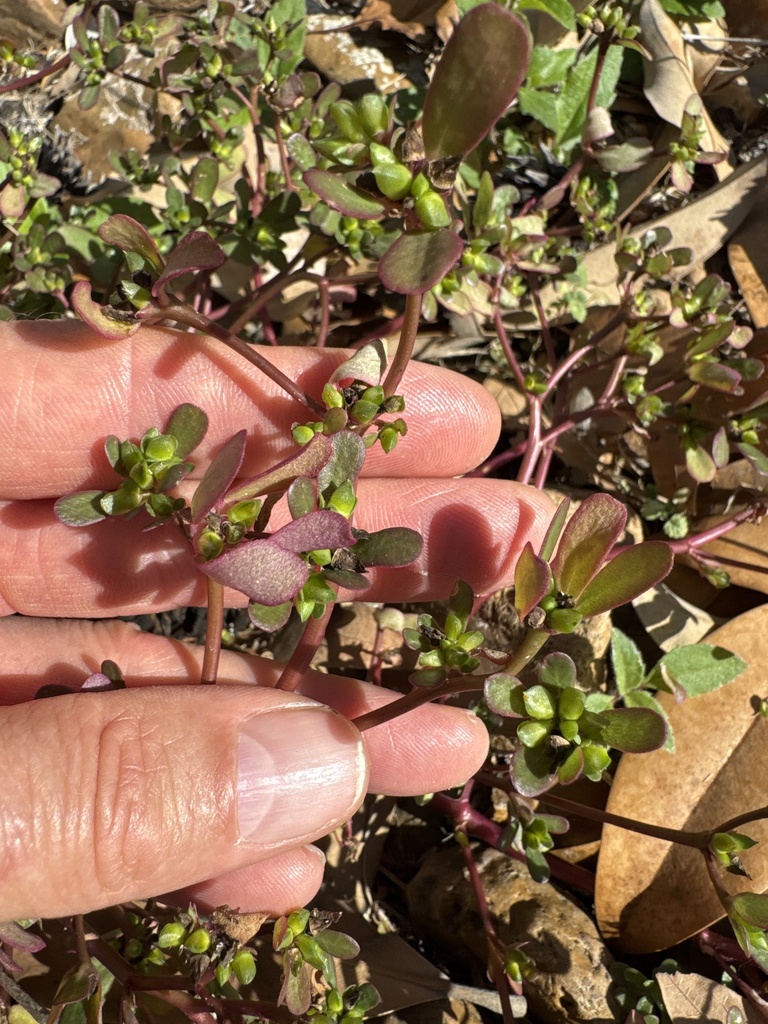
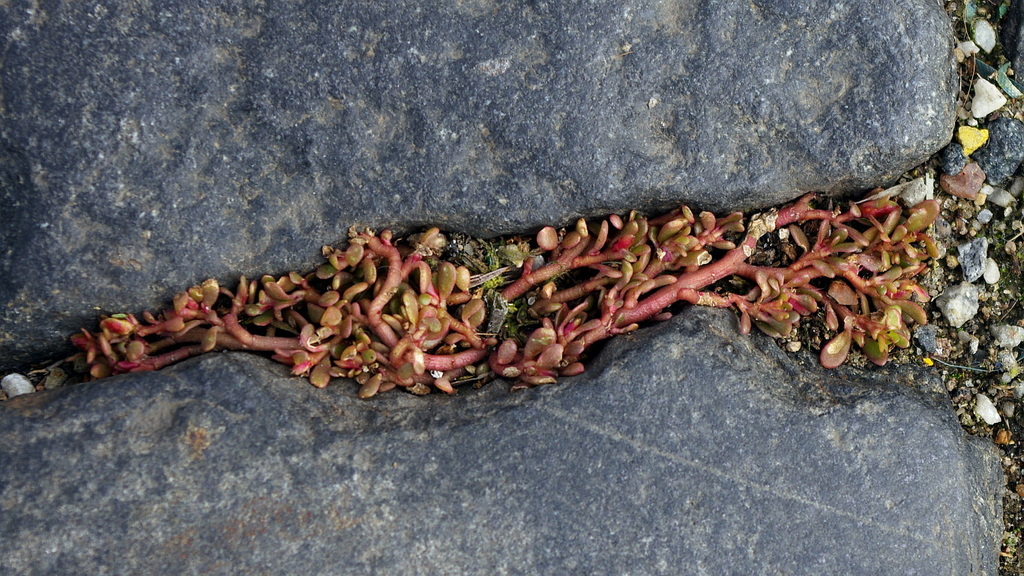
Common Purslane is a hardy, succulent annual that thrives in warm weather. It is often found growing in garden beds or sidewalk cracks. This plant is edible and quite nutritious.
At a glance
- Care level
- Easy
- Plant type
- Annual succulent
- Light
- Full sun
- Indoor light
- Direct sun
- Water
- Every 5 to 10 days
- Mature size
- 15 cm tall, 45 cm wide
- Growth rate
- Fast
- Hardiness
- USDA 2 to 11
- Bloom time
- Late spring to early autumn
Care
Give this plant plenty of sun and well draining soil to keep it happy. Watch for wilting if the soil stays dry for too long during intense heat. It is very drought tolerant once established.
- Watering
- Water when the top inch of soil feels dry to the touch.
- Feeding
- Apply a balanced liquid fertilizer sparingly during the growing season.
- Pruning
- Pinch back stems to encourage a bushier growth habit.
- Repotting
- Repot annually if growing in containers to refresh the soil.
- Soil
- Sandy, loamy, or poor soil
- Soil pH
- 5.5 to 8.5
- Temperature
- 15 to 35°C
- Humidity
- 20 to 60%
- Drought tolerance
- High
- Lifespan
- Annual, completes its life cycle in one season.
- Deer and rabbits
- Moderate
Signs it needs repotting
- Roots growing out of the drainage holes.
- Plant growth significantly slowing down.
- Soil drying out much faster than usual.
Safety
- People
- The plant is generally safe to eat in moderation but contains oxalates that may cause issues for sensitive individuals.
- Pets
- This plant is considered non toxic to cats and dogs.
- Children
- Small children should be supervised as the tiny seeds can pose a minor choking hazard if ingested in large quantities.
- Contact allergens
- No specific contact irritants are known.
- Airborne allergens
- Pollen may cause mild respiratory irritation in highly sensitive individuals.
- Edibility
- Consult a professional before consumption as high oxalate levels can be harmful to those with kidney stones.
How to identify it
- Fleshy, smooth, paddle shaped leaves
- Reddish, succulent, prostrate stems
- Small, yellow, five petaled flowers
- Tiny, black, kidney shaped seeds
- Height
- 0.05 to 0.2m
- Spread
- 0.15 to 0.45m
- Leaves
- green, reddish, deciduous
- Flowers
- yellow, 0.5 to 1cm
- Fruit
- brown, Summer to autumn
Problems to watch for
- AphidsCommon
- White RustCommon
- Root RotUncommon
- Slugs and SnailsUncommon
By symptom
Check your common purslane from a photo
Pocket Botanist looks at a photo of your plant and tells you what's wrong and what to try first.
Growing it
- Propagation
- seed, cuttings
- When to plant
- spring, summer
- Overwintering
- This plant is an annual and will die with the first frost, so collect seeds in late summer to replant next year.
- In containers
- It grows very well in shallow containers or hanging baskets due to its small root system.
Seed Sowing
- 1. Sprinkle seeds on top of moist, well draining soil.
- 2. Press them lightly into the surface without burying them.
- 3. Keep the soil lightly moist until germination occurs.
Use this plant as a living ground cover to protect soil moisture in hot, sunny garden beds.
Grows well with
Similar species
- Moss Rose — It is a close relative often grown for its showy, colorful flowers.
Science
- Family
- Portulacaceae
- Genus
- Portulaca
- Order
- Caryophyllales
- Class
- Magnoliopsida
- Native range
- Likely North Africa and the Middle East, now naturalized globally.
- Conservation
- This plant is considered a widespread weed and is not of conservation concern.
It thrives in disturbed soils and cracks in pavement where other plants struggle to compete.
- Value to wildlife
- nectar source
- Pollinators
- bees, butterflies
- Uses
- culinary greens, ground cover, medicinal herb
Through the year
Ecological indicators
- Salinity
- 4/9
- Soil reaction
- 6/9
- Light
- 8/9
- Temperature
- 7/9
- Moisture
- 3/9
- Nutrients
- 5/9
Taxonomy resolved against GBIF.
Questions people ask
- Is purslane a weed?
- It is often treated as a weed in gardens, but it is also a highly nutritious edible plant.
- Does it need much water?
- No, it is highly drought tolerant and prefers to dry out between waterings.
Where the name comes from
The name oleracea means vegetable garden in Latin, referring to its history as a cultivated food plant.
Good to know
- It is known as a succulent because it stores water in its leaves.
- The plant can survive extreme heat and drought.
- It is often considered a weed in gardens despite its nutritional value.
- The seeds can remain viable in the soil for decades.
Also in
Keep your common purslane growing
This page is a general guide. Save your plant in Pocket Botanist and you get care reminders timed for this plant, plus a care history that shows what worked.
This guide was generated with AI and checked against GBIF taxonomy. It is general information, not horticultural or veterinary advice. Read about how we build these guides.