 Pocket Botanist
Plant guide
Cotton thistle.
Onopordum acanthium L.
Pronounced on-oh-POR-dum ah-KAN-thee-um
Also known as Cotton Thistle, Cotton-thistle, Giant Thistle, Heraldic Thistle


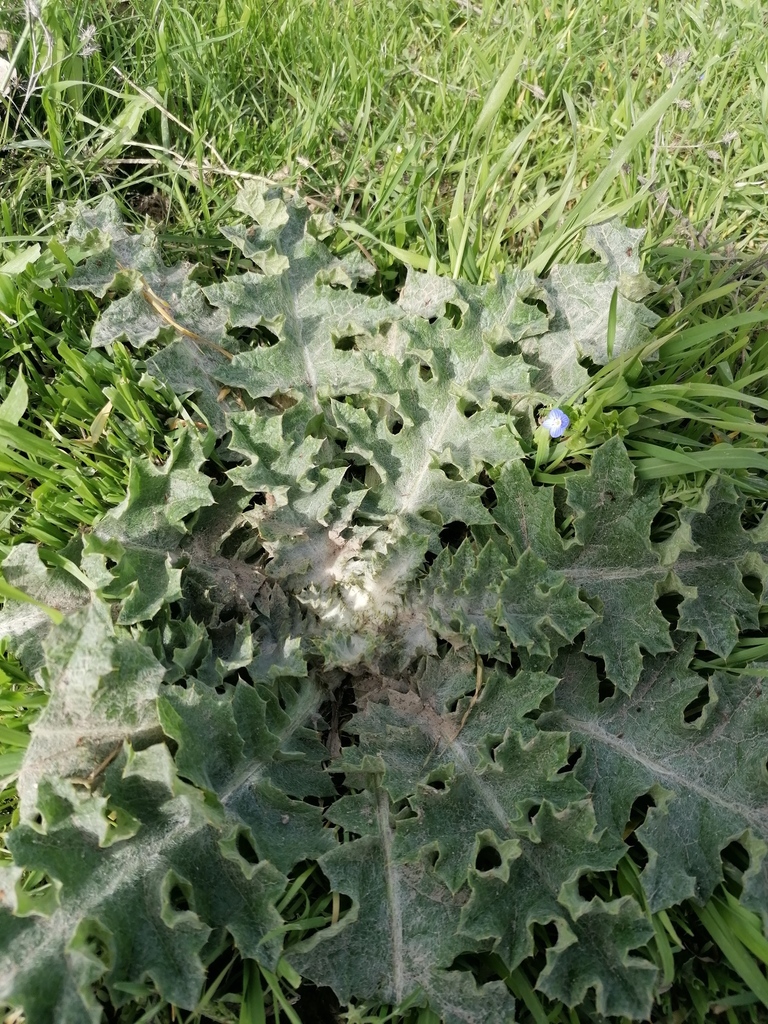
The cotton thistle is a striking biennial plant known for its dramatic architectural presence and silvery, woolly foliage. It produces impressive purple flower heads that attract plenty of pollinators to your garden. You will find it makes a bold statement in any sunny landscape.

At a glance
- Care level
- Easy
- Plant type
- Biennial
- Light
- Full sun
- Indoor light
- Direct sun
- Water
- Every 7 to 14 days
- Mature size
- 6 to 8 feet tall
- Growth rate
- Fast
- Hardiness
- USDA 3 to 9
- Bloom time
- Mid to late summer
Care
Plant this beauty in a spot with plenty of sun and well draining soil. Keep an eye out for aphids or mildew if the air circulation is poor. It is a biennial, so it will grow leaves the first year and bloom the second before dying back.
- Watering
- Water deeply once established, but allow the soil to dry out between sessions.
- Feeding
- Feed with a balanced fertilizer during the first year of growth to support foliage development.
- Pruning
- Remove spent flower stalks after they finish blooming to prevent unwanted self seeding.
- Repotting
- Since it is a biennial, you likely will not need to repot it unless you are starting it in a container.
- Soil
- Well draining, sandy or loamy soil
- Soil pH
- Neutral to slightly alkaline
- Temperature
- -25 to 35°C
- Humidity
- 20 to 50%
- Drought tolerance
- High
- Lifespan
- Biennial, typically 2 years
- Fragrance
- Light
- Deer and rabbits
- High
Safety
- People
- There is no significant toxicity, but the sharp spines pose a physical injury risk.
- Children
- Keep children away due to the extremely sharp and painful spines covering the entire plant.
- Contact allergens
- The stiff, sharp spines can cause skin punctures and irritation.
- Airborne allergens
- The fine hairs on the leaves can become airborne and irritate the respiratory tract.
- Edibility
- The plant is not considered edible and should be avoided for consumption.
How to identify it
- Silvery white woolly foliage
- Large spiny leaves
- Tall branching stems
- Purple thistle like flower heads
- Height
- 1.5 to 3m
- Spread
- 0.6 to 1.2m
- Leaves
- gray, silver, deciduous
- Flowers
- purple, pink, 3 to 6cm
- Fruit
- brown, Autumn
Problems to watch for
- Powdery MildewCommon
- RustCommon
- AphidsUncommon
- Slugs and SnailsUncommon
By symptom
Check your cotton thistle from a photo
Pocket Botanist looks at a photo of your plant and tells you what's wrong and what to try first.
Growing it
- Propagation
- seed
- When to plant
- spring, autumn
- Overwintering
- The first year rosette stays low to the ground and requires no special protection.
- In containers
- It is generally too large and aggressive for standard containers.
Direct Sowing
- 1. Collect seeds in late autumn.
- 2. Sow directly into well drained soil in a sunny spot.
- 3. Thin seedlings to allow for large growth.
Plant in a location where you can easily reach the base to remove it before it spreads.
Grows well with
- Mullein — They share similar requirements for dry, sunny, disturbed soil.
- Common Sage — It complements the silver foliage and thrives in similar conditions.
Similar species
- Milk Thistle — It has similar spiny foliage but features distinctive white marbling on the leaves.
Science
- Family
- Asteraceae
- Genus
- Onopordum
- Order
- Asterales
- Class
- Magnoliopsida
- Native range
- Europe and western Asia
- Conservation
- It is considered an invasive weed in many parts of the world, including North America and Australia.
It thrives in disturbed, dry, sunny soils where it can outcompete native vegetation.
- Value to wildlife
- nectar source, seed source for birds
- Pollinators
- bees, butterflies
- Uses
- ornamental architectural plant, dried flower arrangements
Through the year
Ecological indicators
- Salinity
- 2/9
- Soil reaction
- 6/9
- Light
- 8/9
- Temperature
- 5/9
- Moisture
- 2/9
- Nutrients
- 5/9
Taxonomy resolved against GBIF.
Questions people ask
- Is it really from Scotland?
- Despite its common name, it is actually native to Europe and western Asia.
- How do I control it?
- The best method is to remove the plant before it sets seed.
Where the name comes from
The genus name Onopordum comes from Greek words meaning donkey and fart, referring to the plant's effect on donkeys, while acanthium refers to its prickly nature.
Good to know
- It is the national emblem of Scotland.
- The plant can produce over 20,000 seeds in a single season.
- It is often called the heraldic thistle.
Also in
Keep your cotton thistle growing
This page is a general guide. Save your plant in Pocket Botanist and you get care reminders timed for this plant, plus a care history that shows what worked.
This guide was generated with AI and checked against GBIF taxonomy. It is general information, not horticultural or veterinary advice. Read about how we build these guides.