 Pocket Botanist
Guide botanique
Chardon d'Écosse.
Onopordum acanthium L.
Prononciation on-oh-POR-dum ah-KAN-thee-um
Aussi appelée Cotton Thistle, Cotton-thistle, Chardon géant, Chardon héraldique


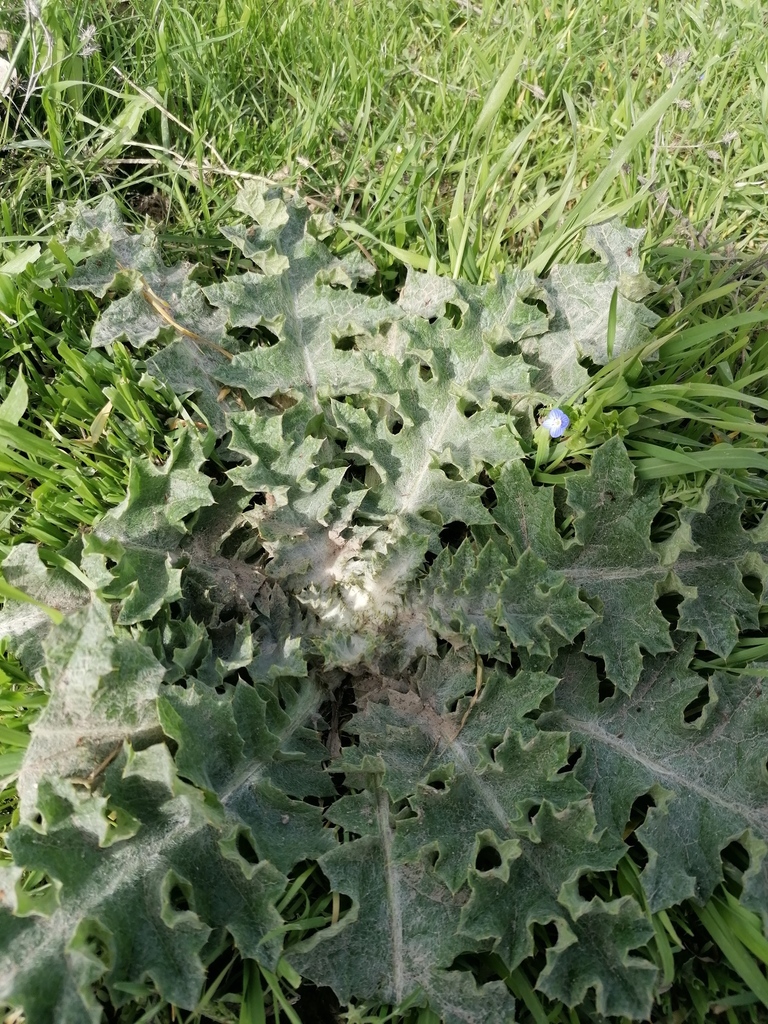
Le chardon étoilé est une plante bisannuelle saisissante, connue pour sa présence architecturale spectaculaire et son feuillage argenté et laineux. Il produit d'impressionnantes têtes florales violettes qui attirent de nombreux pollinisateurs dans votre jardin. Vous constaterez qu'il fait une déclaration audacieuse dans tout paysage ensoleillé.

En un coup d'œil
- Niveau d'entretien
- Facile
- Type de plante
- Bisannuelle
- Lumière
- Plein soleil
- Lumière en intérieur
- Soleil direct
- Arrosage
- Tous les 7 à 14 jours
- Taille adulte
- 6 à 8 pieds de haut
- Croissance
- Rapide
- Rusticité
- USDA 3 à 9
- Floraison
- Mi à fin de l'été
Entretien
Plantez cette beauté dans un endroit avec beaucoup de soleil et un sol bien drainé. Surveillez les pucerons ou le mildiou si la circulation de l'air est mauvaise. C'est une plante bisannuelle, elle produira donc des feuilles la première année et fleurira la seconde avant de dépérir.
- Arrosage
- Arrosez abondamment une fois établie, mais laissez le sol sécher entre les arrosages.
- Engrais
- Nourrissez avec un engrais équilibré pendant la première année de croissance pour favoriser le développement du feuillage.
- Taille
- Retirez les tiges florales fanées après la fin de la floraison pour éviter les semis spontanés indésirables.
- Rempotage
- Comme c'est une plante bisannuelle, vous n'aurez probablement pas besoin de la rempoter à moins que vous ne la cultiviez en pot.
- Sol
- Sol bien drainé, sablonneux ou limoneux
- pH du sol
- Neutre à légèrement alcalin
- Température
- -25 à 35°C
- Humidité
- 20 à 50%
- Résistance à la sécheresse
- Élevée
- Durée de vie
- Bisannuel, généralement 2 ans
- Parfum
- Léger
- Résistance aux chevreuils et lapins
- Élevée
Sécurité
- Humains
- Il n'y a pas de toxicité significative, mais les épines acérées présentent un risque de blessure physique.
- Animaux
- Non toxique, mais les épines peuvent provoquer une irritation mécanique.
- Enfants
- Tenez les enfants à l'écart en raison des épines extrêmement acérées et douloureuses qui recouvrent toute la plante.
- Allergènes de contact
- Les épines rigides et acérées peuvent causer des perforations et une irritation de la peau.
- Allergènes aéroportés
- Les poils fins sur les feuilles peuvent devenir aéroportés et irriter les voies respiratoires.
- Comestibilité
- La plante n'est pas considérée comme comestible et doit être évitée pour la consommation.
Comment l'identifier
- Feuillage argenté blanc laineux
- Grandes feuilles épineuses
- Tiges hautes et ramifiées
- Grosses têtes florales ressemblant à des chardons violets
- Hauteur
- 1,5 à 3m
- Envergure
- 0,6 à 1,2m
- Feuilles
- gris, argent, caduc
- Fleurs
- pourpre, rose, 3 à 6cm
- Fruits
- brun, Automne
Problèmes à surveiller
- OïdiumCourant
- RouilleCourant
- Limaces et escargotsPeu courant
- PuceronsPeu courant
Par symptôme
Vérifie la santé de ta plante en photo
Pocket Botanist analyse une photo de ta plante et te dit ce qui ne va pas et quoi essayer en premier.
La cultiver
- Multiplication
- semis
- Quand planter
- printemps, automne
- Hivernage
- La rosette de la première année reste basse et ne nécessite aucune protection particulière.
- En pot
- Elle est généralement trop grande et agressive pour les conteneurs standard.
Semis direct
- 1. Récoltez les graines à la fin de l'automne.
- 2. Semez directement dans un sol bien drainé dans un endroit ensoleillé.
- 3. Éclaircissez les semis pour permettre une croissance importante.
Plantez dans un endroit où vous pouvez facilement atteindre la base pour la retirer avant qu'elle ne se propage.
Bonnes associations
- Great Mullein — Ils partagent des exigences similaires pour les sols secs, ensoleillés et perturbés.
- Sauge — Elle complète le feuillage argenté et prospère dans des conditions similaires.
Espèces similaires
- Chardon-marie — Il a un feuillage épineux similaire mais présente un marbrage blanc distinctif sur les feuilles.
Science
- Famille
- Asteraceae
- Genre
- Onopordum
- Ordre
- Asterales
- Classe
- Magnoliopsida
- Région d'origine
- Europe et Asie occidentale
- Préservation
- Il est considéré comme une mauvaise herbe envahissante dans de nombreuses régions du monde, y compris en Amérique du Nord et en Australie.
Il prospère dans les sols perturbés, secs et ensoleillés où il peut surpasser la végétation indigène.
- Intérêt pour la faune
- source de nectar, source de graines pour les oiseaux
- Pollinisateurs
- abeilles, papillons
- Utilisations
- plante ornementale architecturale, arrangements de fleurs séchées
Au fil des saisons
Repères écologiques
- Salinité
- 2/9
- Réaction du sol
- 6/9
- Lumière
- 8/9
- Température
- 5/9
- Humidité
- 2/9
- Nutriments
- 5/9
Taxonomie vérifiée avec le GBIF.
Ce qu'on demande souvent
- Est-ce qu'il vient vraiment d'Écosse ?
- Malgré son nom commun, il est en fait originaire d'Europe et d'Asie occidentale.
- Comment le contrôler ?
- La meilleure méthode est de retirer la plante avant qu'elle ne produise des graines.
D'où vient le nom
Le nom du genre Onopordum vient des mots grecs signifiant âne et pet, faisant référence à l'effet de la plante sur les ânes, tandis qu'acanthium fait référence à sa nature épineuse.
Bon à savoir
- C'est l'emblème national de l'Écosse.
- La plante peut produire plus de 20 000 graines en une seule saison.
- Elle est souvent appelée le chardon héraldique.
Aussi dans
Garde ta plante en pleine forme
Cette page est un guide général. Enregistre ta plante dans Pocket Botanist et tu reçois des rappels d'entretien adaptés à cette plante, ainsi qu'un historique d'entretien qui montre ce qui a marché.
Ce guide a été généré par IA et vérifié avec la taxonomie du GBIF. Il s'agit d'informations générales, et non de conseils horticoles ou vétérinaires. Découvre comment nous concevons ces guides.