 Pocket Botanist
Guía de plantas
Watercress.
Nasturtium officinale
Pronunciación nas-TUR-shee-um oh-fiss-ih-NAH-lee
También se conoce como Watercress


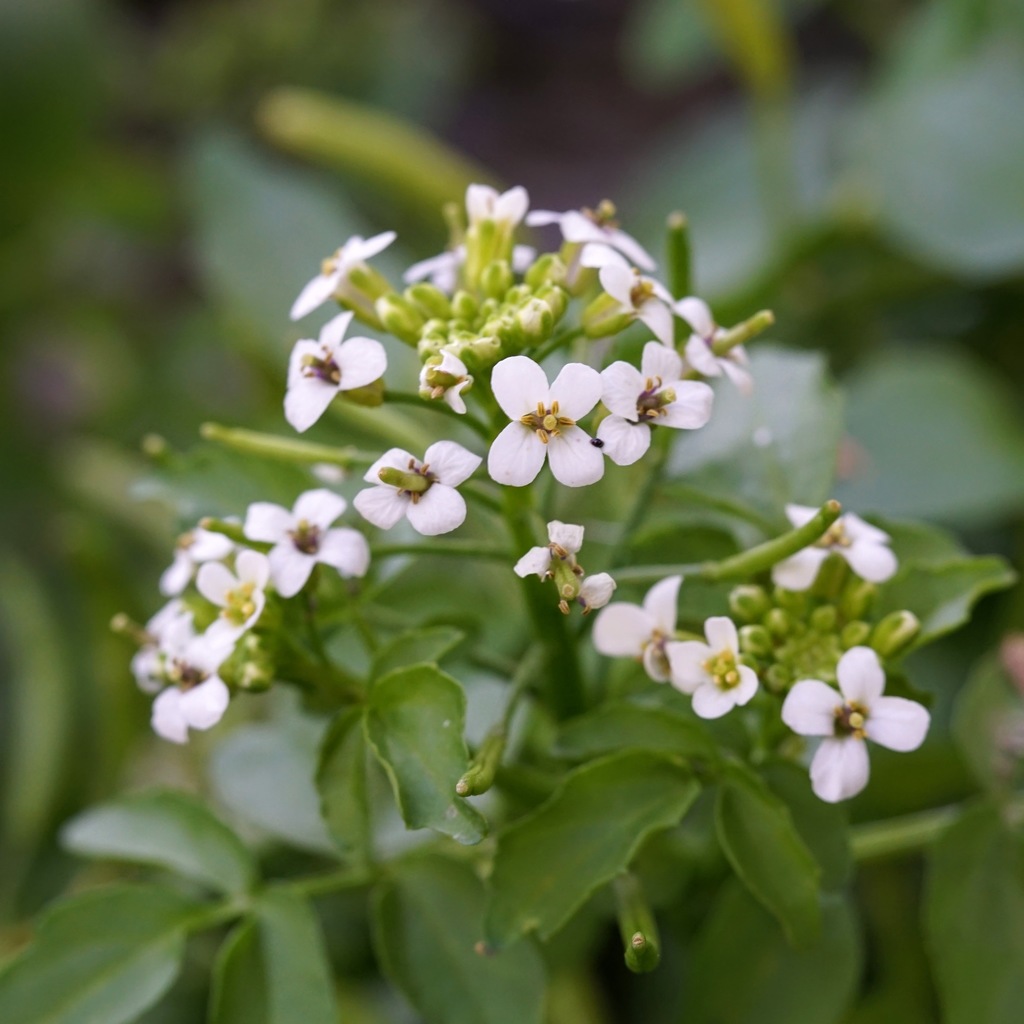
Watercress is a delightful, peppery aquatic plant that loves to grow in cool, running water. It is a fast growing perennial that brings a fresh, spicy kick to salads and sandwiches. You will find it thrives best when its roots are kept consistently wet or even submerged.

De un vistazo
- Nivel de cuidados
- Fácil
- Tipo de planta
- Aquatic perennial
- Luz
- Partial shade to full sun
- Luz en interior
- Luz indirecta brillante
- Riego
- Cada día
- Tamaño adulto
- 1 to 2 feet
- Ritmo de crecimiento
- Rápido
- Rusticidad
- USDA 4 a 9
- Floración
- Late spring to early autumn
Cuidados
Keep the soil or growing medium constantly saturated to mimic its natural stream habitat. Watch for yellowing leaves, which often signal that the water is not fresh enough or the plant is too dry. Ensure the water remains cool and clean to prevent rot.
- Riego
- The roots must remain submerged or in waterlogged soil at all times.
- Abonado
- Use a balanced liquid fertilizer sparingly if the plants appear stunted.
- Poda
- Regularly harvest the stems to encourage bushier growth and prevent flowering.
- Trasplante
- Refresh the growing medium or move to a larger container if the roots become too crowded.
- Suelo
- Aquatic or very moist soil
- pH del suelo
- 6.5 to 7.5
- Temperatura
- 0 a 25°C
- Humedad
- 60 a 90%
- Tolerancia a la sequía
- Baja
- Longevidad
- Perennial, typically 2 to 3 years.
- Resistencia a ciervos y conejos
- Moderada
Señales de que necesita trasplante
- Roots growing out of the bottom of the pot.
- Stunted growth despite adequate water.
- Water in the tray drying out too quickly.
Seguridad
- Personas
- It is generally safe to eat, but excessive consumption may cause stomach irritation.
- Niños
- There are no specific safety concerns for children, though they should be supervised near water sources.
- Alérgenos por contacto
- The sap can occasionally cause mild skin irritation in sensitive individuals.
- Alérgenos en el aire
- Pollen is not typically a significant airborne allergen.
- Comestibilidad
- Watercress must be harvested from clean, flowing water to avoid contamination by liver flukes or harmful bacteria.
Cómo identificarla
- Small, rounded, dark green leaves
- Hollow, succulent, branching stems
- Tiny, four petaled white flowers
- Peppery, mustard like flavor profile
- Altura
- 0,1 a 0,3m
- Anchura
- 0,3 a 1m
- Hojas
- green, semi-evergreen
- Flores
- white, 0,5 a 1cm
- Frutos
- green, Summer to autumn
Problemas frecuentes
- Whitefly — Small white insects that feed on the undersides of leaves.
- Leaf spot — Fungal infection causing dark spots on foliage.
Cómo cultivarla
- Propagación
- seed, cuttings
- Cuándo plantar
- spring, autumn
- Cuidados en invierno
- In cold climates, move containers indoors to a bright, cool spot or ensure the water does not freeze solid.
- En maceta
- It grows well in containers if kept constantly wet in a deep saucer of water.
Stem Cuttings
- 1. Take a 10 cm cutting from a healthy stem.
- 2. Place the cutting in a glass of clean water.
- 3. Wait for roots to appear after a few days.
- 4. Transplant into a wet medium or keep in water.
Group watercress with other moisture loving herbs to simplify your watering routine.
Buenas compañeras
- Menta — Both plants enjoy consistent moisture and similar growing conditions.
Especies parecidas
- Cardamine hirsuta — It shares a similar peppery flavor and appearance but prefers drier soil.
Ciencia
- Familia
- Brassicaceae
- Género
- Nasturtium
- Orden
- Brassicales
- Clase
- Magnoliopsida
- Distribución natural
- Europe and parts of Asia.
- Conservación
- It is a common plant and not of conservation concern.
It grows in shallow, cool, flowing water where it filters nutrients through its roots.
- Valor para la fauna
- larval host plant, nectar source
- Polinizadores
- abejas, mariposas
- Usos
- culinary herb, garnish, salad green
A lo largo del año
Indicadores ecológicos
- Salinidad
- 2/9
- Reacción del suelo
- 7/9
- Luz
- 6/9
- Temperatura
- 4/9
- Humedad
- 9/9
- Nutrientes
- 7/9
Taxonomía cotejada con GBIF.
Lo que más preguntan
- Can I grow it in a pot?
- Yes, keep the pot sitting in a tray of water to mimic its natural habitat.
- How do I harvest it?
- Snip the stems just above the water line, leaving the roots to regrow.
De dónde viene el nombre
The name Nasturtium comes from the Latin nasus tortus, meaning twisted nose, referring to the pungent reaction to its peppery leaves.
Bueno saberlo
- Watercress is a member of the mustard family.
- It was once used as a remedy for scurvy due to high vitamin C content.
- The plant grows best in cold, clear, running water.
¿Tu watercress tiene mal aspecto?
Esta página es una guía general. Pocket Botanist diagnostica problemas a partir de una foto de tu propia planta, calcula el riego según tu luz y tus condiciones, y te avisa cuando toca cuidarla.
Esta guía se ha generado con IA y se ha cotejado con la taxonomía de GBIF. Es información general, no asesoramiento botánico ni veterinario. Descubre cómo elaboramos estas guías.