 Pocket Botanist
Plant guide
Curry leaf tree.
Murraya koenigii
Pronounced muh-RAY-uh koh-NIG-ee-eye
Also known as Curryleaftree, curry-plant



Scan with your phone's camera to get the app
Or go to pocketbotanist.app/get on your phone
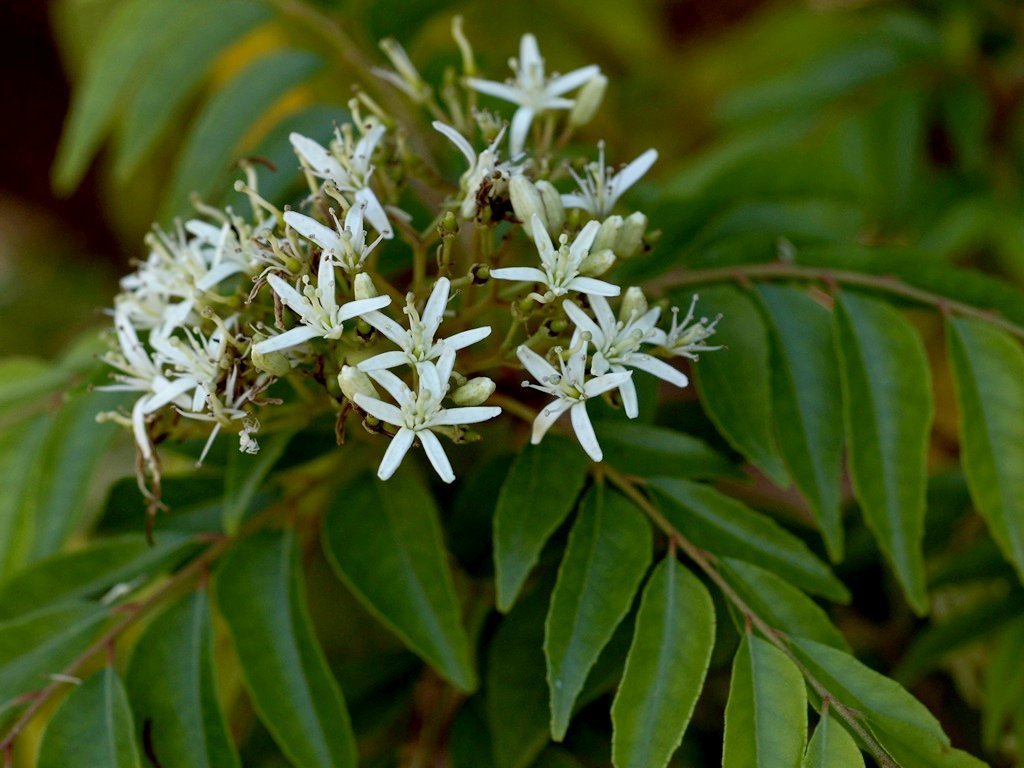
The curry leaf tree is a tropical shrub prized for its highly aromatic, flavorful foliage used in many cuisines. It thrives in warm climates and makes a lovely, fragrant addition to a sunny patio or garden. You will love how quickly it grows when it gets plenty of heat and light.
At a glance
- Care level
- Moderate
- Plant type
- Tropical shrub
- Light
- Full sun to partial shade
- Indoor light
- Bright indirect
- Water
- Every 3 to 7 days
- Mature size
- 20 feet
- Growth rate
- Medium
- Hardiness
- USDA 9 to 12
- Bloom time
- Late spring to early summer
Care
Keep the soil consistently moist but never soggy to prevent root rot. Watch for yellowing leaves which often signal overwatering or a lack of nitrogen. It appreciates high humidity and protection from cold drafts.
- Watering
- Water when the top inch of soil feels dry to the touch.
- Feeding
- Apply a balanced organic fertilizer during the active growing season.
- Pruning
- Trim the tips regularly to encourage a bushier growth habit.
- Repotting
- Move to a slightly larger container once the roots fill the current pot.
- Soil
- Well draining loamy soil
- Soil pH
- 6.0 to 7.0
- Temperature
- 10 to 35°C
- Humidity
- 50 to 70%
- Drought tolerance
- Moderate
- Lifespan
- Perennial, typically 10 to 20 years
- Fragrance
- Strong
- Deer and rabbits
- Moderate
Signs it needs repotting
- Roots growing out of the drainage holes.
- Water sitting on the surface for too long.
- Stunted growth during the active season.
Safety
- People
- The plant is generally safe, but the seeds within the fruit are toxic if consumed.
- Children
- Keep the black berries away from small children as the seeds inside are toxic if swallowed.
- Contact allergens
- Some individuals may experience mild skin irritation from handling the foliage.
- Airborne allergens
- The fragrant flowers can trigger mild respiratory sensitivity in some people.
- Edibility
- The black berries are edible, but their seeds contain toxic compounds and should not be ingested.
How to identify it
- Glossy dark green pinnate leaves
- Small clusters of white fragrant flowers
- Small shiny black edible berries
- Strong spicy curry aroma when crushed
- Height
- 2 to 6m
- Spread
- 1.5 to 4m
- Leaves
- dark green, evergreen
- Flowers
- white, 1 to 2cm
- Fruit
- black, Late summer to autumn
Problems to watch for
- PsyllidsCommon
- Root RotCommon
- ChlorosisUncommon
- Scale InsectsUncommon
- Sooty MoldUncommon
- Spider MitesUncommon
Check your curry leaf tree from a photo
Pocket Botanist looks at a photo of your plant and tells you what's wrong and what to try first.
Scan with your phone's camera to get the app
Or go to pocketbotanist.app/get on your phone
Growing it
- Propagation
- seed, cuttings, root suckers
- When to plant
- spring, early summer
- Overwintering
- Move containers indoors before the first frost. Keep the plant in a bright, warm spot and reduce watering significantly during the cooler months.
- In containers
- It grows beautifully in containers, provided you use a pot at least 30 cm wide with excellent drainage.
Seed
- 1. Harvest fresh, ripe black berries.
- 2. Remove the pulp and clean the seed.
- 3. Sow immediately in moist, well draining soil.
Cuttings
- 1. Take a 15 cm semi hardwood cutting.
- 2. Dip the end in rooting hormone.
- 3. Place in a humid environment until rooted.
Group this plant with other tropical herbs that enjoy consistent warmth and bright light.
Grows well with
- Chili Pepper · They share similar light and moisture requirements in a kitchen garden.
- Turmeric · It thrives in the partial shade cast by the curry leaf plant.
Similar species
- Orange Jasmine · It is a close relative often grown for its highly fragrant flowers.
Science
- Family
- Rutaceae
- Genus
- Murraya
- Order
- Sapindales
- Class
- Magnoliopsida
- Native range
- India and Sri Lanka
- Conservation
- Not currently of conservation concern in its native range.
It grows as an understory tree in tropical forests, often found in disturbed areas.
- Value to wildlife
- nectar source, bird food
- Pollinators
- bees, butterflies
- Uses
- culinary flavoring, ornamental shrub, traditional medicine
Through the year
Ecological indicators
- Salinity
- 2/9
- Soil reaction
- 6/9
- Light
- 7/9
- Temperature
- 8/9
- Moisture
- 5/9
- Nutrients
- 6/9
Taxonomy resolved against GBIF.
Questions people ask
- Can I grow this indoors?
- Yes, it grows well in containers if placed in a very sunny window.
- How often should I harvest leaves?
- You can harvest leaves once the plant is established, but avoid stripping more than a third at once.
Where the name comes from
The specific epithet koenigii honors the German botanist Johann Gerhard König, who studied the plant in India.
Good to know
- The leaves are commonly known as curry leaves.
- It belongs to the same family as citrus trees.
- The plant thrives in warm, tropical climates.
- It is often grown in pots for easy access in the kitchen.
Keep your curry leaf tree growing
This page is a general guide. Save your plant in Pocket Botanist and you get care reminders timed for this plant, plus a care history that shows what worked.
Scan with your phone's camera to get the app
Or go to pocketbotanist.app/get on your phone
This guide was generated with AI on and checked against GBIF taxonomy. It is general information, not horticultural or veterinary advice. Read about how we build these guides.