 Pocket Botanist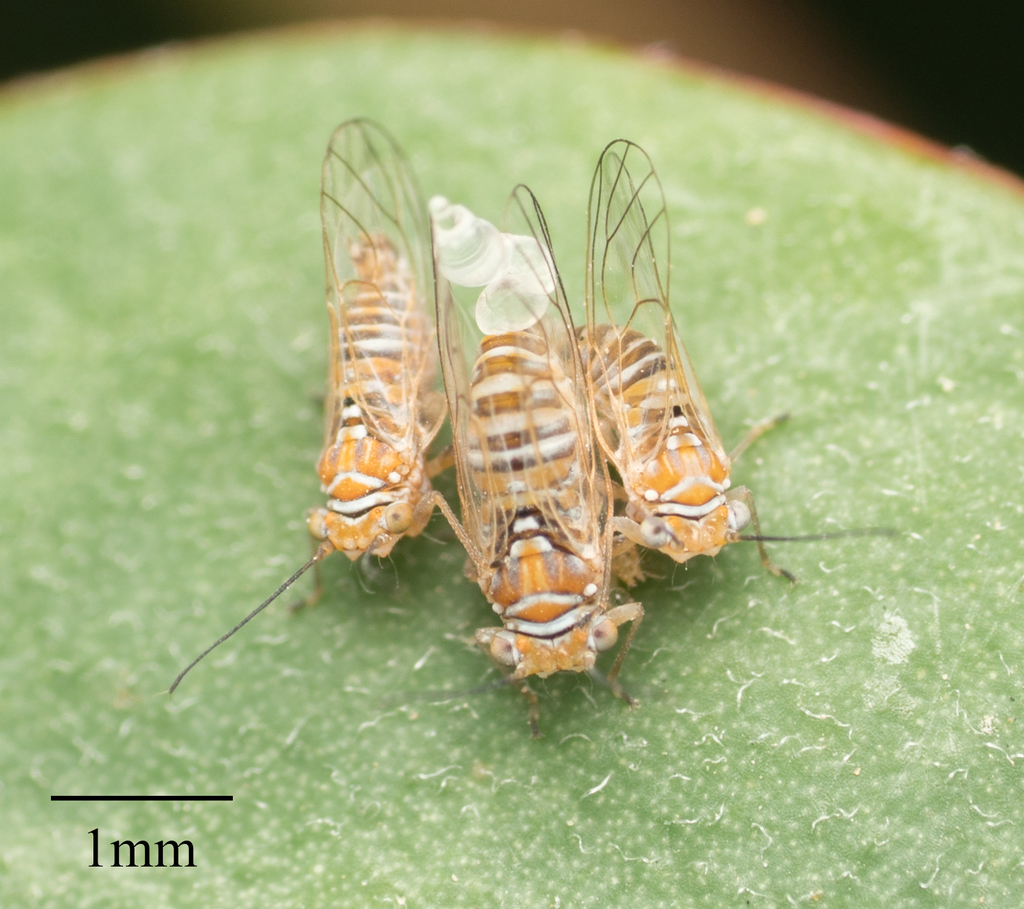
Symptoms by part
Leaves
Leaves often curl, yellow, or develop small pits and galls. You might also see a sticky residue called honeydew or a black, sooty mold growing on the surface.
Stems
Stems may show stunted, twisted growth or abnormal swelling where the insects have fed.
Causes
- Warm, dry weather conditions that favor rapid insect reproduction.
- Introduction of infested plant material into your garden.
- Presence of succulent, new growth which is highly attractive to adult psyllids.
Could be confused with
- Aphids · Aphids are soft bodied and slow moving, whereas psyllids are more active and jump when disturbed.
- Whiteflies · Whiteflies are moth like and fly up in a cloud when disturbed, while psyllids remain more stationary on the plant.
Treatment
- 1. Use a strong stream of water from a garden hose to blast the insects off the leaves and stems early in the day.
- 2. Prune away and dispose of heavily infested or severely distorted branches to reduce the population.
- 3. Apply fatty acids directly to the insects on the undersides of leaves, ensuring full coverage, follow the label.
- 4. Apply spinosad to the affected foliage if the infestation persists, follow the label.
Without chemicals
- Prune out and destroy infested plant parts.
- Encourage natural predators like ladybugs and lacewings in your garden.
- Use fine mesh netting to cover susceptible plants during peak activity periods.
Chemical options
- Fatty acids, spray directly on the insects, follow the label.
- Spinosad, apply to foliage, follow the label.
Preventing it
- Inspect new plants thoroughly for signs of curling or honeydew before bringing them home.
- Avoid over fertilizing with nitrogen, which creates soft growth that attracts psyllids.
- Keep plants well watered to help them withstand feeding pressure.
Season
The warm growing season.
Spread risk
Moderate
Severity
Moderate
When to act
Act as soon as you notice leaf curling or the presence of honeydew. If the plant becomes severely stunted or fails to thrive after treatment, it is best to remove and replace it.
Think it's Psyllids?
This guide covers the general picture. Pocket Botanist looks at your actual plant from a photo and tells you what's really going on, how serious it is, and what to try first. Identification and a health check are free.


Questions people ask
- Do psyllids fly?
- Yes, adult psyllids have wings and are capable of flight, which allows them to move between plants.
- Why is there black stuff on my leaves?
- That is likely sooty mold, a fungus that grows on the sticky honeydew excreted by the psyllids as they feed.
- Can psyllids kill my plant?
- While they rarely kill established plants quickly, a heavy infestation can severely weaken them, making them vulnerable to other stresses.
This guide was generated with AI and is general information, not horticultural advice. Read about how we build these guides.