 Pocket Botanist
Plant guide
Bitter Melon.
Momordica charantia
Pronounced mo-MOR-di-ka cha-RAN-tee-a
Also known as Balsam Pear, Balsam-pear, Balsampear, Bitter Cucumber, Bitter Gourd, Bitter Melon, Bitter gourd, Bitter melon, Bitter balsam apple, Balsam apple, Wild balsam-apple, Bitter apple, Bitter squash, Bitter cucumber, Bitter gourd, Carilla gourd, Carilla bush, Balsam Pear, Jumbee pumpkin, Maiden apple, Bitter squash



Scan with your phone's camera to get the app
Or go to pocketbotanist.app/get on your phone
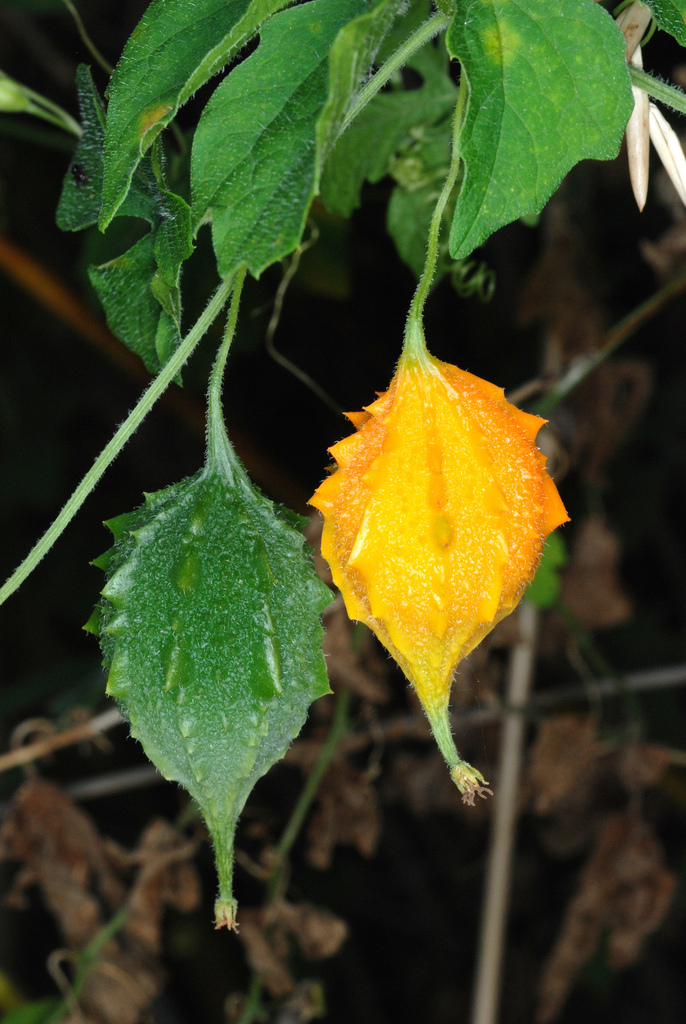
Bitter melon is a fast growing tropical vine known for its unique, bumpy fruit and distinctively bitter flavor. It loves warm weather and thrives when given a sturdy trellis to climb. You will find it is a rewarding plant to grow if you enjoy culinary experimentation.

At a glance
- Care level
- Moderate
- Plant type
- Annual vine
- Light
- Full sun
- Indoor light
- Direct sun
- Water
- Every 2 to 4 days
- Mature size
- 10 to 15 feet
- Growth rate
- Fast
- Hardiness
- USDA 9 to 11
- Bloom time
- Summer to early autumn
Care
Provide a strong support structure for the vines to climb as they grow quickly during the heat of summer. Keep an eye out for pests like aphids or whiteflies that might hide on the undersides of the leaves. Ensure the soil stays consistently moist but not waterlogged to keep the plant productive.
- Watering
- Keep the soil consistently moist throughout the growing season.
- Feeding
- Apply a balanced liquid fertilizer every two weeks to support fruit production.
- Pruning
- Trim back excessive side shoots to encourage better airflow and fruit development.
- Repotting
- This plant is typically grown as an annual and does not require repotting.
- Soil
- Well draining loamy soil
- Soil pH
- 6.0 to 6.8
- Temperature
- 18 to 35°C
- Humidity
- 60 to 90%
- Drought tolerance
- Low
- Lifespan
- Annual, typically 1 growing season.
- Deer and rabbits
- Moderate
Signs it needs repotting
- Roots growing out of the drainage holes
- Water running straight through the soil without soaking in
Safety
- People
- All parts of the plant contain cucurbitacins which can cause stomach upset if ingested in large quantities.
- Pets
- The plant contains compounds that can be harmful to pets if ingested in large quantities.
- Children
- The bright orange fruit and red seeds are attractive to children but pose a risk of ingestion toxicity.
- Contact allergens
- The sap may cause mild skin irritation in sensitive individuals.
- Airborne allergens
- Pollen can trigger mild seasonal allergies in sensitive people.
- Edibility
- The seeds and red pulp surrounding them can be toxic to some individuals, and the fruit must be prepared correctly to reduce bitterness.
How to identify it
- Deeply lobed palmate leaves
- Bright yellow five petaled flowers
- Warty oblong green fruit
- Bright red pulp inside ripe fruit
- Height
- 2 to 5m
- Spread
- 0.6 to 1.2m
- Leaves
- green, deciduous
- Flowers
- yellow, 2 to 4cm
- Fruit
- green, yellow, orange, Late summer to autumn
Problems to watch for
- AphidsCommon
- Cucumber BeetleCommon
- Fruit FlyCommon
- Powdery MildewCommon
- Downy MildewUncommon
- Root RotUncommon
- Spider MitesUncommon
- WhiteflyUncommon
Check your bitter melon from a photo
Pocket Botanist looks at a photo of your plant and tells you what's wrong and what to try first.
Scan with your phone's camera to get the app
Or go to pocketbotanist.app/get on your phone
Growing it
- Propagation
- seed
- When to plant
- Spring
- Overwintering
- This plant is a tender annual and will die with the first frost. Collect seeds from mature fruit to replant next season.
- In containers
- It grows well in large containers of at least 20 liters with a strong trellis provided.
Seed starting
- 1. Soak seeds in water for 24 hours to soften the hard coat.
- 2. Plant seeds 2 centimeters deep in warm, well draining soil.
- 3. Keep the soil consistently moist and warm until germination.
Plant near nitrogen fixing legumes to provide the extra nutrients this heavy feeder needs.
Grows well with
Similar species
- Luffa · Both are tropical vining cucurbits that require similar growing conditions.
Science
- Family
- Cucurbitaceae
- Genus
- Momordica
- Order
- Cucurbitales
- Class
- Magnoliopsida
- Native range
- Tropical regions of Africa and Asia.
- Conservation
- Not of conservation concern as it is widely cultivated and naturalized in tropical regions.
This plant thrives in disturbed tropical soils and climbs over other vegetation to reach sunlight.
- Value to wildlife
- nectar source
- Pollinators
- bees, butterflies
- Uses
- culinary, traditional medicine, ornamental vine
Through the year
Ecological indicators
- Salinity
- 2/9
- Soil reaction
- 6/9
- Light
- 8/9
- Temperature
- 8/9
- Moisture
- 6/9
- Nutrients
- 7/9
Taxonomy resolved against GBIF.
Questions people ask
- How do I reduce the bitterness?
- Soaking sliced fruit in salt water for thirty minutes before cooking helps.
- Does it need a trellis?
- Yes, it is a vigorous climber that requires sturdy support.
Where the name comes from
The genus name Momordica comes from the Latin word for bite, referring to the jagged edges of the seeds, while charantia is a reference to its resemblance to other balsam pears.
Good to know
- Bitter melon is a staple in many Asian and Caribbean cuisines.
- The fruit turns from green to a vibrant orange when fully ripe.
- It is a fast growing vine that loves heat.
- The plant is a member of the cucumber family.
Also in
Keep your bitter melon growing
This page is a general guide. Save your plant in Pocket Botanist and you get care reminders timed for this plant, plus a care history that shows what worked.
Scan with your phone's camera to get the app
Or go to pocketbotanist.app/get on your phone
This guide was generated with AI on and checked against GBIF taxonomy. It is general information, not horticultural or veterinary advice. Read about how we build these guides.