 Pocket Botanist
Pflanzenratgeber
Luffa.
Luffa aegyptiaca
Aussprache LUF-uh ee-jip-tee-AY-kuh
Auch bekannt als Loofah, Plant sponge, Luffa Sponge, Native Towel-gourd, Smooth Luffa, Sponge gourd, Wild Pumpkin, dishcloth gourd, dishrag gourd


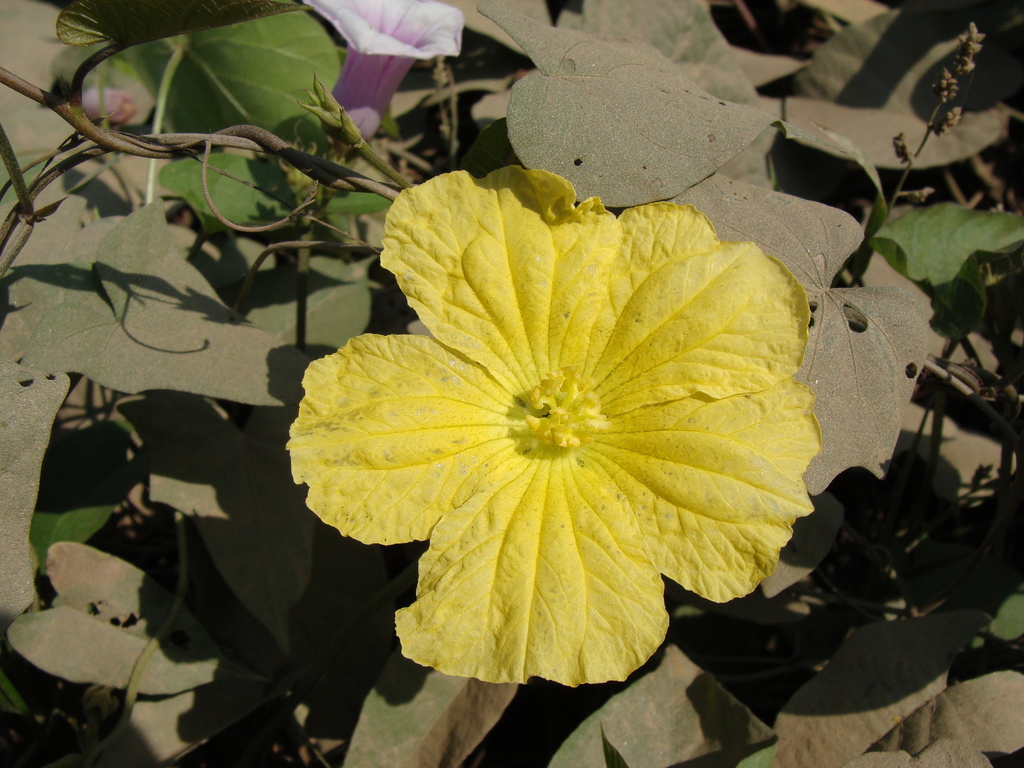
The luffa is a vigorous climbing vine that produces edible fruits when young and fibrous sponges when mature. It loves a long, warm growing season to reach its full potential. You will enjoy watching these unique gourds develop in your garden.

Auf einen Blick
- Pflegestufe
- Mittel
- Pflanzenart
- Annual vine
- Licht
- Full sun
- Licht im Innenraum
- Direkte Sonne
- Gießen
- Alle 1 bis 3 Tage
- Endgröße
- 10 to 20 feet
- Wachstum
- Schnell
- Winterhärte
- USDA 9 bis 11
- Blütezeit
- Mid to late summer
Pflege
Provide a sturdy trellis for the heavy vines to climb. Watch for wilting leaves as a sign of thirst and ensure the soil stays consistently moist. Harvest the fruits early for eating or leave them on the vine until brown for sponges.
- Gießen
- Keep the soil evenly moist but not waterlogged during the peak growing season.
- Düngen
- Feed with a balanced liquid fertilizer every two weeks to support rapid vine growth.
- Schneiden
- Trim back excessive side shoots to encourage the plant to focus energy on fruit production.
- Umtopfen
- This plant is typically grown as an annual directly in the garden soil.
- Boden
- Rich, well draining soil
- Boden-pH
- 6.0 to 6.8
- Temperatur
- 15 bis 35°C
- Luftfeuchtigkeit
- 60 bis 90%
- Trockenheitstoleranz
- Gering
- Lebensdauer
- Annual
- Duft
- Leicht
- Wildverbiss-Resistenz
- Mittel
Anzeichen fürs Umtopfen
- Roots circling the bottom of the pot.
- Stunted growth despite regular feeding.
Sicherheit
- Menschen
- The plant is not considered toxic, but the bitter taste of some varieties can cause digestive upset.
- Kinder
- The large, heavy fruits can be a hazard if they fall on small children, so ensure they are well supported on a trellis.
- Kontaktallergene
- The rough, hairy stems and leaves can cause minor skin irritation in sensitive individuals.
- Allergene in der Luft
- Pollen may trigger mild allergic reactions in sensitive individuals during peak bloom.
- Essbarkeit
- Young fruits are edible like zucchini, but mature fruits used for sponges are fibrous and inedible.
So erkennst du die Pflanze
- Vigorous climbing vine with tendrils
- Large, lobed, bright green leaves
- Showy, five petaled yellow flowers
- Long, cylindrical green fruits
- Fibrous interior develops as fruit matures
- Höhe
- 3 bis 9m
- Breite
- 1 bis 3m
- Blätter
- green, deciduous
- Blüten
- yellow, 5 bis 10cm
- Früchte
- green, brown, Autumn
Häufige Probleme
- Powdery mildew — A white fungal growth on leaves caused by high humidity and poor air circulation.
- Aphids — Small sap sucking insects that cluster on new growth and flower buds.
Standort und Pflege
- Vermehrung
- seed
- Pflanzzeit
- Spring
- Überwinterung
- This plant is an annual and will die with the first frost.
- Im Kübel
- Requires a minimum 20 liter pot with a very strong trellis system.
Seed starting
- Soak seeds in warm water for 24 hours.
- Plant in pots 4 weeks before the last frost.
- Keep soil warm at 25 Celsius until germination.
Plant near a strong trellis to keep fruits off the ground and prevent rot.
Gute Pflanzpartner
- Kapuzinerkresse — They act as a trap crop for aphids.
- Tagetes — They help deter soil pests.
Ähnliche Arten
- Luffa acutangula — It has ridged fruit and is primarily grown for culinary use.
Botanisches
- Familie
- Cucurbitaceae
- Gattung
- Luffa
- Ordnung
- Cucurbitales
- Klasse
- Magnoliopsida
- Ursprüngliche Heimat
- Tropical Asia
- Artenschutz
- Not of conservation concern.
This vigorous climber uses tendrils to scale trees and structures in its native tropical habitat to reach sunlight.
- Nutzen für Wildtiere
- nectar source
- Bestäuber
- Bienen, Schmetterlinge
- Verwendung
- culinary, bath sponge, ornamental vine
Im Jahresverlauf
Ökologische Zeigerwerte
- Salzgehalt
- 2/9
- Bodenreaktion
- 6/9
- Licht
- 8/9
- Temperatur
- 8/9
- Feuchtigkeit
- 7/9
- Nährstoffe
- 7/9
Taxonomie abgeglichen mit GBIF.
Häufige Fragen
- When should I harvest for sponges?
- Wait until the fruit turns brown, feels light, and the skin becomes brittle.
- Can I grow this in a pot?
- Yes, but you need a very large container and a sturdy trellis.
Woher der Name kommt
The genus name Luffa comes from the Arabic name for the plant, while the specific epithet aegyptiaca refers to its historical cultivation in Egypt.
Gut zu wissen
- Luffa is a member of the cucumber family.
- The name is derived from the Arabic word lūf.
- It needs a long, hot growing season to produce mature sponges.
- The flowers open in the morning and attract many pollinators.
Probleme mit Luffa?
Diese Seite bietet allgemeine Infos. Pocket Botanist erkennt Probleme anhand eines Fotos deiner echten Pflanze, passt das Gießen an dein Licht und deinen Standort an und erinnert dich an die Pflege.
Dieser Ratgeber wurde mit KI erstellt und mit der GBIF-Taxonomie abgeglichen. Er dient zur allgemeinen Information und ersetzt keine gärtnerische oder tierärztliche Beratung. Hier erfährst du, wie wir diese Ratgeber erstellen.