 Pocket Botanist
Plant guide
Cassava.
Manihot esculenta
Pronounced MAN-ih-hot es-kyoo-LEN-tuh



Scan with your phone's camera to get the app
Or go to pocketbotanist.app/get on your phone
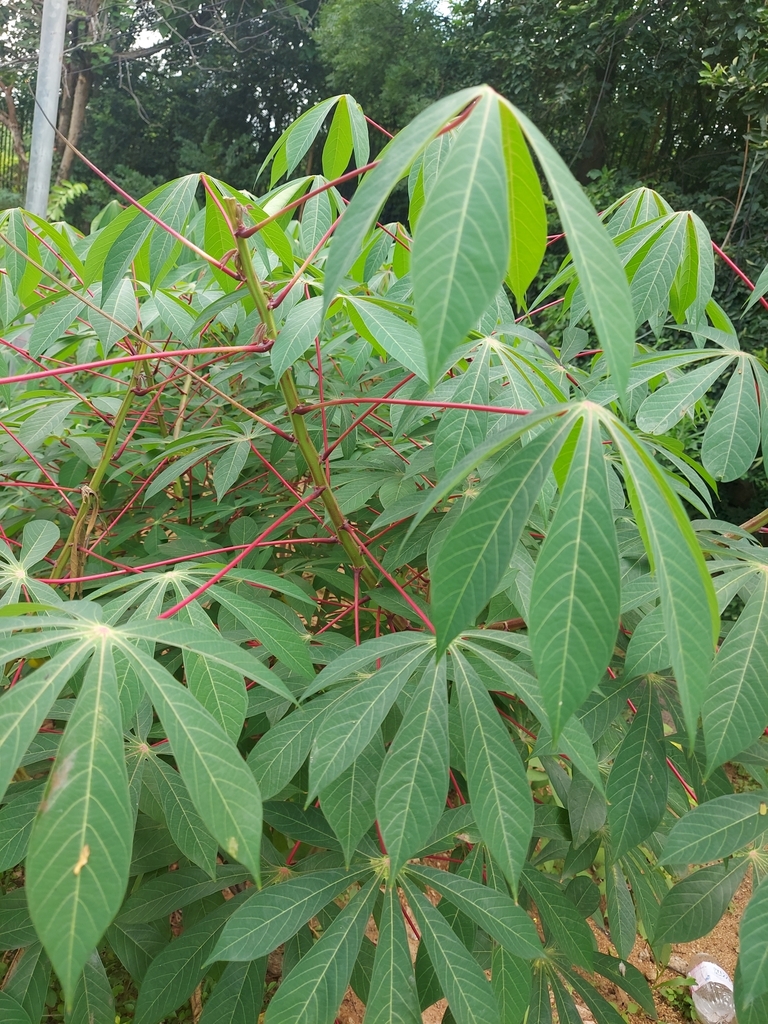
Cassava is a woody shrub grown primarily for its edible, starchy tuberous roots. It is a staple food source in many tropical regions around the world. You will find it thrives best in warm climates with plenty of sun.

At a glance
- Care level
- Moderate
- Plant type
- Perennial shrub
- Light
- Full sun
- Indoor light
- Direct sun
- Water
- Every 3 to 7 days
- Mature size
- 6 to 10 feet
- Growth rate
- Fast
- Hardiness
- USDA 10 to 12
- Bloom time
- Late summer to autumn
Care
Keep the soil consistently moist but never waterlogged to encourage healthy root development. Watch for yellowing leaves which often signal poor drainage or nutrient deficiency. Provide as much warmth and sunlight as you possibly can.
- Watering
- Water deeply whenever the top inch of soil feels dry to the touch.
- Feeding
- Apply a balanced fertilizer during the active growing season to support root growth.
- Pruning
- Trim back dead or damaged branches to keep the shrub tidy and encourage vigor.
- Repotting
- Move to a larger container once the roots begin to crowd the current pot.
- Soil
- Well draining sandy loam
- Soil pH
- 5.5 to 6.5
- Temperature
- 15 to 35°C
- Humidity
- 50 to 80%
- Drought tolerance
- High
- Lifespan
- Perennial, typically grown as an annual crop
- Deer and rabbits
- Moderate
Signs it needs repotting
- Roots growing out of drainage holes
- Stunted growth despite regular feeding
Safety
- People
- All parts of the plant contain compounds that release cyanide if ingested raw.
- Pets
- This plant contains cyanogenic glycosides and is toxic to cats and dogs if ingested.
- Children
- Keep children away from the raw roots and leaves as ingestion poses a serious poisoning risk.
- Contact allergens
- Handling the raw plant may cause skin irritation in sensitive individuals.
- Airborne allergens
- Pollen may trigger mild allergic reactions in sensitive individuals.
- Edibility
- Raw cassava contains cyanogenic glycosides and must be processed correctly to remove toxins before consumption.
How to identify it
- Palmately lobed green leaves
- Sturdy woody stems
- Large edible tuberous roots
- Small inconspicuous flowers
- Height
- 1.5 to 3m
- Spread
- 0.6 to 1.2m
- Leaves
- green, deciduous
- Flowers
- white, yellow, 1 to 2cm
- Fruit
- brown, Autumn to winter
Problems to watch for
- Cassava Mosaic DiseaseCommon
- Spider MitesCommon
- WhiteflyCommon
- Cercospora Leaf SpotUncommon
- Root RotUncommon
- Stem BorersUncommon
- Tuber RotUncommon
- AnthracnoseRare
Check your cassava from a photo
Pocket Botanist looks at a photo of your plant and tells you what's wrong and what to try first.
Scan with your phone's camera to get the app
Or go to pocketbotanist.app/get on your phone
Growing it
- Propagation
- cuttings
- When to plant
- Spring
- Overwintering
- In frost prone areas, harvest the roots before the first frost and use them promptly, and save mature stem cuttings in a cool, dry, frost free place for replanting in spring. If kept in a pot, bring it indoors to a bright, warm location.
- In containers
- It can be grown in large containers of at least 20 liters, though yields will be lower than in the ground.
Stem cuttings
- 1. Select a healthy, mature stem from a plant at least 8 months old.
- 2. Cut the stem into 20 cm segments with at least 5 nodes.
- 3. Plant the cuttings horizontally or vertically in moist, well drained soil.
Intercropping with legumes can help maintain soil fertility over multiple growing seasons.
Grows well with
Similar species
- Sweet Potato · Both are important tropical root crops grown for their starchy tubers.
Science
- Family
- Euphorbiaceae
- Genus
- Manihot
- Order
- Malpighiales
- Class
- Magnoliopsida
- Native range
- Tropical South America
- Conservation
- Not of conservation concern as it is widely cultivated globally.
It thrives in full sun and well drained soils, often colonizing disturbed areas in tropical climates.
- Value to wildlife
- nectar source
- Pollinators
- bees, butterflies
- Uses
- food crop, starch production, ornamental foliage
Through the year
Ecological indicators
- Salinity
- 2/9
- Soil reaction
- 6/9
- Light
- 8/9
- Temperature
- 9/9
- Moisture
- 5/9
- Nutrients
- 4/9
Taxonomy resolved against GBIF.
Questions people ask
- Can I grow cassava in a pot?
- Yes, but you need a very large container to accommodate the tuberous roots.
- How do I know when to harvest?
- Harvest when the leaves begin to yellow and drop, usually 8 to 12 months after planting.
Where the name comes from
The name Manihot comes from the Tupi word for the plant, while esculenta refers to its edible nature.
Good to know
- Cassava is the third largest source of food carbohydrates in the tropics.
- The roots can be stored in the ground for several months after maturity.
- It is highly tolerant of poor soils and drought conditions.
Also in
Keep your cassava growing
This page is a general guide. Save your plant in Pocket Botanist and you get care reminders timed for this plant, plus a care history that shows what worked.
Scan with your phone's camera to get the app
Or go to pocketbotanist.app/get on your phone
This guide was generated with AI on and checked against GBIF taxonomy. It is general information, not horticultural or veterinary advice. Read about how we build these guides.