 Pocket Botanist
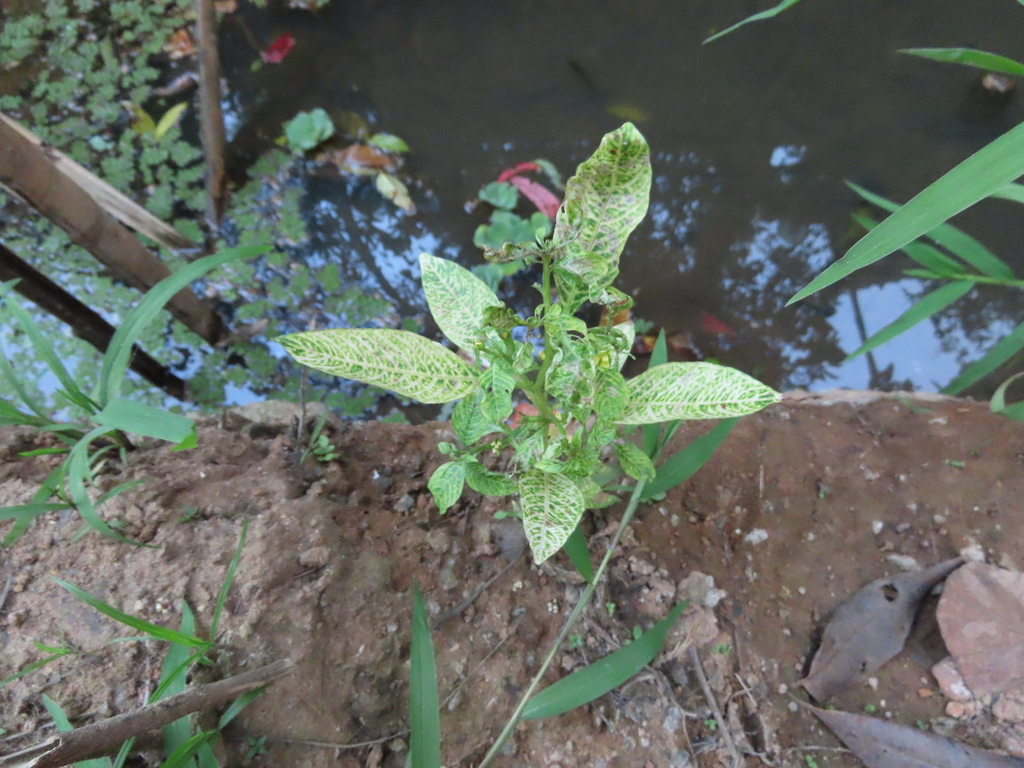
Symptoms by part
Leaves
Look for a mottled appearance with patches of yellow or pale green tissue against the normal dark green leaf color. You may also notice the leaves becoming distorted, twisted, or smaller than usual.
Causes
- The primary cause is the transmission of the virus by whiteflies that feed on infected plant sap.
- Using infected stem cuttings for propagation introduces the virus into new plantings.
- The movement of infested plant material between growing areas allows the virus to spread.
Could be confused with
- Nutrient deficiency · Nutrient deficiencies usually show uniform yellowing across the entire leaf or between veins, whereas mosaic disease creates irregular, patchy patterns.
- Spider mite damage · Spider mites cause fine stippling or webbing on the undersides of leaves, while mosaic disease causes larger, blotchy color changes without webbing.
Find out what's really wrong with your plant
Problems that look alike are easy to mix up. Pocket Botanist looks at a photo of your actual plant and tells you what's going on, how serious it is, and what to try first. Identification and a health check are free.



Scan with your phone's camera to get the app
Or go to pocketbotanist.app/get on your phone
Treatment
- Immediately remove and destroy any plants showing clear symptoms to stop the virus from spreading to healthy neighbors.
- Dispose of all infected plant material by burning or burying it deep away from the growing site, never compost it.
- Select only healthy, symptom free stem cuttings from reliable sources if you plan to propagate new plants.
Without chemicals
- Use physical barriers like fine mesh netting to exclude whiteflies from your plants.
- Practice strict sanitation by cleaning all pruning tools with a disinfectant solution after working on any plant.
- Remove weeds around the growing area that might serve as alternative hosts for whiteflies.
Chemical options
- Fatty acids, apply as a spray to target whiteflies on the undersides of leaves, follow the label.
- Pyrethrins, use as a contact spray to manage whitefly populations, follow the label.
Preventing it
- Always start with certified disease free planting material.
- Space plants properly to improve airflow and reduce the attractiveness of the area to whiteflies.
- Inspect new plants thoroughly before introducing them to your garden or field.
Season
The warm growing season, when whitefly populations are most active and feeding on new growth.
Spread risk
High
Severity
High
When to act
Act as soon as you spot the first signs of mottling or distortion on the leaves. If a plant shows significant symptoms, remove and destroy it immediately to protect the rest of your collection.
Keep your plants healthy from here
Save your plants in Pocket Botanist and you get care reminders timed for each one, plus a care history that shows what worked. Identification and a health check are free.
Questions people ask
- Can I save a plant that has Cassava Mosaic Disease?
- Unfortunately, there is no cure for this viral disease once a plant is infected. Removal is the only way to protect nearby healthy plants.
- Does the disease stay in the soil?
- No, the virus does not persist in the soil. It is spread through infected plant material and whiteflies.
- Will the fruit or roots be safe to eat if the leaves look sick?
- While the virus itself does not harm humans, the plant will likely produce very little food, and the quality will be poor due to the lack of energy from the damaged leaves.
Plants it affects
Answers plant by plant
This guide was generated with AI on and is general information, not horticultural advice. Read about how we build these guides.