 Pocket Botanist
Plant guide
Panicle Hydrangea.
Hydrangea paniculata
Pronounced hy-DRAN-jee-uh pan-ik-yoo-LAY-tuh
Also known as Panicle Hydrangea, Panicled Hydrangea, Peegee Hydrangea, paniculate hydrangea


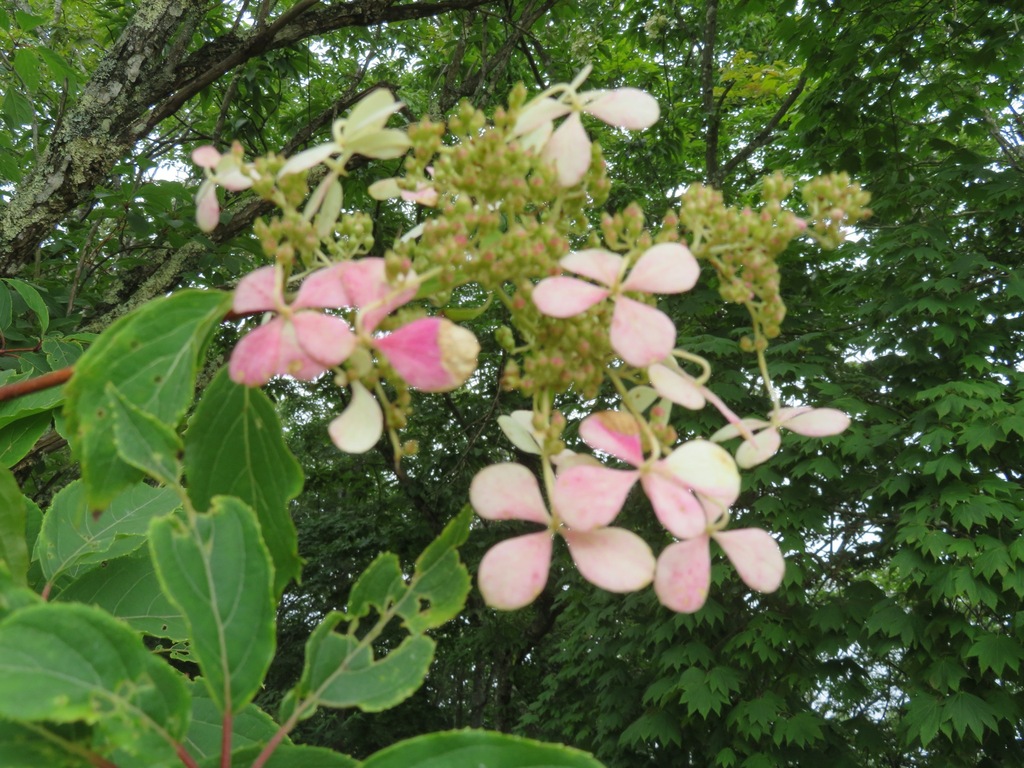
The panicle hydrangea is a sturdy, reliable shrub known for its large, cone shaped flower clusters. It is a fantastic choice for adding height and long lasting blooms to your garden. These plants are quite adaptable and handle colder climates better than many other hydrangea varieties.

At a glance
- Care level
- Easy
- Plant type
- Deciduous shrub
- Light
- Full sun to partial shade
- Indoor light
- Bright indirect
- Water
- Every 3 to 7 days
- Mature size
- 3 to 5 meters
- Growth rate
- Fast
- Hardiness
- USDA 3 to 8
- Bloom time
- Mid summer to late autumn
Care
Keep the soil consistently moist but not waterlogged, especially during dry spells. Prune in late winter or early spring before new growth begins to encourage larger blooms. Watch for wilting leaves as a sign that the plant needs more water.
- Watering
- Water deeply once or twice a week to keep the root ball moist.
- Feeding
- Apply a balanced, slow release fertilizer in early spring.
- Pruning
- Prune back by one third in late winter to maintain shape and promote flowering.
- Repotting
- Repot only if the plant becomes root bound in a container.
- Soil
- Well draining, rich, loamy soil
- Soil pH
- Slightly acidic to neutral
- Temperature
- -34 to 35°C
- Humidity
- 40 to 70%
- Drought tolerance
- Moderate
- Lifespan
- Perennial, typically 20 to 30 years
- Fragrance
- Light
- Deer and rabbits
- Moderate
Signs it needs repotting
- Roots growing out of the drainage holes.
- Water running straight through the pot without soaking in.
- Stunted growth during the active season.
Safety
- People
- All parts of the plant contain cyanogenic glycosides which can be harmful if eaten in large quantities.
- Pets
- This plant is considered mildly toxic to cats and dogs if ingested.
- Children
- Keep children away from the plant as ingestion of leaves or flowers can lead to stomach upset.
- Contact allergens
- Handling the foliage may cause mild skin irritation in sensitive individuals.
- Airborne allergens
- The pollen is generally not considered a significant allergen.
- Edibility
- This plant is not intended for consumption and can cause gastrointestinal distress if ingested.
How to identify it
- Cone shaped flower panicles
- Opposite or whorled leaf arrangement
- Serrated, ovate green leaves
- Sturdy, woody stems
- Height
- 1.5 to 4.5m
- Spread
- 1.5 to 3.5m
- Leaves
- green, deciduous
- Flowers
- white, cream, pink, lime, 15 to 40cm
- Fruit
- brown, winter
Problems to watch for
- AphidsCommon
- Powdery MildewCommon
- Botrytis BlightUncommon
- ChlorosisUncommon
- Japanese BeetlesUncommon
- Leaf ScorchUncommon
- Leaf SpotUncommon
- Root RotUncommon
Check your panicle hydrangea from a photo
Pocket Botanist looks at a photo of your plant and tells you what's wrong and what to try first.
Growing it
- Propagation
- cuttings, layering
- When to plant
- spring, autumn
- Overwintering
- Apply a layer of mulch around the base to protect roots from extreme temperature fluctuations. No special covering is required for the branches as they are very hardy.
- In containers
- They grow well in large containers, provided the pot is at least 50 centimeters wide and has excellent drainage.
Softwood Cuttings
- Take a 15 centimeter cutting from a non flowering stem in early summer.
- Remove the lower leaves and dip the cut end in rooting hormone.
- Place the cutting in a moist, well draining potting mix.
- Cover with a plastic bag to maintain humidity until roots develop.
Plant them with shade tolerant perennials that appreciate the same consistent soil moisture.
Grows well with
- Hosta — They share similar moisture requirements and provide a nice foliage contrast.
- Coral Bells — These low growing perennials fill the space beneath the shrub perfectly.
- Daylily — They offer a different bloom texture that complements the large hydrangea panicles.
Similar species
- Smooth Hydrangea — It has a similar growth habit but features rounded flower heads instead of panicles.
- Oakleaf Hydrangea — It also produces panicle blooms but has distinct oak shaped leaves.
Science
- Family
- Hydrangeaceae
- Genus
- Hydrangea
- Order
- Cornales
- Class
- Magnoliopsida
- Native range
- Eastern Asia, including China and Japan.
- Conservation
- This species is common and not of conservation concern.
It thrives in forest edges and thickets where it receives dappled light and consistent moisture.
- Value to wildlife
- nectar source
- Pollinators
- bees, butterflies
- Uses
- ornamental shrub, dried flower arrangements, hedging, specimen plant
Through the year
Ecological indicators
- Salinity
- 2/9
- Soil reaction
- 5/9
- Light
- 6/9
- Moisture
- 6/9
- Temperature
- 5/9
- Nutrients
- 6/9
Taxonomy resolved against GBIF.
Questions people ask
- When should I prune my panicle hydrangea?
- Prune in late winter or very early spring before new growth begins.
- Do I need to change the soil pH to change the flower color?
- No, unlike bigleaf hydrangeas, the color of panicle hydrangeas is not affected by soil pH.
Where the name comes from
The name Hydrangea comes from Greek words meaning water vessel, referring to the seed capsules. Paniculata refers to the panicle shaped flower clusters.
Good to know
- Panicle hydrangeas are much more cold hardy than the popular bigleaf varieties.
- You can prune these in late winter because they bloom on new wood.
- The dried flower heads provide winter interest in the garden.
- These shrubs tolerate full sun better than most other hydrangea species.
Also in
Keep your panicle hydrangea growing
This page is a general guide. Save your plant in Pocket Botanist and you get care reminders timed for this plant, plus a care history that shows what worked.
This guide was generated with AI and checked against GBIF taxonomy. It is general information, not horticultural or veterinary advice. Read about how we build these guides.