 Pocket Botanist
Plant guide
Coral Bells.
Heuchera
Pronounced HEW-ker-uh
Also known as Alumroot, alum roots



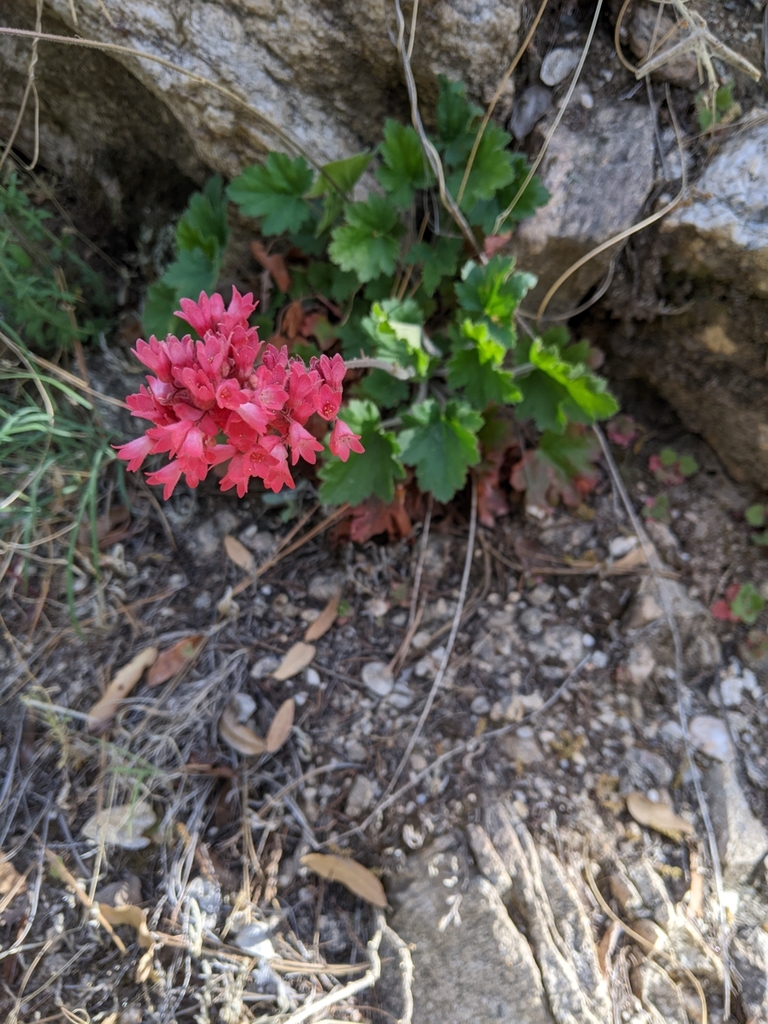
Coral bells are lovely perennials known for their stunning, colorful foliage that stays vibrant throughout the season. They produce delicate, bell shaped flowers on tall spikes that attract hummingbirds to your garden. These plants are perfect for adding texture and contrast to shady borders or containers.
At a glance
- Care level
- Easy
- Plant type
- Perennial
- Light
- Partial shade to full sun
- Indoor light
- Bright indirect
- Water
- Every 3 to 7 days
- Mature size
- 1 to 2 feet
- Growth rate
- Medium
- Hardiness
- USDA 4 to 9
- Bloom time
- Late spring to mid summer
Care
Plant these in well draining soil and keep them consistently moist but not soggy. Watch for wilting leaves which often signal that the plant needs a drink. If you notice the crown rising above the soil, simply mound a little extra dirt around it to keep the roots protected.
- Watering
- Water when the top inch of soil feels dry to the touch.
- Feeding
- Apply a balanced liquid fertilizer once a month during the active growing season.
- Pruning
- Trim back dead or tattered leaves in early spring to encourage fresh growth.
- Repotting
- Repot every few years if the plant becomes crowded or the soil loses its structure.
- Soil
- Rich, well draining, organic soil
- Soil pH
- 6.0 to 7.0
- Temperature
- -30 to 35°C
- Humidity
- 40 to 70%
- Drought tolerance
- Moderate
- Lifespan
- Perennial, typically 5 to 10 years
- Deer and rabbits
- Moderate
Signs it needs repotting
- Roots growing out of the drainage holes.
- The plant has become woody and sparse in the center.
- Water runs through the pot too quickly without soaking in.
Safety
- People
- The plant is generally considered non-toxic to humans.
- Pets
- Heuchera is generally considered non toxic to cats and dogs.
- Children
- The plant is safe for children, though the small flowers could pose a minor choking hazard if ingested.
- Contact allergens
- Some people may experience mild skin irritation from the fine hairs on the leaves.
- Airborne allergens
- The pollen is not considered a significant airborne allergen.
- Edibility
- While not typically toxic, these plants are not considered edible and should be avoided for consumption.
How to identify it
- Mounded habit of basal leaves
- Heart shaped or lobed foliage
- Varied leaf colors like purple or bronze
- Tall spikes of tiny bell flowers
- Height
- 0.2 to 0.6m
- Spread
- 0.3 to 0.5m
- Leaves
- green, purple, silver, bronze, red, semi-evergreen
- Flowers
- white, pink, red, 0.5 to 1cm
Problems to watch for
- Heuchera RustCommon
- Root RotCommon
- Slugs and SnailsCommon
- Leaf ScorchUncommon
- Vine WeevilUncommon
- Foliar NematodesRare
Check your coral bells from a photo
Pocket Botanist looks at a photo of your plant and tells you what's wrong and what to try first.
Growing it
- Propagation
- division, seed
- When to plant
- spring, early autumn
- Overwintering
- In cold climates, apply a layer of mulch around the base to prevent frost heaving. Ensure the crown remains slightly above the soil line to avoid rot.
- In containers
- They grow very well in containers, provided the pot has excellent drainage and is at least 25 centimeters wide.
Division
- Dig up the entire plant in early spring.
- Gently pull or cut the woody crown into smaller sections.
- Ensure each section has a healthy root system and some foliage.
- Replant the divisions at the same depth they were previously growing.
Pair them with other shade loving perennials to create a lush, layered look that hides the base of taller plants.
Grows well with
Similar species
- Tiarella — They are closely related and share similar growing habits.
- Heucherella — This is a hybrid between Heuchera and Tiarella.
Science
- Family
- Saxifragaceae
- Genus
- Heuchera
- Order
- Saxifragales
- Class
- Magnoliopsida
- Native range
- North America
- Conservation
- None of the common species are currently of conservation concern.
They naturally grow in rocky crevices and woodland areas where they benefit from cool, well drained soil.
- Value to wildlife
- nectar source
- Pollinators
- bees, butterflies, hummingbirds
- Uses
- groundcover, container gardening, border filler, rock gardens
Through the year
Ecological indicators
- Soil reaction
- 6/9
- Light
- 4/9
- Moisture
- 5/9
- Nutrients
- 5/9
- Salinity
- 2/9
- Temperature
- 5/9
Taxonomy resolved against GBIF.
Questions people ask
- Do they need full sun?
- Most varieties prefer partial shade, especially in hotter climates.
- How often should I divide them?
- It is best to divide them every 3 to 4 years to keep the plants vigorous.
Where the name comes from
The genus is named after Johann Heinrich von Heucher, an 18th century German physician and botanist.
Good to know
- They are native to North America.
- The foliage provides color in the garden long after the flowers fade.
- They are excellent for adding texture to shade gardens.
- Modern breeding has produced leaves in almost every color of the rainbow.
Keep your coral bells growing
This page is a general guide. Save your plant in Pocket Botanist and you get care reminders timed for this plant, plus a care history that shows what worked.
This guide was generated with AI and checked against GBIF taxonomy. It is general information, not horticultural or veterinary advice. Read about how we build these guides.