 Pocket Botanist
Guide botanique
Hortensia paniculée.
Hydrangea paniculata
Prononciation hy-DRAN-jee-uh pan-ik-yoo-LAY-tuh
Aussi appelée Hortensia paniculée, Hortensia paniculée, Hortensia paniculée, hortensia paniculée


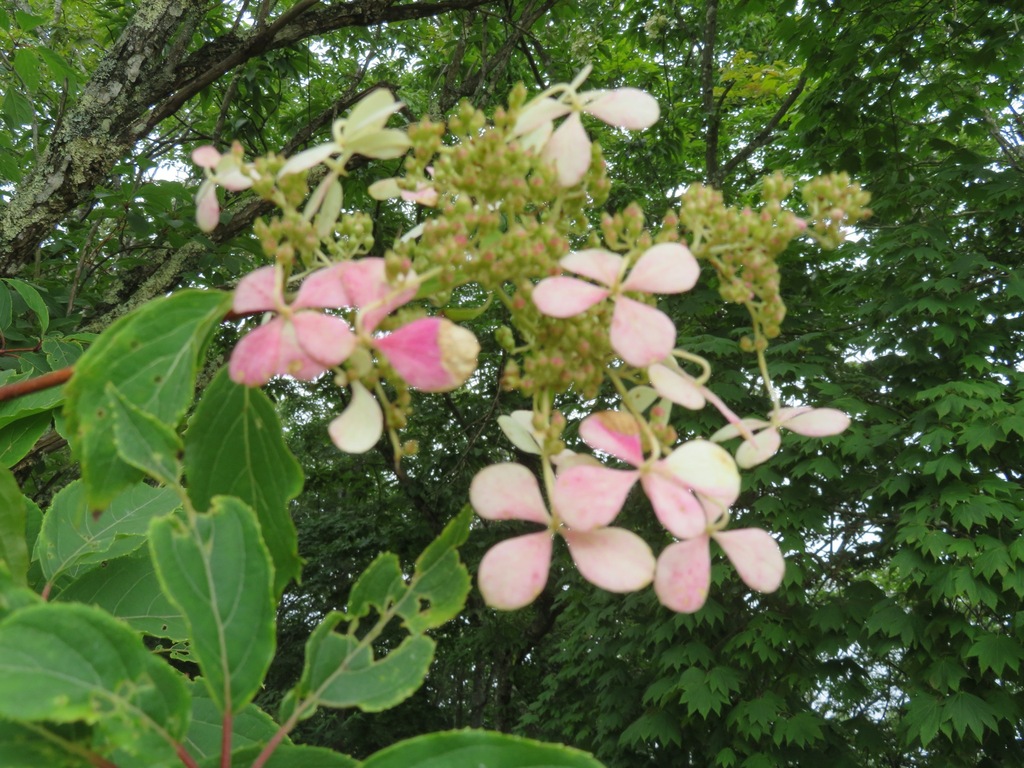
La grande hortensia paniculée est un arbuste robuste et fiable, connu pour ses grandes grappes de fleurs en forme de cône. C'est un choix fantastique pour ajouter de la hauteur et des floraisons durables à votre jardin. Ces plantes sont assez adaptables et supportent mieux les climats froids que de nombreuses autres variétés d'hortensias.

En un coup d'œil
- Niveau d'entretien
- Facile
- Type de plante
- Arbuste à feuilles caduques
- Lumière
- Plein soleil à mi-ombre
- Lumière en intérieur
- Lumière vive indirecte
- Arrosage
- Tous les 3 à 7 jours
- Taille adulte
- 3 à 5 mètres
- Croissance
- Rapide
- Rusticité
- USDA 3 à 8
- Floraison
- Milieu de l'été à la fin de l'automne
Entretien
Gardez le sol constamment humide mais pas détrempé, surtout pendant les périodes sèches. Taillez à la fin de l'hiver ou au début du printemps avant que la nouvelle croissance ne commence pour encourager des fleurs plus grosses. Surveillez le flétrissement des feuilles comme signe que la plante a besoin de plus d'eau.
- Arrosage
- Arrosez profondément une ou deux fois par semaine pour garder la motte humide.
- Engrais
- Appliquez un engrais équilibré à libération lente au début du printemps.
- Taille
- Taillez d'un tiers à la fin de l'hiver pour maintenir la forme et favoriser la floraison.
- Rempotage
- Rempotez uniquement si la plante est à l'étroit dans son contenant.
- Sol
- Sol riche, limoneux et bien drainé
- pH du sol
- Légèrement acide à neutre
- Température
- -34 à 35°C
- Humidité
- 40 à 70%
- Résistance à la sécheresse
- Moyenne
- Durée de vie
- Vivace, généralement 20 à 30 ans
- Parfum
- Léger
- Résistance aux chevreuils et lapins
- Moyenne
Signes qu'il faut rempoter
- Les racines sortent des trous de drainage.
- L'eau traverse directement le pot sans s'imbiber.
- Croissance ralentie pendant la saison active.
Sécurité
- Humains
- Toutes les parties de la plante contiennent des glycosides cyanogènes qui peuvent être nocifs s'ils sont consommés en grandes quantités.
- Animaux
- Cette plante est considérée comme légèrement toxique pour les chats et les chiens en cas d'ingestion.
- Enfants
- Éloignez les enfants de la plante car l'ingestion de feuilles ou de fleurs peut entraîner des maux d'estomac.
- Allergènes de contact
- La manipulation du feuillage peut provoquer une légère irritation cutanée chez les personnes sensibles.
- Allergènes aéroportés
- Le pollen n'est généralement pas considéré comme un allergène important.
- Comestibilité
- Cette plante n'est pas destinée à la consommation et peut provoquer des troubles gastro-intestinaux si elle est ingérée.
Comment l'identifier
- Panicules de fleurs en forme de cône
- Disposition des feuilles opposées ou verticillées
- Feuilles vertes dentées et ovales
- Tiges robustes et ligneuses
- Hauteur
- 1,5 à 4,5m
- Envergure
- 1,5 à 3,5m
- Feuilles
- vert, caduc
- Fleurs
- blanc, crème, rose, lime, 15 à 40cm
- Fruits
- brun, hiver
Problèmes à surveiller
- OïdiumCourant
- PuceronsCourant
- BotrytisPeu courant
- Brûlures du feuillagePeu courant
- ChlorosePeu courant
- Pourriture des racinesPeu courant
- Scarabée japonaisPeu courant
- Taches foliairesPeu courant
- Mildiou poudreux — Une infection fongique qui crée un revêtement blanc poudreux sur les feuilles.
Par symptôme
Vérifie la santé de ta plante en photo
Pocket Botanist analyse une photo de ta plante et te dit ce qui ne va pas et quoi essayer en premier.
La cultiver
- Multiplication
- bouturage, marcottage
- Quand planter
- printemps, automne
- Hivernage
- Appliquez une couche de paillis autour de la base pour protéger les racines des fluctuations extrêmes de température. Aucun couvrement spécial n'est requis pour les branches car elles sont très rustiques.
- En pot
- Ils poussent bien dans de grands contenants, à condition que le pot mesure au moins 50 centimètres de large et ait un excellent drainage.
Boutures herbacées
- Prenez une bouture de 15 centimètres d'une tige non florale au début de l'été.
- Retirez les feuilles inférieures et trempez l'extrémité coupée dans de l'hormone d'enracinement.
- Placez la bouture dans un terreau humide et bien drainant.
- Couvrez avec un sac en plastique pour maintenir l'humidité jusqu'à ce que les racines se développent.
Plantez-les avec des vivaces tolérantes à l'ombre qui apprécient la même humidité constante du sol.
Bonnes associations
- Hosta — Ils partagent des besoins en humidité similaires et offrent un beau contraste de feuillage.
- Heuchère — Ces vivaces à croissance basse remplissent parfaitement l'espace sous l'arbuste.
- Hémérocalle — Ils offrent une texture de floraison différente qui complète les grandes panicules d'hortensias.
Espèces similaires
- Hydrangea arborescens — Il a un port similaire mais présente des têtes florales arrondies au lieu de panicules.
- Hydrangea quercifolia — Il produit également des fleurs en panicule mais a des feuilles distinctes en forme de chêne.
Science
- Famille
- Hydrangeaceae
- Genre
- Hydrangea
- Ordre
- Cornales
- Classe
- Magnoliopsida
- Région d'origine
- Asie de l'Est, y compris la Chine et le Japon.
- Préservation
- Cette espèce est commune et ne fait pas l'objet de préoccupations en matière de conservation.
Il prospère en bordure de forêt et dans les fourrés où il reçoit une lumière tamisée et une humidité constante.
- Intérêt pour la faune
- source de nectar
- Pollinisateurs
- abeilles, papillons
- Utilisations
- arbuste ornemental, arrangements floraux séchés, haie, plante spécimen
Au fil des saisons
Repères écologiques
- Salinité
- 2/9
- Réaction du sol
- 5/9
- Lumière
- 6/9
- Humidité
- 6/9
- Température
- 5/9
- Nutriments
- 6/9
Taxonomie vérifiée avec le GBIF.
Ce qu'on demande souvent
- Quand dois-je tailler mon hortensia paniculé ?
- Taillez à la fin de l'hiver ou au tout début du printemps avant que la nouvelle croissance ne commence.
- Dois-je changer le pH du sol pour changer la couleur des fleurs ?
- Non, contrairement aux hortensias à grandes feuilles, la couleur des hortensias paniculés n'est pas affectée par le pH du sol.
D'où vient le nom
Le nom Hydrangea vient des mots grecs signifiant vaisseau d'eau, faisant référence aux capsules de graines. Paniculata fait référence aux grappes de fleurs en forme de panicule.
Bon à savoir
- Les hydrangées paniculées sont beaucoup plus résistantes au froid que les variétés à grandes feuilles populaires.
- Vous pouvez les tailler à la fin de l'hiver car elles fleurissent sur le nouveau bois.
- Les têtes de fleurs séchées offrent un intérêt hivernal dans le jardin.
- Ces arbustes tolèrent le plein soleil mieux que la plupart des autres espèces d'hortensias.
Aussi dans
Garde ta plante en pleine forme
Cette page est un guide général. Enregistre ta plante dans Pocket Botanist et tu reçois des rappels d'entretien adaptés à cette plante, ainsi qu'un historique d'entretien qui montre ce qui a marché.
Ce guide a été généré par IA et vérifié avec la taxonomie du GBIF. Il s'agit d'informations générales, et non de conseils horticoles ou vétérinaires. Découvre comment nous concevons ces guides.