 Pocket Botanist
Guide botanique
Hémérocalle.
Hemerocallis
Prononciation hem-er-oh-KAL-iss
Aussi appelée hémérocalles, hémérocalle, hémérocalle, hémérocalle, hémérocalles


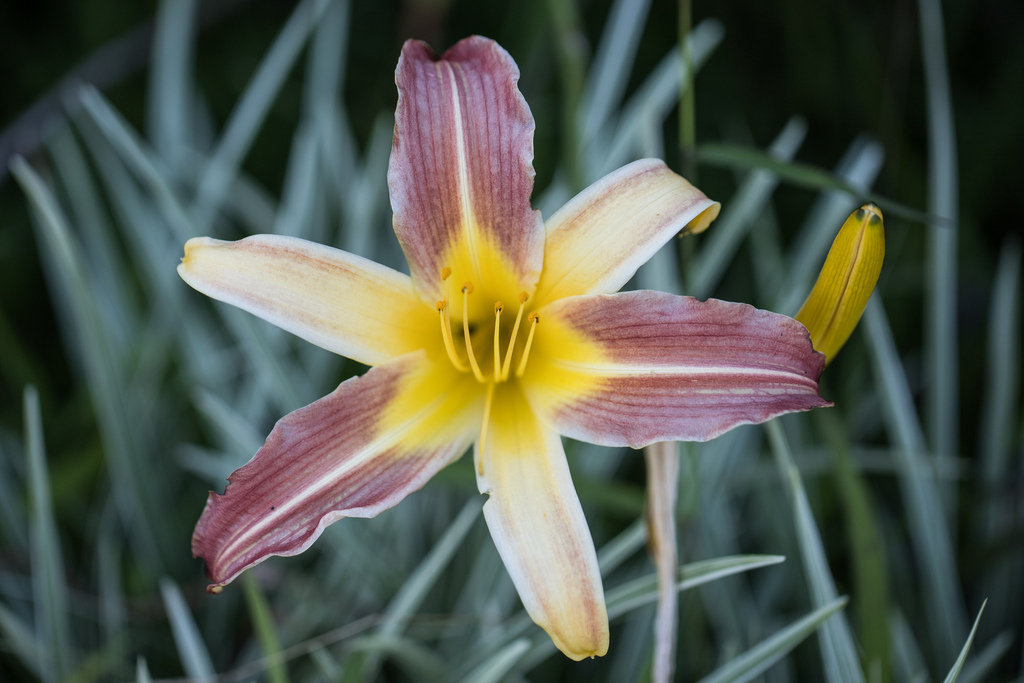
Les hémérocalles sont des plantes vivaces robustes et fiables qui produisent des fleurs éclatantes sur de hautes tiges. Chaque fleur individuelle ne dure qu'une seule journée, mais les plantes produisent de nombreux bourgeons pour une longue période de floraison. Elles sont excellentes pour les bordures et les massifs.
En un coup d'œil
- Niveau d'entretien
- Facile
- Type de plante
- Plante vivace herbacée
- Lumière
- Plein soleil à ombre partielle
- Lumière en intérieur
- Lumière vive indirecte
- Arrosage
- Tous les 5 à 10 jours
- Taille adulte
- 60 à 120 cm
- Croissance
- Moyenne
- Rusticité
- USDA 3 à 9
- Floraison
- Début à fin d'été
Entretien
Plantez dans un endroit ensoleillé avec un sol bien drainé pour encourager la meilleure floraison. Retirez les tiges florales fanées après la floraison pour garder la plante nette. Surveillez les pucerons ou les thrips pendant la période de croissance au printemps.
- Arrosage
- Gardez le sol constamment humide mais pas gorgé d'eau pendant la saison de croissance active.
- Engrais
- Appliquez un engrais équilibré une fois au début du printemps lorsque la nouvelle croissance apparaît.
- Taille
- Coupez le feuillage mort au ras du sol à la fin de l'automne ou au début du printemps.
- Rempotage
- Divisez les touffes tous les quelques années pour maintenir la vigueur et éviter la surpopulation.
- Sol
- Sol limoneux et bien drainé
- pH du sol
- 6,0 à 7,5
- Température
- -30 à 35°C
- Humidité
- 30 à 70%
- Résistance à la sécheresse
- Moyenne
- Durée de vie
- Vivace, généralement 10 à 20 ans
- Parfum
- Léger
- Résistance aux chevreuils et lapins
- Faible
Signes qu'il faut rempoter
- Les racines sortent des trous de drainage
- L'eau stagne trop longtemps à la surface du sol
- Floraison réduite sur plusieurs saisons
Sécurité
- Humains
- La plante est généralement considérée comme légèrement toxique pour les animaux de compagnie en cas d'ingestion, bien que la toxicité humaine soit faible.
- Animaux
- Les hémérocalles sont très toxiques pour les chats et peuvent causer une insuffisance rénale en cas d'ingestion.
- Enfants
- La plante n'est pas considérée comme dangereuse, mais les longues feuilles semblables à des lanières peuvent présenter un risque d'étouffement mineur si elles sont mâchées.
- Allergènes de contact
- La manipulation du feuillage peut provoquer une légère irritation cutanée chez les personnes sensibles.
- Allergènes aéroportés
- Le pollen n'est généralement pas considéré comme un allergène aérien majeur.
- Comestibilité
- Bien que certaines espèces soient consommées dans la cuisine asiatique, de nombreuses hémérocalles peuvent provoquer des maux d'estomac et ne sont pas recommandées pour une consommation occasionnelle.
Comment l'identifier
- Touffes de feuillage arqué ressemblant à de l'herbe
- Tiges florales hautes et sans feuilles
- Fleurs en forme d'entonnoir à six pétales
- Systèmes racinaires charnus et tubéreux
- Hauteur
- 0,3 à 1,2m
- Envergure
- 0,3 à 0,9m
- Feuilles
- vert, caduc
- Fleurs
- jaune, orange, rouge, rose, violet, blanc, 5 à 15cm
Problèmes à surveiller
- PuceronsCourant
- RouilleCourant
- Brûlures du feuillagePeu courant
- Limaces et escargotsPeu courant
- ThripsPeu courant
- Pourriture des racinesRare
- Rouille de l'hémérocalle — Une infection fongique causant des pustules orangées sur les feuilles.
Par symptôme
Vérifie la santé de ta plante en photo
Pocket Botanist analyse une photo de ta plante et te dit ce qui ne va pas et quoi essayer en premier.
La cultiver
- Multiplication
- division, semis
- Quand planter
- printemps, automne
- Hivernage
- Coupez le feuillage au ras du sol après le premier gel sévère. Une légère couche de paillis peut aider à protéger la couronne dans les climats plus froids.
- En pot
- Elles poussent bien dans de grands pots, à condition que le récipient ait un excellent drainage et qu'il soit d'au moins 30 cm de profondeur.
Division
- 1. Dégagez la touffe entière au printemps ou à l'automne.
- 2. Utilisez une bêche tranchante ou une fourche de jardin pour séparer la masse racinaire en sections plus petites.
- 3. Assurez-vous que chaque section possède une bonne partie de racines et de feuillage.
- 4. Replantez les divisions à la même profondeur où elles poussaient précédemment.
- 5. Arrosez abondamment pour aider les racines à s'établir.
Plantez des hémérocalles avec des vivaces plus hautes pour un aspect luxuriant et superposé dans vos massifs.
Bonnes associations
- Échinacée pourpre — Elles partagent des exigences similaires en matière de soleil et d'eau tout en offrant un joli contraste dans la forme des fleurs.
- Perovskia atriplicifolia — Les fleurs bleu aérien de la sauge complètent les fleurs audacieuses en forme de trompette de l'hémérocalle.
Espèces similaires
- Lys — Souvent confondu en raison du nom, mais les vrais lys poussent à partir de bulbes plutôt que de racines charnues.
Science
- Famille
- Asphodelaceae
- Genre
- Hemerocallis
- Ordre
- Asparagales
- Classe
- Liliopsida
- Région d'origine
- Régions tempérées d'Asie.
- Préservation
- Ne fait pas l'objet de préoccupations de conservation.
Elles prospèrent dans les prairies ouvertes et en bordure de forêt où elles utilisent leurs racines épaisses et charnues pour stocker l'eau pendant les périodes sèches.
- Intérêt pour la faune
- source de nectar
- Pollinisateurs
- abeilles, papillons, colibris
- Utilisations
- plante de bordure, lutte contre l'érosion, plantation en masse, fleurs coupées
Au fil des saisons
Repères écologiques
- Salinité
- 2/9
- Lumière
- 7/9
- Humidité
- 5/9
- Température
- 5/9
- Nutriments
- 5/9
- Réaction du sol
- 5/9
Taxonomie vérifiée avec le GBIF.
Ce qu'on demande souvent
- Les hémérocalles ont-elles besoin d'être ébouriffées ?
- Oui, retirer les fleurs fanées permet de garder la plante propre et encourage plus de floraisons.
- À quelle fréquence dois-je les diviser ?
- Divisez-les tous les 3 à 5 ans lorsque la floraison commence à décliner.
D'où vient le nom
Le nom Hemerocallis dérive des mots grecs hemera signifiant jour et kallos signifiant beauté. Cela fait référence à la courte durée de vie des fleurs individuelles.
Bon à savoir
- Les hémérocalles ne sont pas de vrais lys, car elles appartiennent à une famille botanique différente.
- Il existe plus de 60 000 cultivars enregistrés d'hémérocalles.
- Elles sont incroyablement résistantes et peuvent survivre dans des sols pauvres.
- Le nom du genre vient de mots grecs signifiant beauté et jour.
Aussi dans
Garde ta plante en pleine forme
Cette page est un guide général. Enregistre ta plante dans Pocket Botanist et tu reçois des rappels d'entretien adaptés à cette plante, ainsi qu'un historique d'entretien qui montre ce qui a marché.
Ce guide a été généré par IA et vérifié avec la taxonomie du GBIF. Il s'agit d'informations générales, et non de conseils horticoles ou vétérinaires. Découvre comment nous concevons ces guides.