 Pocket Botanist
Plant guide
Jerusalem artichoke.
Helianthus tuberosus
Pronounced hee-lee-AN-thus too-ber-OH-sus
Also known as Earth apple, Girasole, Jerusalem Artichoke, Canada Potato, Jerusalem Artichoke, Jerusalem-artichoke


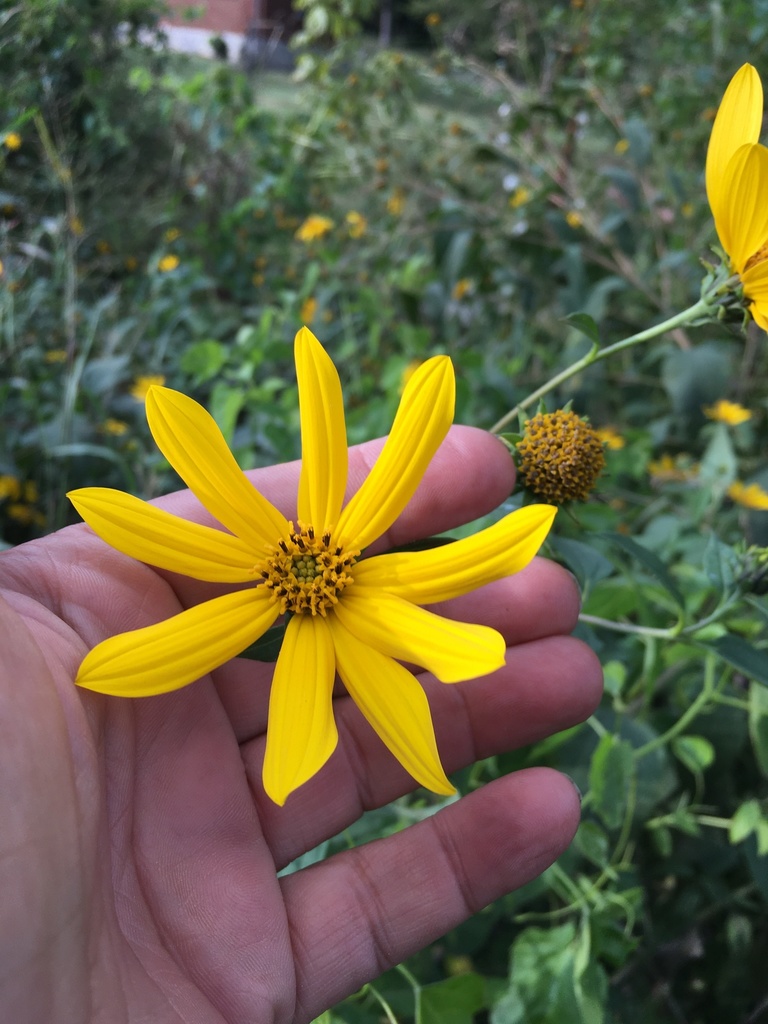
The Jerusalem artichoke is a hardy perennial sunflower known for its edible, knobby tubers. It grows quite tall and produces cheerful yellow flowers in late summer. You will love how easy it is to grow in your garden.

At a glance
- Care level
- Easy
- Plant type
- Perennial vegetable
- Light
- Full sun
- Indoor light
- Direct sun
- Water
- Every 5 to 7 days
- Mature size
- 10 feet
- Growth rate
- Fast
- Hardiness
- USDA 3 to 9
- Bloom time
- Late summer to mid autumn
Care
Plant these in a sunny spot with well draining soil to keep them happy. Watch for powdery mildew on the leaves during humid weather. Since they spread quickly, you might want to contain them in a specific area.
- Watering
- Keep the soil consistently moist but not waterlogged during the growing season.
- Feeding
- Apply a balanced fertilizer once a month during the active growing period.
- Pruning
- Cut the stalks back to the ground after the first frost in autumn.
- Repotting
- If growing in containers, move them to a larger pot every year or two to accommodate tuber growth.
- Soil
- Well draining, fertile loam
- Soil pH
- 6.0 to 7.5
- Temperature
- -30 to 35°C
- Humidity
- 40 to 70%
- Drought tolerance
- Moderate
- Lifespan
- Perennial, typically 5 to 10 years.
- Deer and rabbits
- Moderate
Signs it needs repotting
- Roots growing out of drainage holes
- Stunted growth
- Soil drying out too quickly
Safety
- People
- The plant is not toxic to humans.
- Children
- No specific risks, though the tall, heavy stalks can be unstable if climbed by small children.
- Contact allergens
- Handling the rough, hairy stems may cause minor skin irritation in sensitive individuals.
- Airborne allergens
- Pollen can trigger hay fever symptoms in sensitive individuals during late summer.
- Edibility
- Tubers should be washed thoroughly to remove soil and can cause gas in some individuals.
How to identify it
- Tall, rough, hairy stems
- Yellow daisy like flower heads
- Large, ovate, alternate leaves
- Edible knobby underground tubers
- Height
- 1.5 to 3m
- Spread
- 0.6 to 1.2m
- Leaves
- green, deciduous
- Flowers
- yellow, 5 to 10cm
- Fruit
- brown, Late autumn to early winter
Problems to watch for
- Powdery MildewCommon
- Sclerotinia RotCommon
- Slugs and SnailsCommon
- RustUncommon
- Sunflower MothUncommon
- Tuber RotUncommon
Check your jerusalem artichoke from a photo
Pocket Botanist looks at a photo of your plant and tells you what's wrong and what to try first.
Growing it
- Propagation
- division, tuber cuttings
- When to plant
- spring, autumn
- Overwintering
- Cut the dead stalks to the ground after the first frost. Leave the tubers in the ground for harvest as needed, or dig them up and store in a cool, dark place.
- In containers
- It is generally too large and aggressive for most containers, but can grow in a very large, deep tub.
Tuber Division
- 1. Dig up the clump of tubers in early spring.
- 2. Separate the tubers, ensuring each piece has at least one eye.
- 3. Replant the pieces 10 to 15 centimeters deep in well drained soil.
Give this plant plenty of space as it will quickly outcompete smaller neighbors.
Grows well with
Keep away from
- Potatoes — Both are aggressive tuber producers that compete for soil space.
Similar species
- Common Sunflower — Shares the same genus and general flower appearance.
Science
- Family
- Asteraceae
- Genus
- Helianthus
- Order
- Asterales
- Class
- Magnoliopsida
- Native range
- Central and eastern North America.
- Conservation
- It is considered invasive in some regions outside its native range due to its aggressive spread.
It thrives in open, sunny areas and spreads rapidly through an extensive underground rhizome system.
- Value to wildlife
- nectar source, larval host plant
- Pollinators
- bees, butterflies
- Uses
- culinary tubers, ornamental screen, wildlife habitat
Through the year
Ecological indicators
- Salinity
- 2/9
- Soil reaction
- 6/9
- Light
- 8/9
- Nutrients
- 6/9
- Temperature
- 5/9
- Moisture
- 6/9
Taxonomy resolved against GBIF.
Questions people ask
- How do I keep it from spreading?
- Plant it in a contained area or harvest all tubers annually to prevent regrowth.
- When should I harvest the tubers?
- Wait until after the first hard frost for the best flavor.
Where the name comes from
The name Helianthus comes from the Greek words for sun and flower, while tuberosus refers to the edible tubers.
Good to know
- Despite the name, it is not from Jerusalem and is not a true artichoke.
- The name comes from a corruption of the Italian word for sunflower, girasole.
- Tubers were a staple food for many indigenous peoples in North America.
- It is a member of the daisy family.
Keep your jerusalem artichoke growing
This page is a general guide. Save your plant in Pocket Botanist and you get care reminders timed for this plant, plus a care history that shows what worked.
This guide was generated with AI and checked against GBIF taxonomy. It is general information, not horticultural or veterinary advice. Read about how we build these guides.