 Pocket Botanist
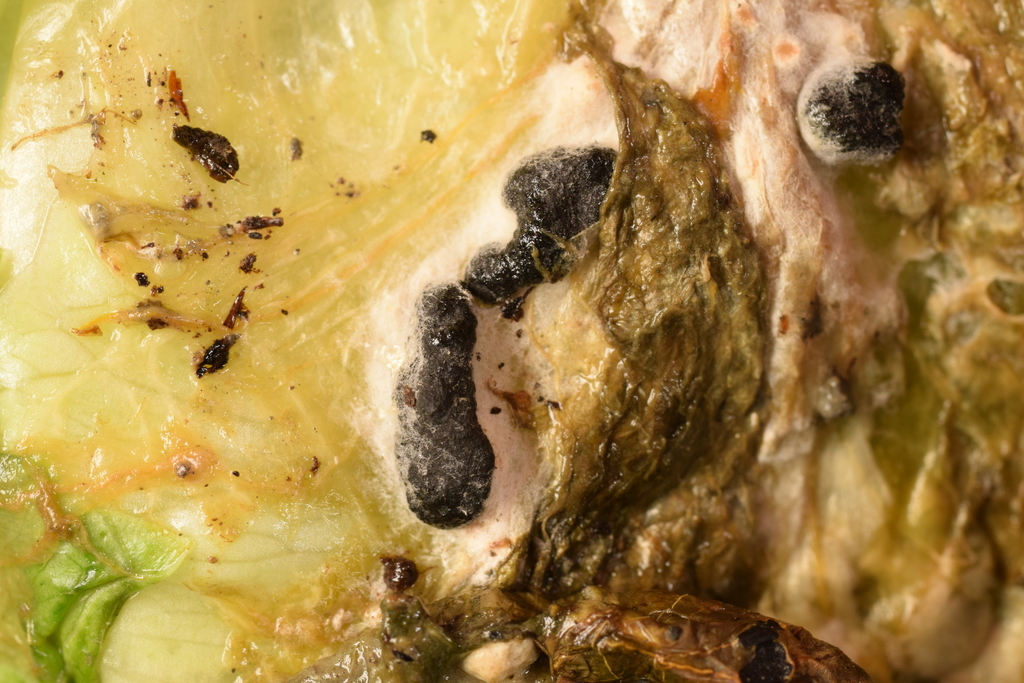
Symptoms by part
Stems
You will see water soaked lesions near the soil line that eventually turn tan or white. As the infection progresses, the stem becomes soft and mushy, often showing a white cottony fungal growth and hard black structures called sclerotia inside or on the surface of the stem.
Causes
- Prolonged periods of cool, wet weather
- Poor air circulation around the base of the plant
- Overcrowding plants which traps moisture
- High soil moisture levels
- Presence of fungal resting structures in the soil from previous seasons
Could be confused with
- Botrytis Blight · Botrytis usually produces a fuzzy gray mold rather than the white cottony growth of Sclerotinia, and it rarely forms the large black sclerotia inside the stem.
- Bacterial Soft Rot · Bacterial rot typically produces a foul odor and a slimy texture, whereas Sclerotinia rot is characterized by the distinct white mycelium and black, seed like sclerotia.
Find out what's really wrong with your plant
Problems that look alike are easy to mix up. Pocket Botanist looks at a photo of your actual plant and tells you what's going on, how serious it is, and what to try first. Identification and a health check are free.



Scan with your phone's camera to get the app
Or go to pocketbotanist.app/get on your phone
Treatment
- Immediately remove and destroy any infected plant material including the roots to prevent the sclerotia from entering the soil.
- Dig out and discard the top 2 to 4 inches of soil surrounding the infected plant to remove dormant fungal structures.
- Sanitize all garden tools used on the infected area with a solution of one part bleach to nine parts water to prevent spreading the fungus.
Without chemicals
- Improve soil drainage by adding organic matter or creating raised beds.
- Increase spacing between plants to ensure better airflow.
- Avoid overhead watering to keep the base of the stems dry.
- Rotate crops by planting non susceptible species in the affected area for 3 to 5 years.
Preventing it
- Ensure plants have adequate space for air to move freely around the stems.
- Water at the base of the plant early in the day so the soil surface dries before nightfall.
- Remove plant debris from the garden at the end of the season to reduce overwintering sites.
- Use mulch sparingly near the stem to avoid creating a damp environment.
Season
Cool to mild periods of the growing season, often spring and autumn, especially during periods of high humidity and rainfall.
Spread risk
Moderate
Severity
High
When to act
Act as soon as you notice wilting or stem lesions to prevent the fungus from producing more sclerotia. If the entire plant has collapsed, remove it immediately and do not compost the material.
Keep your plants healthy from here
Save your plants in Pocket Botanist and you get care reminders timed for each one, plus a care history that shows what worked. Identification and a health check are free.
Questions people ask
- Can I compost plants that died from Sclerotinia Rot?
- No, do not compost infected plants because home compost piles rarely get hot enough to kill the resilient black sclerotia.
- How long do the black sclerotia stay in the soil?
- These resting structures can survive in the soil for several years, which is why crop rotation is so important.
Plants it affects
Answers plant by plant
This guide was generated with AI on and is general information, not horticultural advice. Read about how we build these guides.