 Pocket Botanist
Plant guide
Sword Lily.
Gladiolus
Pronounced glad-ee-OH-lus
Also known as Gladioli, Painted Ladies, Sword Lilies, gladiolus, gladioluses


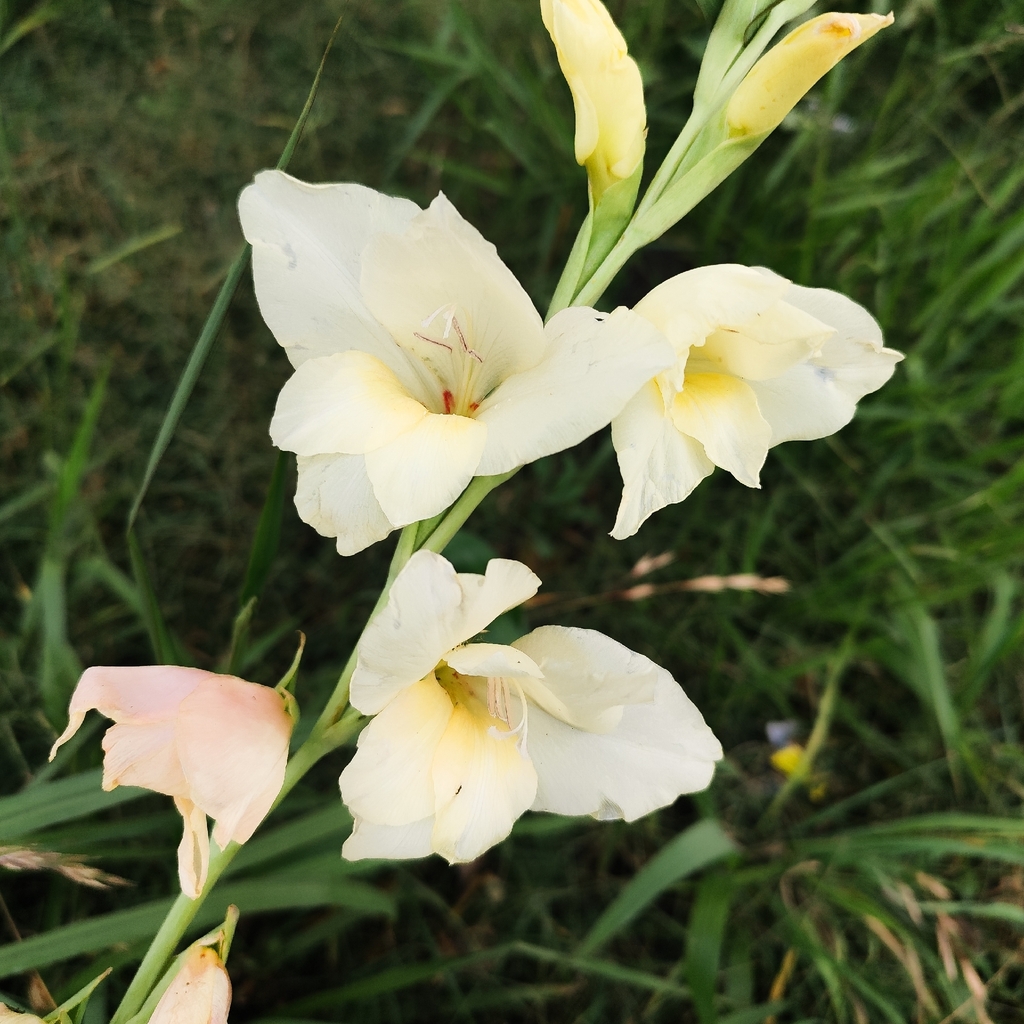
Gladiolus are striking perennials known for their tall, sword shaped leaves and impressive spikes of funnel shaped flowers. They grow from corms and add a dramatic vertical element to any garden bed. These plants are a favorite for cut flower arrangements because they last a long time in a vase.

At a glance
- Care level
- Easy
- Plant type
- Perennial corm
- Light
- Full sun
- Indoor light
- Direct sun
- Water
- Every 5 to 7 days
- Mature size
- 150 cm
- Growth rate
- Medium
- Hardiness
- USDA 7 to 10
- Bloom time
- Mid to late summer
Care
Plant corms in well draining soil once the danger of frost has passed. Watch for thrips or aphids on the foliage and ensure the soil does not stay soggy to prevent corm rot. Stake the taller varieties to keep them from leaning over in heavy winds.
- Watering
- Keep the soil consistently moist during the active growing season.
- Feeding
- Apply a balanced fertilizer once growth begins and again after blooming.
- Pruning
- Remove spent flower spikes to keep the plant tidy and cut back foliage after it yellows.
- Repotting
- Corms should be lifted and stored in cool areas during winter in colder climates.
- Soil
- Well draining, sandy loam
- Soil pH
- 6.0 to 7.0
- Temperature
- 5 to 30°C
- Humidity
- 40 to 60%
- Drought tolerance
- Moderate
- Lifespan
- Perennial, typically 3 to 5 years per corm.
- Fragrance
- Light
- Deer and rabbits
- Moderate
Signs it needs repotting
- Roots growing out of the drainage holes.
- Stunted growth despite regular feeding.
- Corms becoming too crowded in the pot.
Safety
- People
- All parts of the plant are considered toxic if ingested and may cause skin irritation upon contact.
- Pets
- Gladiolus is toxic to cats and dogs if ingested.
- Children
- The corms look like small onions and pose a significant ingestion risk to small children.
- Contact allergens
- Handling the corms or foliage can cause contact dermatitis in sensitive individuals.
- Airborne allergens
- The pollen can be an irritant for those with severe seasonal allergies.
- Edibility
- Gladiolus corms are toxic and should not be consumed by humans or pets.
How to identify it
- Tall, sword shaped foliage
- Spikes of funnel shaped flowers
- Grows from underground corms
- Flowers open from bottom to top
- Height
- 0.6 to 1.5m
- Spread
- 0.15 to 0.3m
- Leaves
- green, deciduous
- Flowers
- red, pink, yellow, white, purple, orange, 5 to 15cm
Problems to watch for
- Fusarium WiltCommon
- ThripsCommon
- AphidsUncommon
- Botrytis BlightUncommon
- Bulb RotUncommon
- Root RotUncommon
By symptom
Check your sword lily from a photo
Pocket Botanist looks at a photo of your plant and tells you what's wrong and what to try first.
Growing it
- Propagation
- division, seed
- When to plant
- spring
- Overwintering
- In cold regions, dig up corms after the first frost, clean them, and store in a mesh bag in a cool, dark, frost-free location.
- In containers
- They grow well in containers at least 30 centimeters deep, provided there is excellent drainage.
Cormel Division
- Dig up the corms in autumn after the foliage yellows.
- Gently separate the small cormels from the main mother corm.
- Store the cormels in a cool, dry place until spring planting.
Plant them in groups of seven or more to create a strong visual impact and support pollinator visits.
Grows well with
Similar species
- Crocosmia — They share a similar growth habit and are also members of the iris family.
- Freesia — They are related cormous plants that bloom in similar conditions.
Science
- Family
- Iridaceae
- Genus
- Gladiolus
- Order
- Asparagales
- Class
- Liliopsida
- Native range
- Africa and the Mediterranean
- Conservation
- Not of conservation concern.
They grow in well drained soils and rely on specialized pollinators to reach their deep nectar tubes.
- Value to wildlife
- nectar source
- Pollinators
- bees, butterflies, hummingbirds
- Uses
- cut flowers, border gardens, container gardening
Through the year
Ecological indicators
- Salinity
- 2/9
- Soil reaction
- 6/9
- Moisture
- 5/9
- Nutrients
- 6/9
- Light
- 7/9
- Temperature
- 6/9
Taxonomy resolved against GBIF.
Questions people ask
- Do I need to dig up my bulbs in winter?
- In climates where the ground freezes, you must dig up and store the corms in a cool, dry place.
- How deep should I plant them?
- Plant the corms 10 to 15 centimeters deep.
Where the name comes from
The name comes from the Latin gladius, meaning sword, referring to the leaf shape.
Good to know
- Gladiolus were once used in ancient times as a poultice to draw out thorns.
- They are a popular choice for floral arrangements due to their long vase life.
- The plants are native to Africa and the Mediterranean region.
- They are often called sword lilies.
Also in
Keep your sword lily growing
This page is a general guide. Save your plant in Pocket Botanist and you get care reminders timed for this plant, plus a care history that shows what worked.
This guide was generated with AI and checked against GBIF taxonomy. It is general information, not horticultural or veterinary advice. Read about how we build these guides.