 Pocket Botanist
Guide botanique
Glaïeul.
Gladiolus
Prononciation glad-ee-OH-lus
Aussi appelée Glaïeuls, Glaïeuls, Glaïeuls, gladiolus, gladioluses


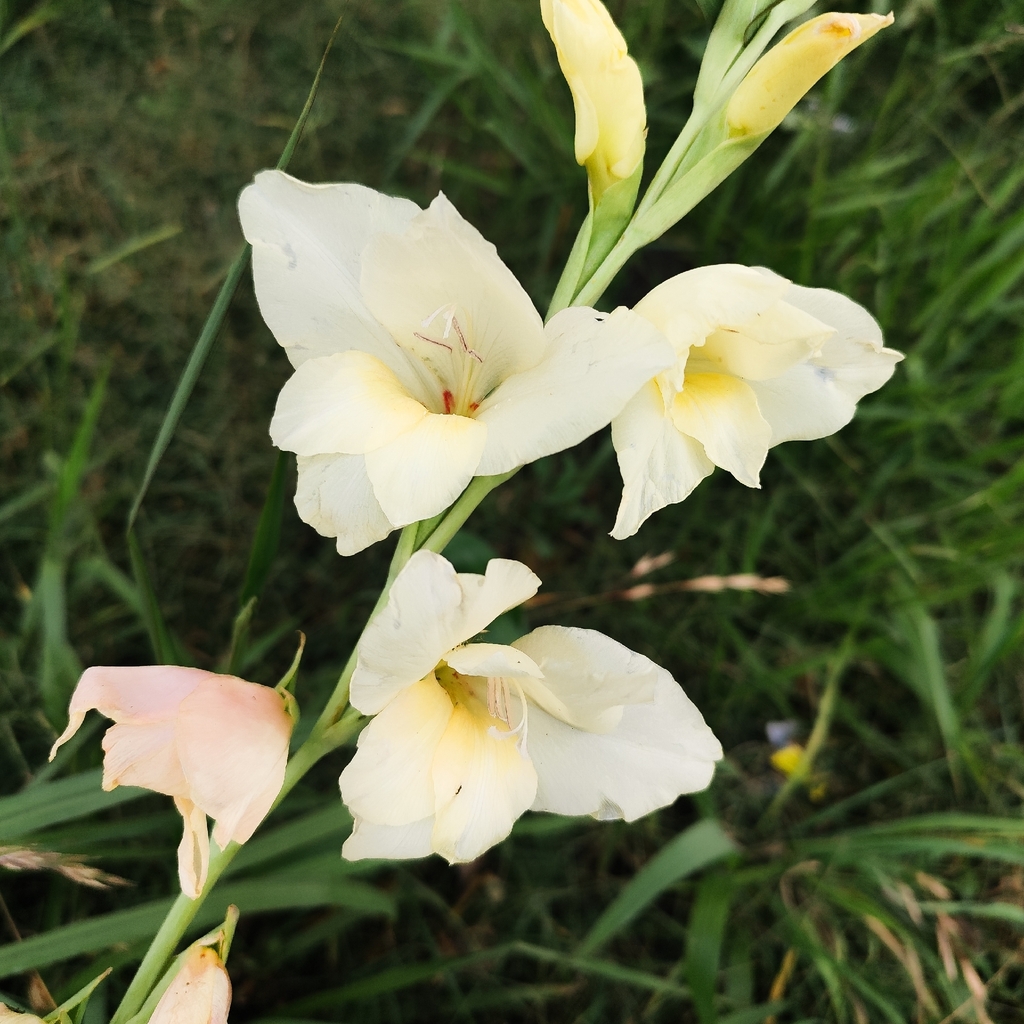
Les glaïeuls sont des vivaces remarquables connues pour leurs hautes feuilles en forme d'épée et leurs impressionnantes hampes florales en forme d'entonnoir. Ils poussent à partir de cormes et ajoutent un élément vertical spectaculaire à n'importe quel parterre de jardin. Ces plantes sont un choix privilégié pour les arrangements floraux coupés car elles durent longtemps dans un vase.

En un coup d'œil
- Niveau d'entretien
- Facile
- Type de plante
- Corme vivace
- Lumière
- Plein soleil
- Lumière en intérieur
- Soleil direct
- Arrosage
- Tous les 5 à 7 jours
- Taille adulte
- 150 cm
- Croissance
- Moyenne
- Rusticité
- USDA 7 à 10
- Floraison
- Milieu à fin de l'été
Entretien
Plantez les cormes dans un sol bien drainant une fois tout risque de gel passé. Surveillez la présence de thrips ou de pucerons sur le feuillage et assurez-vous que le sol ne reste pas détrempé pour éviter la pourriture des cormes. Piquez les variétés les plus hautes pour éviter qu'elles ne penchent sous les vents forts.
- Arrosage
- Maintenez le sol constamment humide pendant la saison de croissance active.
- Engrais
- Appliquez un engrais équilibré une fois que la croissance commence et à nouveau après la floraison.
- Taille
- Retirez les hampes florales fanées pour garder la plante nette et coupez le feuillage après qu'il ait jauni.
- Rempotage
- Les cormes doivent être déterrés et stockés dans des endroits frais pendant l'hiver dans les climats plus froids.
- Sol
- Terre franche sableuse bien drainée
- pH du sol
- 6,0 à 7,0
- Température
- 5 à 30°C
- Humidité
- 40 à 60%
- Résistance à la sécheresse
- Moyenne
- Durée de vie
- Vivace, généralement 3 à 5 ans par corme.
- Parfum
- Léger
- Résistance aux chevreuils et lapins
- Moyenne
Signes qu'il faut rempoter
- Des racines sortent des trous de drainage.
- Croissance ralentie malgré une fertilisation régulière.
- Les cormes deviennent trop serrés dans le pot.
Sécurité
- Humains
- Toutes les parties de la plante sont considérées comme toxiques si ingérées et peuvent provoquer une irritation cutanée au contact.
- Animaux
- Le glaïeul est toxique pour les chats et les chiens s'il est ingéré.
- Enfants
- Les cormes ressemblent à de petits oignons et présentent un risque d'ingestion important pour les jeunes enfants.
- Allergènes de contact
- La manipulation des cormes ou du feuillage peut provoquer une dermatite de contact chez les personnes sensibles.
- Allergènes aéroportés
- Le pollen peut être irritant pour les personnes souffrant d'allergies saisonnières sévères.
- Comestibilité
- Les cormes de glaïeul sont toxiques et ne doivent pas être consommés par les humains ou les animaux de compagnie.
Comment l'identifier
- Feuillage haut en forme d'épée
- Hampes florales en forme d'entonnoir
- Pousse à partir de cormes souterrains
- Les fleurs s'ouvrent de bas en haut
- Hauteur
- 0,6 à 1,5m
- Envergure
- 0,15 à 0,3m
- Feuilles
- vert, caduc
- Fleurs
- rouge, rose, jaune, blanc, violet, orange, 5 à 15cm
Problèmes à surveiller
- Fusariose vasculaireCourant
- ThripsCourant
- BotrytisPeu courant
- Pourriture des bulbesPeu courant
- Pourriture des racinesPeu courant
- PuceronsPeu courant
- Flétrissement par Fusarium — Une infection fongique qui provoque le jaunissement et la pourriture des cormes.
Par symptôme
Vérifie la santé de ta plante en photo
Pocket Botanist analyse une photo de ta plante et te dit ce qui ne va pas et quoi essayer en premier.
La cultiver
- Multiplication
- division, semis
- Quand planter
- printemps
- Hivernage
- Dans les régions froides, déterrez les cormes après le premier gel, nettoyez-les et stockez-les dans un sac en filet dans un endroit frais, sombre et hors gel.
- En pot
- Ils poussent bien dans des conteneurs d'au moins 30 centimètres de profondeur, à condition qu'il y ait un excellent drainage.
Division des bulbilles
- Dégagez les cormes en automne après le jaunissement du feuillage.
- Séparez délicatement les petites bulbilles du corme mère principal.
- Stockez les bulbilles dans un endroit frais et sec jusqu'à la plantation au printemps.
Plantez-les par groupes de sept ou plus pour créer un fort impact visuel et favoriser les visites des pollinisateurs.
Bonnes associations
Espèces similaires
- Crocosmia — Ils partagent un port similaire et sont également membres de la famille des iris.
- Freesia — Ce sont des plantes cormeuses apparentées qui fleurissent dans des conditions similaires.
Science
- Famille
- Iridaceae
- Genre
- Gladiolus
- Ordre
- Asparagales
- Classe
- Liliopsida
- Région d'origine
- Afrique et Méditerranée
- Préservation
- Pas une préoccupation de conservation.
Ils poussent dans des sols bien drainés et dépendent de pollinisateurs spécialisés pour atteindre leurs tubes de nectar profonds.
- Intérêt pour la faune
- source de nectar
- Pollinisateurs
- abeilles, papillons, colibris
- Utilisations
- fleurs coupées, jardins en bordure, culture en pot
Au fil des saisons
Repères écologiques
- Salinité
- 2/9
- Réaction du sol
- 6/9
- Humidité
- 5/9
- Nutriments
- 6/9
- Lumière
- 7/9
- Température
- 6/9
Taxonomie vérifiée avec le GBIF.
Ce qu'on demande souvent
- Dois-je déterrer mes bulbes en hiver ?
- Dans les climats où le sol gèle, vous devez déterrer et stocker les cormes dans un endroit frais et sec.
- Quelle profondeur dois-je les planter ?
- Plantez les cormes à une profondeur de 10 à 15 centimètres.
D'où vient le nom
Le nom vient du latin gladius, signifiant épée, faisant référence à la forme de la feuille.
Bon à savoir
- Les glaïeuls étaient autrefois utilisés dans l'Antiquité comme cataplasme pour extraire les échardes.
- Ils sont un choix populaire pour les arrangements floraux en raison de leur longue durée de vie en vase.
- Les plantes sont originaires d'Afrique et de la région méditerranéenne.
- On les appelle souvent 'lis-épées'.
Aussi dans
Garde ta plante en pleine forme
Cette page est un guide général. Enregistre ta plante dans Pocket Botanist et tu reçois des rappels d'entretien adaptés à cette plante, ainsi qu'un historique d'entretien qui montre ce qui a marché.
Ce guide a été généré par IA et vérifié avec la taxonomie du GBIF. Il s'agit d'informations générales, et non de conseils horticoles ou vétérinaires. Découvre comment nous concevons ces guides.