 Pocket Botanist
Plant guide
Ginkgo.
Ginkgo biloba L.
Pronounced GINK-oh by-LOH-buh
Also known as Common Ginkgo, Ginkgo, Maidenhair Tree, Maidenhair-tree, gingko



The ginkgo is a truly ancient tree species that has survived for millions of years. It is famous for its unique fan shaped leaves that turn a brilliant gold in autumn. You will find it is a very hardy and resilient addition to a landscape.
At a glance
- Care level
- Easy
- Plant type
- Deciduous tree
- Light
- Full sun
- Indoor light
- Direct sun
- Water
- Every 7 to 14 days
- Mature size
- 50 to 80 feet
- Growth rate
- Slow
- Hardiness
- USDA 3 to 9
- Bloom time
- Mid spring
Care
Plant your tree in a spot with plenty of room for its roots to spread. Keep an eye on soil moisture during the first few years while it gets established. It is quite tolerant of urban pollution and poor soil conditions.
- Watering
- Water deeply once a week during dry spells while the tree is young.
- Feeding
- Apply a balanced fertilizer once in early spring before new growth starts.
- Pruning
- Prune only to remove dead or damaged branches during the dormant winter season.
- Repotting
- If grown in a container, move to a larger pot every few years to accommodate root growth.
- Soil
- Well draining loamy soil
- Soil pH
- 5.0 to 7.0
- Temperature
- -30 to 40°C
- Humidity
- 40 to 70%
- Drought tolerance
- Moderate
- Lifespan
- Perennial, can live for over 1,000 years.
- Deer and rabbits
- High
Signs it needs repotting
- Roots growing out of the drainage holes.
- Water running straight through the pot without soaking in.
- Stunted growth during the active season.
Safety
- People
- The seeds are toxic if consumed in large quantities and the fruit pulp is a skin irritant.
- Pets
- The seeds and leaves can be toxic to cats and dogs if ingested.
- Children
- Keep children away from the fallen fruit as the pulp is a skin irritant and the seeds are poisonous if eaten.
- Contact allergens
- The fruit pulp contains urushiol, which can cause skin rashes similar to poison ivy.
- Airborne allergens
- The pollen is generally considered to have low allergenicity compared to many other trees.
- Edibility
- The fleshy outer coating of the fruit contains ginkgolic acid, which can cause severe contact dermatitis and is toxic if ingested.
How to identify it
- Distinctive fan shaped leaves
- Leaves have parallel veins
- Yellow autumn foliage color
- Spur shoots on branches
- Height
- 15 to 35m
- Spread
- 8 to 15m
- Leaves
- green, yellow, deciduous
- Flowers
- green, 1 to 2cm
- Fruit
- yellow, orange, Autumn
Problems to watch for
- Leaf SpotCommon
- ChlorosisUncommon
- Leaf ScorchUncommon
- Root RotUncommon
Check your ginkgo from a photo
Pocket Botanist looks at a photo of your plant and tells you what's wrong and what to try first.
Growing it
- Propagation
- seed, cuttings
- When to plant
- spring, autumn
- Overwintering
- Young trees benefit from a layer of mulch around the base to protect roots from extreme temperature fluctuations. No special protection is needed for established trees.
- In containers
- Young trees can be grown in large containers for many years, but they eventually require planting in the ground.
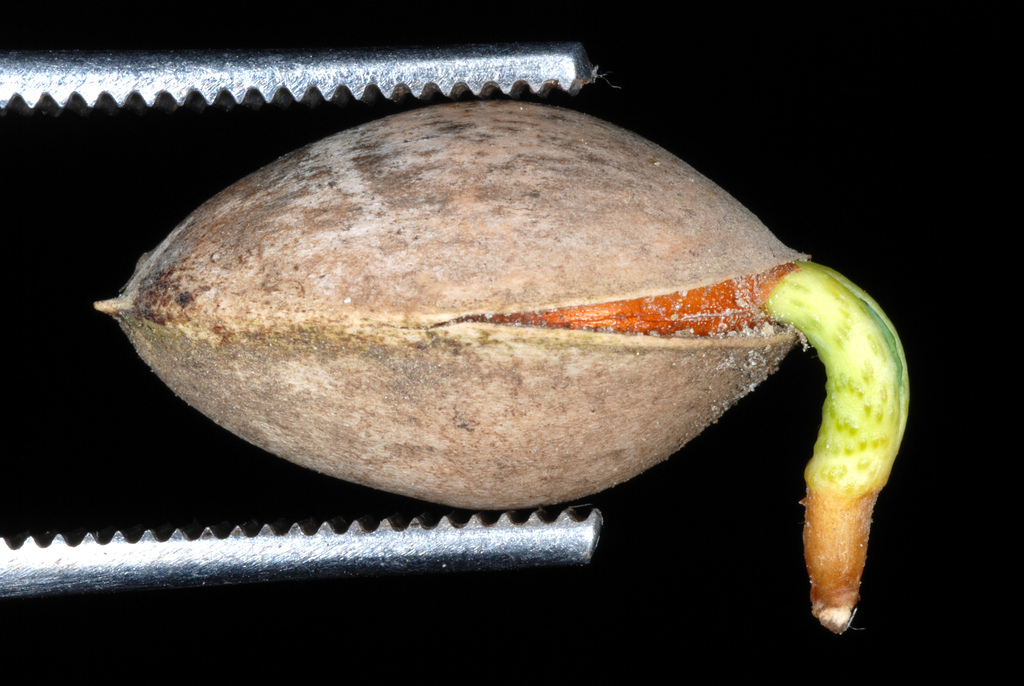
Seed
- Clean the fleshy pulp from the seed wearing gloves.
- Scarify the hard outer shell lightly.
- Sow in a cold frame during autumn for spring germination.
Plant shade-tolerant perennials beneath the canopy to take advantage of the filtered light.
Grows well with
- Hosta — They thrive in the dappled shade provided by the mature canopy.
- Japanese Maple — They share similar soil requirements and provide beautiful contrasting foliage.
Similar species
- Dawn Redwood — Another ancient deciduous conifer that offers a similar prehistoric aesthetic.
Science
- Family
- Ginkgoaceae
- Genus
- Ginkgo
- Order
- Ginkgoales
- Class
- Ginkgoopsida
- Native range
- Restricted to small areas in eastern China.
- Conservation
- The species is listed as endangered in its native range in China.
It survives in the wild by being highly adaptable to various soil types and resistant to most modern pests and diseases.
- Value to wildlife
- ancient evolutionary lineage, urban resilience
- Pollinators
- bees, beetles
- Uses
- ornamental shade tree, urban street planting, traditional herbal medicine
Through the year
Ecological indicators
- Salinity
- 4/9
- Light
- 7/9
- Temperature
- 5/9
- Moisture
- 5/9
- Nutrients
- 5/9
- Soil reaction
- 5/9
Taxonomy resolved against GBIF.
Questions people ask
- Why do people prefer male trees?
- Female trees produce fruit that has a very unpleasant, rancid odor when it falls and decays.
- How fast do they grow?
- They are slow to moderate growers, often taking many years to reach maturity.
Where the name comes from
The name Ginkgo is a corruption of the Japanese word for silver apricot, while biloba refers to the two-lobed shape of the leaves.
Good to know
- Ginkgo trees are dioecious, meaning male and female flowers grow on separate trees.
- The leaves turn a brilliant, uniform gold color all at once in autumn.
- They are incredibly resistant to pollution and pests, making them perfect for city streets.
- The name comes from a misreading of the Japanese word ginkyo, meaning silver apricot.
Also in
Keep your ginkgo growing
This page is a general guide. Save your plant in Pocket Botanist and you get care reminders timed for this plant, plus a care history that shows what worked.
This guide was generated with AI and checked against GBIF taxonomy. It is general information, not horticultural or veterinary advice. Read about how we build these guides.