 Pocket Botanist
Pflanzenratgeber
Ginkgo.
Ginkgo biloba
Aussprache GINK-oh by-LOH-buh
Auch bekannt als Ginkgo, Ginkgo, Fächerblattbaum, Maidenhair-tree, gingko


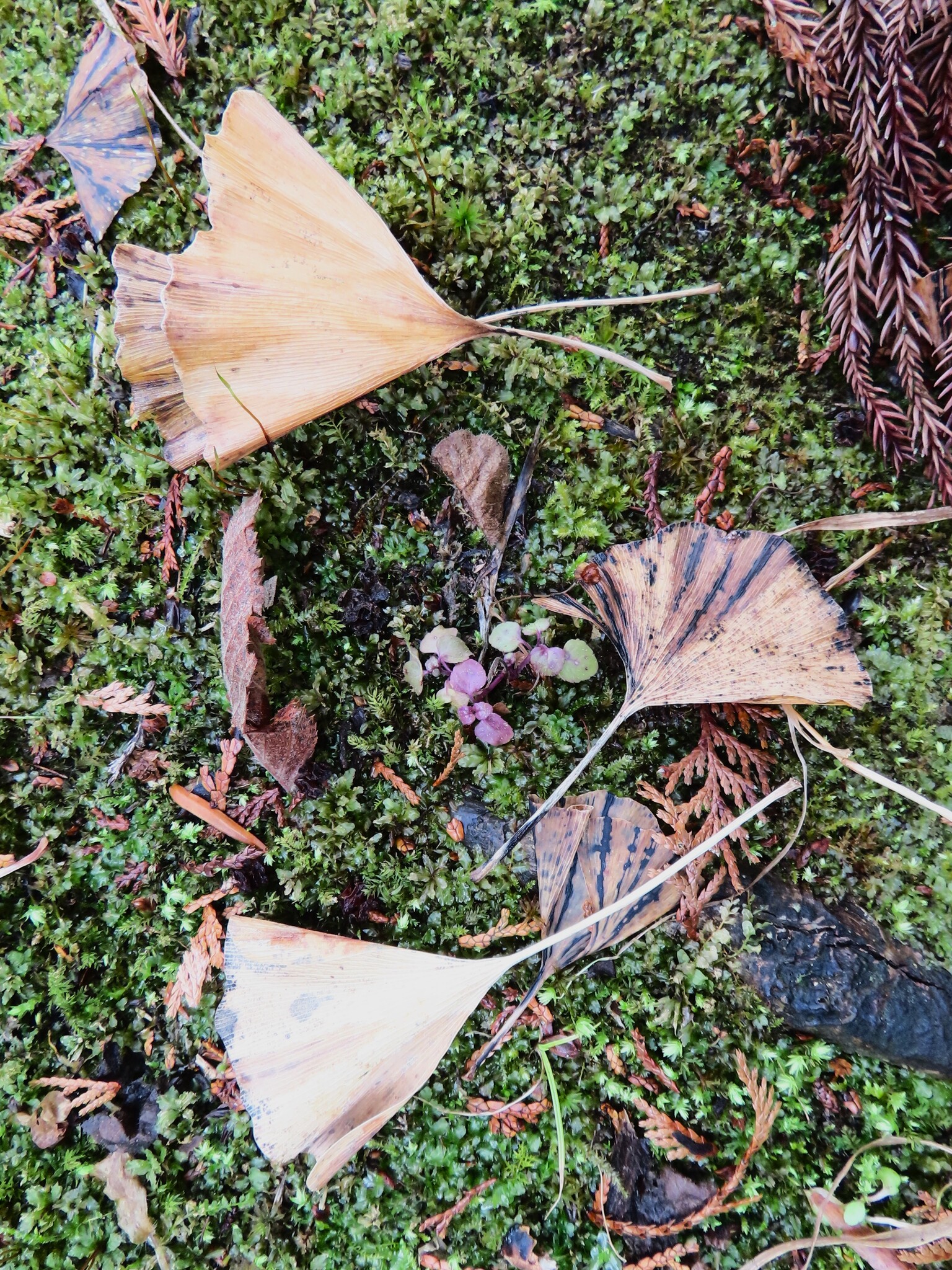
Der Ginkgo ist ein wahrhaft uralter Baum, der seit Millionen von Jahren überlebt hat. Er hat einzigartige fächerförmige Blätter, die sich im Herbst leuchtend goldgelb färben. Diese robuste Art ist sehr tolerant gegenüber städtischer Umweltverschmutzung und schlechten Bodenbedingungen.
Auf einen Blick
- Care level
- Easy
- Plant type
- Laubbaum
- Light
- Volle Sonne
- Indoor light
- direct
- Water
- Every 7 to 14 days
- Mature size
- 20 bis 35 Meter
- Growth rate
- slow
- Hardiness
- USDA 3 to 9
- Bloom time
- Mitte Frühling
Pflege
Pflanzen Sie Ihren Ginkgo an einen sonnigen Standort mit gut durchlässigem Boden. Halten Sie den Boden jung, wenn der Baum jung ist, aber er wird nach der Etablierung ziemlich trockenheitstolerant. Achten Sie im Sommer auf vergilbende Blätter, die auf schlechte Drainage oder extreme Hitzebelastung hinweisen können.
- Watering
- Tief gießen während Trockenperioden, um die Wurzelzone feucht zu halten.
- Feeding
- Im zeitigen Frühjahr einen ausgewogenen Langzeitdünger ausbringen.
- Pruning
- Nur im Winter während der Ruhephase tote oder sich kreuzende Äste entfernen.
- Repotting
- Junge Bäume alle paar Jahre umtopfen, wenn sie in Behältern gezüchtet werden.
- Soil
- Gut durchlässiger Lehm oder sandiger Boden
- Soil pH
- Sauer bis neutral
- Temperature
- -30 to 35°C
- Humidity
- 40 to 70%
- Drought tolerance
- moderate
- Lifespan
- Perennial, can live for over 1,000 years.
- Deer and rabbits
- high
Anzeichen fürs Umtopfen
- Roots growing out of the drainage holes.
- Water running straight through the pot without soaking in.
- Noticeable decline in annual growth rate.
Sicherheit
- People
- The seeds are toxic if ingested in large quantities, and the fruit pulp can cause skin irritation.
- Pets
- Die Samen und Blätter sind für Katzen und Hunde giftig, wenn sie eingenommen werden.
- Children
- Keep children away from the fallen fruit, as the pulp is highly irritating to skin and toxic if eaten.
- Contact allergens
- The pulp of the female fruit contains ginkgolic acids which are potent skin irritants.
- Airborne allergens
- Male trees produce pollen that can trigger seasonal allergies in sensitive individuals.
- Edibility
- The fleshy outer coating of the seeds contains ginkgotoxin and can cause severe contact dermatitis or internal distress if ingested.
So erkennst du die Pflanze
- Fächerförmige Blätter mit parallelen Adern
- Blätter färben sich im Herbst leuchtend gelb
- Charakteristische Sporntriebe an älteren Ästen
- Graubraune Rinde mit tiefen Furchen
- Height
- 15 to 35m
- Spread
- 6 to 12m
- Leaves
- grün, gelb, laubabwerfend
- Flowers
- grün, 1 to 2cm
- Fruit
- gelb, orange, Herbst
Häufige Probleme
- Leaf spot — Fungal infections can cause brown or black spots on foliage during wet seasons.
- Scale insects — Small sap sucking insects may cluster on branches and weaken the tree.
Standort und Pflege
- Propagation
- Samen, Stecklinge
- When to plant
- Frühling, Herbst
- Overwintering
- No special care is needed as they are fully deciduous and dormant in winter.
- In containers
- Ginkgo can be grown in large containers for many years, making them popular subjects for bonsai.
Seed propagation
- Collect seeds from female trees in autumn.
- Remove the fleshy pulp carefully while wearing gloves.
- Clean the seeds and sow them in a cold frame or pot outdoors for winter stratification.
Focus on shade tolerant perennials that can handle the dry soil often found under a mature tree canopy.
Gute Pflanzpartner
- Hostas — They thrive in the dappled shade provided by the Ginkgo canopy.
- Japanese Maple — Both trees appreciate similar soil conditions and provide beautiful contrasting foliage.
Ähnliche Arten
- Dawn Redwood — It is another ancient deciduous conifer that offers a similar prehistoric aesthetic.
Botanisches
- Family
- Ginkgoaceae
- Genus
- Ginkgo
- Order
- Ginkgoales
- Class
- Ginkgoopsida
- Native range
- Native to a small region in eastern China.
- Conservation
- Ginkgo biloba is listed as endangered in its native wild habitat in China.
This hardy tree survives by being exceptionally tolerant of urban pollution, pests, and poor soil conditions.
- Uses
- Ornamental street tree, Traditional herbal supplement, Landscape specimen
Im Jahresverlauf
Ökologische Zeigerwerte
- Salinity
- 4/9
- Soil reaction
- 6/9
- Light
- 7/9
- Temperature
- 5/9
- Moisture
- 5/9
- Nutrients
- 5/9
Taxonomie abgeglichen mit GBIF.
Häufige Fragen
- Why do people avoid female Ginkgo trees?
- The female trees produce fruit that smells like rancid butter when it rots on the ground.
- How fast does a Ginkgo grow?
- They are quite slow growing, often adding less than 1 foot per year.
Woher der Name kommt
The name Ginkgo comes from a Japanese misreading of the Chinese word for silver apricot, while biloba refers to the two lobed shape of the leaves.
Gut zu wissen
- Ginkgo trees are dioecious, meaning they have separate male and female plants.
- The leaves turn a brilliant, uniform gold in autumn before dropping all at once.
- Ginkgo trees are incredibly resistant to pollution and urban conditions.
- The tree is often called the maidenhair tree because its leaves resemble maidenhair fern leaflets.
Auch in
Geht es deiner ginkgo nicht gut?
Diese Seite bietet allgemeine Infos. Pocket Botanist erkennt Probleme anhand eines Fotos deiner echten Pflanze, passt das Gießen an dein Licht und deinen Standort an und erinnert dich an die Pflege.
Dieser Ratgeber wurde mit KI erstellt und mit der GBIF-Taxonomie abgeglichen. Er dient zur allgemeinen Information und ersetzt keine gärtnerische oder tierärztliche Beratung. Hier erfährst du, wie wir diese Ratgeber erstellen.