 Pocket Botanist
Plant guide
Sago Palm.
Cycas revoluta
Pronounced SY-kas rev-oh-LOO-tuh
Also known as Fern Palm, Sago Palm, Sago palm, King sago, Sago cycad, Japanese sago palm, sago cycas, sotesu-nut



The Sago Palm is a beautiful, ancient plant that looks like a miniature palm tree. It is actually a cycad and grows very slowly, making it a great choice for a long term houseplant. It adds a touch of prehistoric charm to any sunny spot in your home.
At a glance
- Care level
- Moderate
- Plant type
- Cycad
- Light
- Bright, indirect light is best, though it can handle some direct sun once acclimated.
- Indoor light
- Bright indirect
- Water
- Every 14 to 21 days
- Mature size
- 1 to 2 meters tall
- Growth rate
- Slow
- Hardiness
- USDA 8 to 11
- Bloom time
- Rarely blooms in cultivation.
Care
Let the soil dry out significantly between waterings to prevent root rot. Provide plenty of bright light to keep the fronds from stretching. Watch for yellowing leaves, which often signal that the plant is getting too much water.
- Watering
- Allow the top half of the soil to dry out completely before watering again.
- Feeding
- Feed with a balanced liquid fertilizer during the active growing season.
- Pruning
- Only remove fronds that have turned completely brown or yellow.
- Repotting
- Repot only when the plant has become severely root bound.
- Soil
- Well draining, sandy potting mix
- Soil pH
- 6.0 to 7.0
- Temperature
- -7 to 40°C
- Humidity
- 40 to 70%
- Drought tolerance
- High
- Lifespan
- Perennial, can live for over 100 years.
- Deer and rabbits
- High
Signs it needs repotting
- Roots growing out of the drainage holes
- The plant has stopped growing entirely
- Soil is breaking down and holding too much water
Safety
- People
- The entire plant contains cycasin, which is a potent neurotoxin and carcinogen that causes severe gastrointestinal distress and liver failure.
- Pets
- This plant is extremely toxic to cats and dogs if ingested.
- Children
- This plant is extremely dangerous for children because every part is poisonous and the leaves have sharp, needle like tips.
- Contact allergens
- The stiff, sharp leaflets can cause mechanical skin irritation and minor puncture wounds.
- Airborne allergens
- There is no significant evidence of respiratory allergies associated with this plant.
- Edibility
- All parts of this plant are highly toxic if ingested and can cause severe liver damage.
How to identify it
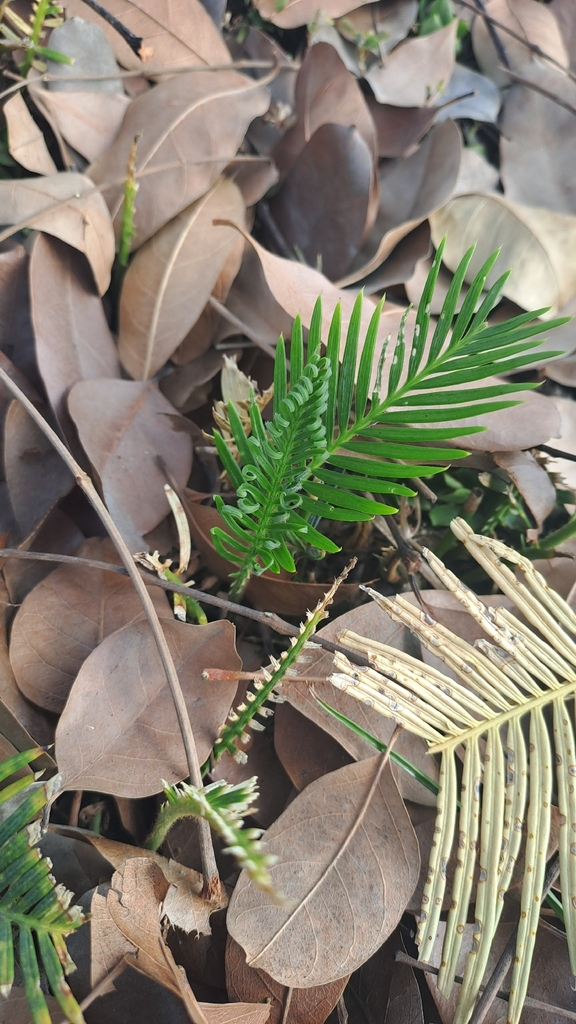
- Stiff, dark green feathery fronds
- Thick, woody, pineapple like trunk
- Fronds grow in a circular rosette
- Slow growing evergreen habit
- Height
- 0.6 to 3m
- Spread
- 0.6 to 2.5m
- Leaves
- dark green, evergreen
- Flowers
- 0cm
Problems to watch for
- Root RotCommon
- Scale InsectsCommon
- Brown Leaf EdgesUncommon
- ChlorosisUncommon
- Frond BrowningUncommon
- Sooty MoldUncommon
By symptom
Check your sago palm from a photo
Pocket Botanist looks at a photo of your plant and tells you what's wrong and what to try first.
Growing it
- Propagation
- seed, offsets
- When to plant
- spring, early summer
- Overwintering
- Move containers indoors before the first frost if you live in a cold climate. Keep the plant in a cool, bright spot and reduce watering significantly during the winter months.
- In containers
- It is excellent for containers, but ensure the pot has large drainage holes and use a gritty, fast draining potting mix.
Offsets
- 1. Carefully remove the small pups that grow at the base of the main trunk.
- 2. Allow the cut end to callous over for a few days in a dry area.
- 3. Plant the offset in a small pot with well draining soil.
- 4. Keep the soil barely moist until new roots develop.
Plant in well draining soil with low organic matter to mimic its natural rocky habitat.
Grows well with
Similar species
- Cardboard Palm — It has a similar growth habit and is also a popular cycad for landscaping.
Science
- Family
- Cycadaceae
- Genus
- Cycas
- Order
- Cycadales
- Class
- Cycadopsida
- Native range
- Southern Japan and parts of the Ryukyu Islands.
- Conservation
- It is listed as near threatened in its native habitat due to overcollection for the nursery trade.
It thrives in rocky, well drained soils in coastal areas where it can withstand salt spray and wind.
- Value to wildlife
- rarely visited by local pollinators
- Pollinators
- beetles
- Uses
- ornamental specimen, container plant, architectural focal point
Through the year
Ecological indicators
- Soil reaction
- 6/9
- Light
- 7/9
- Moisture
- 3/9
- Nutrients
- 3/9
- Salinity
- 5/9
- Temperature
- 7/9
Taxonomy resolved against GBIF.
Questions people ask
- Is it a palm tree?
- No, it is a cycad, which is a primitive group of seed plants that do not produce flowers.
- Why are the leaves turning yellow?
- Yellowing often indicates a magnesium deficiency or poor drainage in the soil.
Where the name comes from
The name Cycas comes from the Greek word for a type of palm, while revoluta refers to the way the leaf margins roll downward.
Good to know
- Cycads are living fossils that have existed since the time of the dinosaurs.
- They grow incredibly slowly, often producing only one set of new leaves per year.
- The trunk is actually a woody stem that stores starch.
- They are dioecious, meaning male and female cones grow on separate plants.
Also in
Keep your sago palm growing
This page is a general guide. Save your plant in Pocket Botanist and you get care reminders timed for this plant, plus a care history that shows what worked.
This guide was generated with AI and checked against GBIF taxonomy. It is general information, not horticultural or veterinary advice. Read about how we build these guides.