 Pocket Botanist
Guide botanique
Sagou.
Cycas revoluta
Prononciation SY-kas rev-oh-LOO-tuh
Aussi appelée Palmier-fougère, Sagou, Sagou, Sagou royal, Cycas du Japon, cycas sagou, sotesu-nut



Le Sagou est une plante magnifique et ancienne qui ressemble à un petit palmier. C'est en fait un cycas qui pousse très lentement, ce qui en fait un excellent choix pour une plante d'intérieur à long terme. Il ajoute une touche de charme préhistorique à tout coin ensoleillé de votre maison.
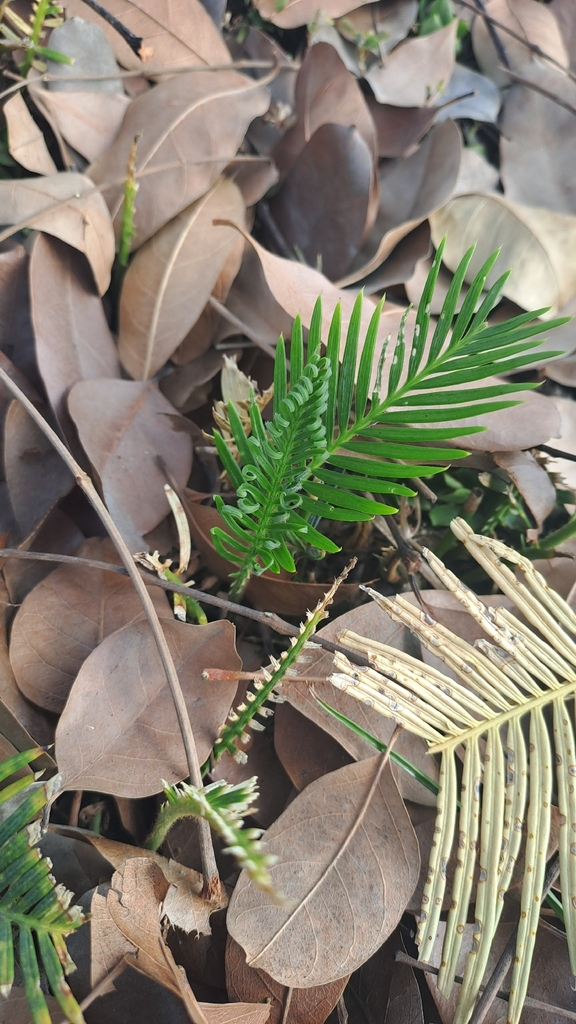
En un coup d'œil
- Niveau d'entretien
- Moyenne
- Type de plante
- Cycad
- Lumière
- Une lumière vive et indirecte est préférable, bien qu'elle puisse tolérer un peu de soleil direct une fois acclimatée.
- Lumière en intérieur
- Lumière vive indirecte
- Arrosage
- Tous les 14 à 21 jours
- Taille adulte
- 1 à 2 mètres de haut
- Croissance
- Lente
- Rusticité
- USDA 8 à 11
- Floraison
- Fleurit rarement en culture.
Entretien
Laissez le sol sécher considérablement entre les arrosages pour éviter la pourriture des racines. Fournissez beaucoup de lumière vive pour éviter que les frondes ne s'étirent. Surveillez le jaunissement des feuilles, qui signale souvent que la plante reçoit trop d'eau.
- Arrosage
- Laissez la moitié supérieure du sol sécher complètement avant d'arroser à nouveau.
- Engrais
- Nourrissez avec un engrais liquide équilibré pendant la saison de croissance active.
- Taille
- Retirez uniquement les frondes qui sont complètement devenues brunes ou jaunes.
- Rempotage
- Rempotez uniquement lorsque la plante est gravement à l'étroit dans son pot.
- Sol
- Mélange de terreau sableux bien drainant
- pH du sol
- 6,0 à 7,0
- Température
- -7 à 40°C
- Humidité
- 40 à 70%
- Résistance à la sécheresse
- Élevée
- Durée de vie
- Vivace, peut vivre plus de 100 ans.
- Résistance aux chevreuils et lapins
- Élevée
Signes qu'il faut rempoter
- Les racines sortent des trous de drainage
- La plante a complètement arrêté de pousser
- Le sol se décompose et retient trop d'eau
Sécurité
- Humains
- La plante entière contient de la cycasine, qui est une neurotoxine et un cancérogène puissant qui provoque de graves troubles gastro-intestinaux et une insuffisance hépatique.
- Animaux
- Cette plante est extrêmement toxique pour les chats et les chiens si ingérée.
- Enfants
- Cette plante est extrêmement dangereuse pour les enfants car chaque partie est toxique et les feuilles ont des pointes acérées comme des aiguilles.
- Allergènes de contact
- Les folioles rigides et pointues peuvent provoquer une irritation mécanique de la peau et de petites plaies perforantes.
- Allergènes aéroportés
- Il n'y a pas de preuves significatives d'allergies respiratoires associées à cette plante.
- Comestibilité
- Toutes les parties de cette plante sont hautement toxiques si ingérées et peuvent causer de graves dommages au foie.
Comment l'identifier
- Fronde raide, vert foncé, plumeuse
- Tronc épais, ligneux, semblable à un ananas
- Fronde pousse en rosette circulaire
- Habitude persistante à croissance lente
- Hauteur
- 0,6 à 3m
- Envergure
- 0,6 à 2,5m
- Feuilles
- vert foncé, evergreen
- Fleurs
- aucun, 0cm
- Fruits
- aucun, aucun
Problèmes à surveiller
- CochenillesCourant
- Pourriture des racinesCourant
- Brunissement des frondesPeu courant
- Brunissement du bord des feuillesPeu courant
- ChlorosePeu courant
- FumaginePeu courant
Par symptôme
Vérifie la santé de ta plante en photo
Pocket Botanist analyse une photo de ta plante et te dit ce qui ne va pas et quoi essayer en premier.
La cultiver
- Multiplication
- semis, drageons
- Quand planter
- printemps, début d'été
- Hivernage
- Rentrez les conteneurs à l'intérieur avant le premier gel si vous vivez dans un climat froid. Gardez la plante dans un endroit frais et lumineux et réduisez considérablement l'arrosage pendant les mois d'hiver.
- En pot
- Il est excellent pour les conteneurs, mais assurez-vous que le pot a de grands trous de drainage et utilisez un mélange de terre de rempotage granuleux et à drainage rapide.
Drageons
- 1. Retirez soigneusement les petites pousses qui poussent à la base du tronc principal.
- 2. Laissez l'extrémité coupée se calciner pendant quelques jours dans un endroit sec.
- 3. Plantez le drageon dans un petit pot avec un sol bien drainant.
- 4. Gardez le sol à peine humide jusqu'à ce que de nouvelles racines se développent.
Plantez dans un sol bien drainant avec peu de matière organique pour imiter son habitat rocheux naturel.
Bonnes associations
- Liriope panaché — Son feuillage ressemblant à de l'herbe offre un contraste doux avec la structure rigide du sagoutier.
- Rhododendron — Ils partagent des exigences de drainage du sol similaires et prospèrent à l'ombre partielle.
Espèces similaires
- Zamia furfuracea — Il a un port similaire et est également un sagoutier populaire pour l'aménagement paysager.
Science
- Famille
- Cycadaceae
- Genre
- Cycas
- Ordre
- Cycadales
- Classe
- Cycadopsida
- Région d'origine
- Sud du Japon et parties des îles Ryukyu.
- Préservation
- Il est classé comme quasi menacé dans son habitat d'origine en raison de la surcollecte pour le commerce des pépinières.
Il prospère dans les sols rocheux et bien drainés des zones côtières où il peut résister aux embruns salés et au vent.
- Intérêt pour la faune
- rarement visité par les pollinisateurs locaux
- Pollinisateurs
- coléoptères
- Utilisations
- spécimen ornemental, plante en pot, point focal architectural
Au fil des saisons
Repères écologiques
- Réaction du sol
- 6/9
- Lumière
- 7/9
- Humidité
- 3/9
- Nutriments
- 3/9
- Salinité
- 5/9
- Température
- 7/9
Taxonomie vérifiée avec le GBIF.
Ce qu'on demande souvent
- Est-ce un palmier?
- Non, c'est un sagoutier, un groupe primitif de plantes à graines qui ne produisent pas de fleurs.
- Pourquoi les feuilles jaunissent-elles?
- Le jaunissement indique souvent une carence en magnésium ou un mauvais drainage du sol.
D'où vient le nom
Le nom Cycas vient du mot grec pour un type de palmier, tandis que revoluta fait référence à la façon dont les bords des feuilles s'enroulent vers le bas.
Bon à savoir
- Les sagoutiers sont des fossiles vivants qui existent depuis l'époque des dinosaures.
- Ils poussent incroyablement lentement, ne produisant souvent qu'un seul jeu de nouvelles feuilles par an.
- Le tronc est en réalité une tige ligneuse qui stocke de l'amidon.
- Ils sont dioïques, ce qui signifie que les cônes mâles et femelles poussent sur des plantes séparées.
Aussi dans
Garde ta plante en pleine forme
Cette page est un guide général. Enregistre ta plante dans Pocket Botanist et tu reçois des rappels d'entretien adaptés à cette plante, ainsi qu'un historique d'entretien qui montre ce qui a marché.
Ce guide a été généré par IA et vérifié avec la taxonomie du GBIF. Il s'agit d'informations générales, et non de conseils horticoles ou vétérinaires. Découvre comment nous concevons ces guides.