 Pocket Botanist
Plant guide
Variegated Lilyturf.
Liriope muscari
Pronounced li-RYE-oh-pee mus-KAR-ee
Also known as Big Blue Lilyturf, Big blue lilyturf', Liriope, monkey grass



Scan with your phone's camera to get the app
Or go to pocketbotanist.app/get on your phone

Variegated Lilyturf is a tough, grass-like perennial that adds bright color to shady spots. It forms dense clumps of arching leaves with creamy yellow margins. This plant is a reliable choice for borders or ground cover.
At a glance
- Care level
- Easy
- Plant type
- Herbaceous perennial
- Light
- Partial shade to full shade
- Indoor light
- Medium light
- Water
- Every 5 to 10 days
- Mature size
- 30 to 45 cm
- Growth rate
- Medium
- Hardiness
- USDA 5 to 10
- Bloom time
- Late summer to early autumn
Care
Keep the soil consistently moist but not soggy. Watch for browning leaf tips, which often indicate the soil is drying out too much or the air is too dry. Trim back old foliage in late winter to make room for fresh spring growth.
- Watering
- Water when the top inch of soil feels dry to the touch.
- Feeding
- Apply a balanced liquid fertilizer once during the spring growth spurt.
- Pruning
- Cut back foliage to the ground in late winter before new growth emerges.
- Repotting
- Repot when the plant becomes root-bound or needs division.
- Soil
- Well-draining, fertile soil
- Soil pH
- 6.0 to 7.0
- Temperature
- -15 to 35°C
- Humidity
- 40 to 70%
- Drought tolerance
- Moderate
- Lifespan
- Perennial, typically 10 to 20 years.
- Deer and rabbits
- High
Signs it needs repotting
- Roots growing out of the drainage holes.
- Water sitting on the surface instead of soaking in.
- The plant looks crowded and stops producing new shoots.
Safety
- People
- All parts of the plant can cause mild stomach upset if eaten.
- Pets
- This plant is considered non-toxic to cats and dogs, although eating large amounts of the leaves may cause mild stomach upset.
- Children
- The small black berries may look like fruit to a child and pose a choking or ingestion risk.
- Contact allergens
- The foliage can cause mild skin irritation in sensitive individuals.
- Airborne allergens
- There are no significant reports of airborne allergens for this plant.
- Edibility
- The berries are not considered toxic, but they are not edible and should not be consumed.
How to identify it
- Arching grass-like leaves
- Creamy yellow leaf margins
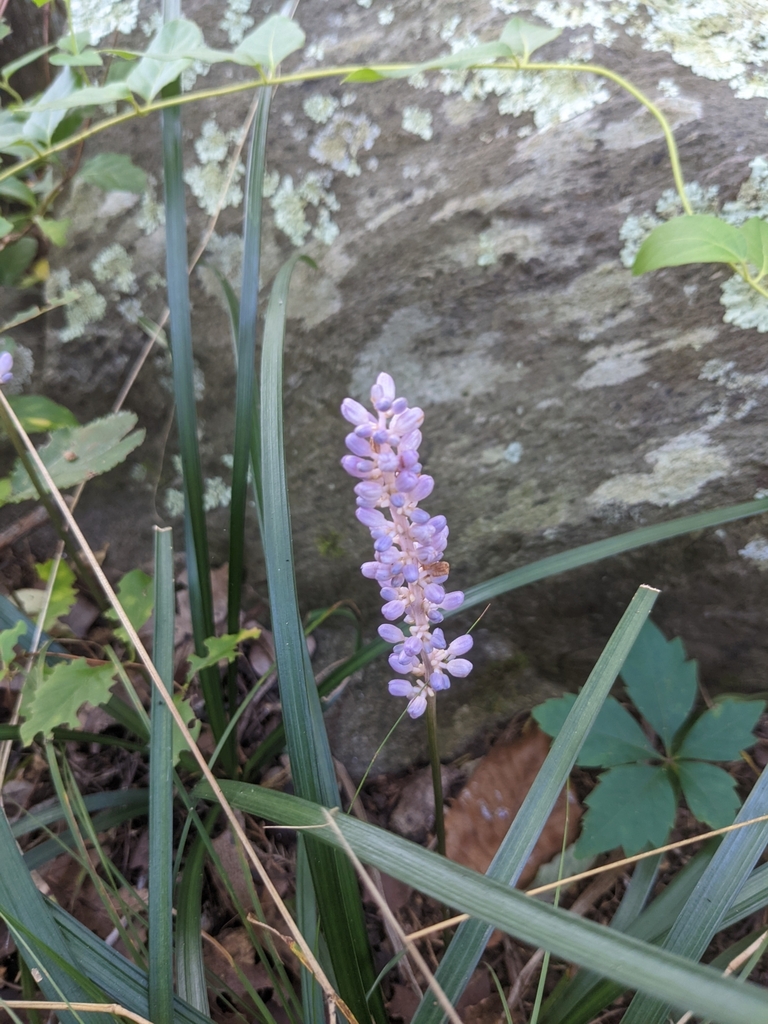
- Spikes of violet flowers
- Dark blue berry-like fruit
- Height
- 0.3 to 0.45m
- Spread
- 0.3 to 0.6m
- Leaves
- dark green, evergreen
- Flowers
- purple, lavender, 0.5 to 1cm
- Fruit
- black, Autumn
Problems to watch for
- Root RotCommon
- Slugs and SnailsCommon
- Leaf SpotUncommon
- AnthracnoseRare
Check your variegated lilyturf from a photo
Pocket Botanist looks at a photo of your plant and tells you what's wrong and what to try first.
Scan with your phone's camera to get the app
Or go to pocketbotanist.app/get on your phone
Growing it
- Propagation
- division
- When to plant
- spring, autumn
- Overwintering
- In colder regions, the foliage may brown slightly but will remain intact. Simply clear away any dead leaves in late winter to tidy the plant for the new season.
- In containers
- It grows very well in containers, provided the pot has excellent drainage and is at least 25 centimeters wide.
Division
- Dig up a mature clump in early spring.
- Use a sharp spade or knife to separate the clump into smaller sections.
- Ensure each section has healthy roots and foliage.
- Replant the divisions at the same depth as the original plant.
- Water thoroughly to establish the new roots.
Plant in groups to create a dense mat that effectively blocks out competing weeds.
Grows well with
- Hosta · They share similar light and moisture needs in shaded garden beds.
- Coral Bells · The contrasting foliage colors create a beautiful texture in the landscape.
Similar species
- Ophiopogon · It has a similar growth habit but features smaller, more grass like leaves.
Science
- Family
- Asparagaceae
- Genus
- Liriope
- Order
- Asparagales
- Class
- Liliopsida
- Native range
- East Asia, including China, Japan, and Vietnam.
- Conservation
- This plant is not of conservation concern and is widely cultivated.
It thrives in woodland understories where it spreads slowly through underground rhizomes.
- Value to wildlife
- nectar source
- Pollinators
- bees
- Uses
- ground cover, border edging, container plant
Through the year
Ecological indicators
- Salinity
- 2/9
- Light
- 4/9
- Moisture
- 5/9
- Soil reaction
- 5/9
- Temperature
- 5/9
- Nutrients
- 4/9
Taxonomy resolved against GBIF.
Questions people ask
- Does it need to be cut back?
- You can trim the foliage in late winter to encourage fresh spring growth.
- Is it a true grass?
- No, it is a perennial herb in the Asparagaceae family.
Where the name comes from
The genus name Liriope comes from Greek mythology, referring to a water nymph, while muscari describes the grape hyacinth like flower spikes.
Good to know
- It is often called lilyturf.
- It is incredibly tough, although it does not hold up well to regular foot traffic.
- The name muscari refers to its resemblance to grape hyacinth flowers.
- It grows in dense clumps that help suppress weeds.
Also in
Keep your variegated lilyturf growing
This page is a general guide. Save your plant in Pocket Botanist and you get care reminders timed for this plant, plus a care history that shows what worked.
Scan with your phone's camera to get the app
Or go to pocketbotanist.app/get on your phone
This guide was generated with AI on and checked against GBIF taxonomy. It is general information, not horticultural or veterinary advice. Read about how we build these guides.