 Pocket Botanist
Plant guide
Carob.
Ceratonia siliqua
Pronounced seh-ruh-TOH-nee-uh sih-LIH-kwuh
Also known as Carob, Carob Bean, Carob Tree Bean, Locust Bean, Locust Tree, St John's Bread, St. John's Bread, St. John's-bread



The carob tree is a beautiful, evergreen Mediterranean native known for its edible, sweet pods. It is quite hardy and thrives in warm, dry climates where it can grow into a substantial shade tree. You will love its glossy, dark green foliage and its ability to handle drought once it is established.
At a glance
- Care level
- Easy
- Plant type
- Evergreen tree
- Light
- Full sun
- Indoor light
- Direct sun
- Water
- Every 14 to 30 days
- Mature size
- 30 to 50 feet
- Growth rate
- Slow
- Hardiness
- USDA 9 to 11
- Bloom time
- Late summer to early autumn
Care
Plant this tree in well draining soil and provide plenty of sunlight to keep it happy. Watch for yellowing leaves which can indicate overwatering or poor drainage. It is very drought tolerant, so let the soil dry out significantly between waterings.
- Watering
- Water deeply but infrequently, allowing the soil to dry out almost completely between sessions.
- Feeding
- Apply a balanced, slow release fertilizer once a year in early spring.
- Pruning
- Prune during the dormant season to remove dead wood and maintain a desirable shape.
- Repotting
- Only repot young trees when they become root bound, as they prefer stable conditions.
- Soil
- Sandy, rocky, or well draining loam
- Soil pH
- Neutral to alkaline
- Temperature
- -5 to 45°C
- Humidity
- 20 to 50%
- Drought tolerance
- High
- Lifespan
- Long lived, often exceeding 100 years.
- Fragrance
- Light
- Deer and rabbits
- High
Signs it needs repotting
- Roots growing out of the drainage holes.
- Stunted growth despite proper care.
- Soil drying out too quickly.
Safety
- People
- The plant is non toxic, though the hard seeds pose a choking hazard.
- Children
- The hard, bean like seeds are a significant choking hazard for small children.
- Contact allergens
- None notable.
- Airborne allergens
- The pollen can cause mild respiratory irritation in sensitive individuals during the flowering season.
- Edibility
- The pulp of the pods is edible, but the seeds are extremely hard and should not be consumed.
How to identify it
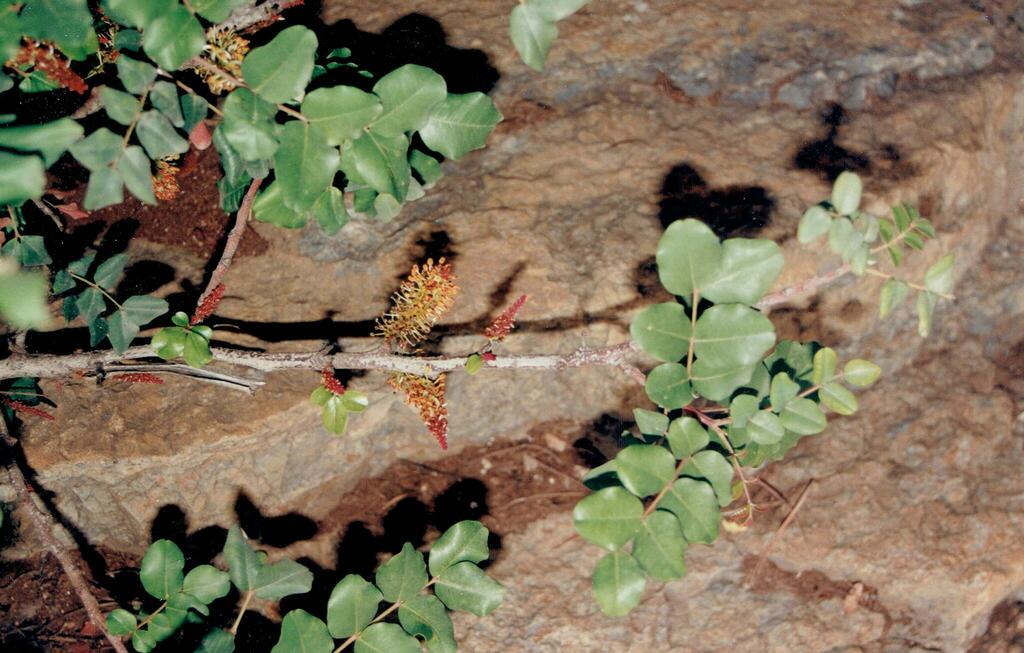
- Glossy, dark green pinnate leaves
- Small, reddish flowers in clusters
- Large, leathery, dark brown seed pods
- Slow growing, dense, rounded canopy
- Height
- 5 to 15m
- Spread
- 4 to 10m
- Leaves
- dark green, evergreen
- Flowers
- red, yellow, 0.5 to 1cm
- Fruit
- brown, Autumn to winter
Common problems
- Root rot — Occurs when the soil remains too wet for extended periods.
- Scale insects — Small sap sucking insects that can weaken the tree.
Growing it
- Propagation
- seed, cuttings, grafting
- When to plant
- spring, autumn
- Overwintering
- Protect young trees from frost with a cover. Established trees are generally hardy but appreciate a layer of mulch to protect roots.
- In containers
- It grows well in large pots while young, but ensure the container has excellent drainage.
Seed
- 1. Scarify the hard seed coat with sandpaper.
- 2. Soak seeds in warm water for 24 hours.
- 3. Plant in well draining soil mix.
- 4. Keep warm until germination occurs.
Group this tree with other drought tolerant Mediterranean plants to simplify irrigation management.
Grows well with
Similar species
- Honey Locust — Both produce long, bean like pods.
Science
- Family
- Fabaceae
- Genus
- Ceratonia
- Order
- Fabales
- Class
- Magnoliopsida
- Native range
- Mediterranean basin and the Middle East.
- Conservation
- It is widely cultivated and not considered threatened in its native range.
It thrives in rocky, arid landscapes by developing a deep taproot to access groundwater.
- Value to wildlife
- nectar source, provides shelter
- Pollinators
- bees, beetles
- Uses
- ornamental shade tree, culinary flour substitute, livestock fodder
Through the year
Ecological indicators
- Salinity
- 4/9
- Soil reaction
- 7/9
- Light
- 8/9
- Temperature
- 8/9
- Moisture
- 2/9
- Nutrients
- 3/9
Taxonomy resolved against GBIF.
Questions people ask
- Does carob need a lot of water?
- No, it is highly drought tolerant and prefers well drained soil.
- Can I grow carob in a container?
- It can be grown in a large container for several years but will eventually require planting in the ground.
Where the name comes from
The name Ceratonia comes from the Greek word keration, meaning little horn, referring to the shape of the pods. Siliqua is Latin for pod.
Good to know
- The term carat, used to measure gold and gemstones, comes from the Greek word for the carob seed, which was once thought to be uniform in weight.
- Carob trees are dioecious, meaning male and female flowers grow on separate trees.
- These trees are incredibly drought tolerant once established.
- Carob is often used as a caffeine free alternative to chocolate.
Also in
Is your carob looking unwell?
This page is a general guide. Pocket Botanist diagnoses problems from a photo of your actual plant, works out watering for your light and conditions, and reminds you when care is due.
This guide was generated with AI and checked against GBIF taxonomy. It is general information, not horticultural or veterinary advice. Read about how we build these guides.