 Pocket Botanist
Guía de plantas
Algarrobo.
Ceratonia siliqua
Pronunciación seh-ruh-TOH-nee-uh sih-LIH-kwuh
También se conoce como Carob, Carob Bean, Carob Tree Bean, Locust Bean, Locust Tree, St John's Bread, St. John's Bread, St. John's-bread



El algarrobo es un hermoso árbol mediterráneo de hoja perenne conocido por sus vainas comestibles y dulces. Es bastante resistente y prospera en climas cálidos y secos donde puede crecer hasta convertirse en un árbol de sombra sustancial. Te encantará su follaje verde oscuro y brillante y su capacidad para soportar la sequía una vez que esté establecido.
De un vistazo
- Nivel de cuidados
- Fácil
- Tipo de planta
- Árbol de hoja perenne
- Luz
- Pleno sol
- Luz en interior
- Sol directo
- Riego
- Cada 14 a 30 días
- Tamaño adulto
- 30 a 50 pies
- Ritmo de crecimiento
- Lento
- Rusticidad
- USDA 9 a 11
- Floración
- Late summer to early autumn
Cuidados
Planta este árbol en suelo bien drenado y proporciónale mucha luz solar para mantenerlo feliz. Observa si las hojas se amarillean, lo que puede indicar un riego excesivo o un drenaje deficiente. Tolera muy bien la sequía, así que deja que la tierra se seque significativamente entre riegos.
- Riego
- Riega profundamente pero con poca frecuencia, permitiendo que la tierra se seque casi por completo entre riegos.
- Abonado
- Aplica un fertilizante equilibrado de liberación lenta una vez al año a principios de primavera.
- Poda
- Poda durante la temporada de inactividad para eliminar la madera muerta y mantener una forma deseable.
- Trasplante
- Solo trasplanta los árboles jóvenes cuando tengan las raíces apretadas, ya que prefieren condiciones estables.
- Suelo
- Franco arenoso, rocoso o bien drenado
- pH del suelo
- Neutro a alcalino
- Temperatura
- -5 a 45°C
- Humedad
- 20 a 50%
- Tolerancia a la sequía
- Alta
- Longevidad
- Long lived, often exceeding 100 years.
- Fragancia
- Suave
- Resistencia a ciervos y conejos
- Alta
Señales de que necesita trasplante
- Roots growing out of the drainage holes.
- Stunted growth despite proper care.
- Soil drying out too quickly.
Seguridad
- Personas
- The plant is non toxic, though the hard seeds pose a choking hazard.
- Niños
- The hard, bean like seeds are a significant choking hazard for small children.
- Alérgenos por contacto
- None notable.
- Alérgenos en el aire
- The pollen can cause mild respiratory irritation in sensitive individuals during the flowering season.
- Comestibilidad
- The pulp of the pods is edible, but the seeds are extremely hard and should not be consumed.
Cómo identificarla
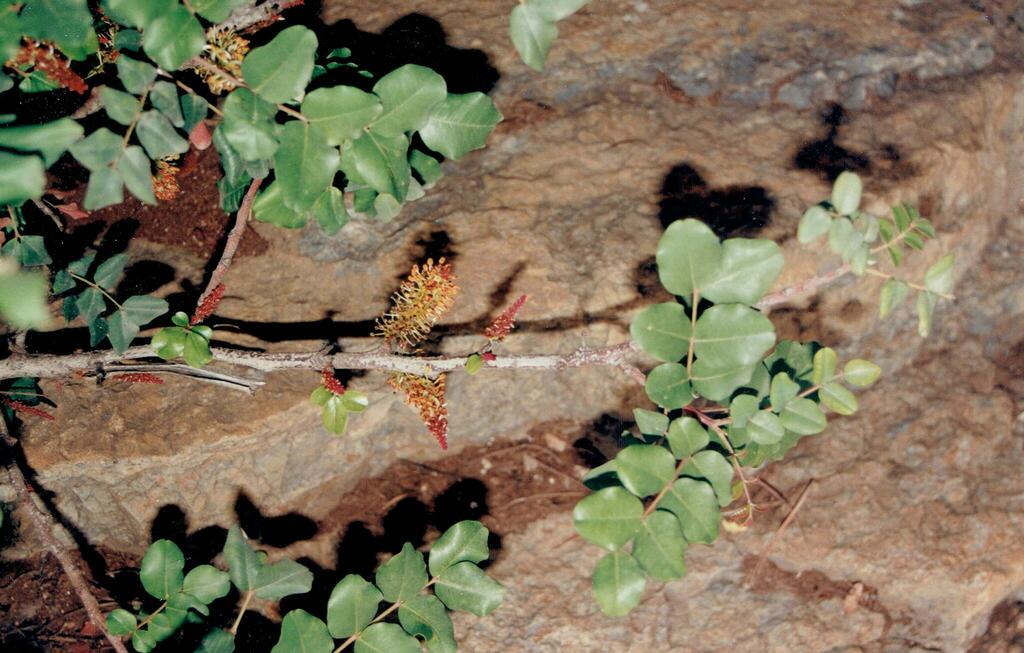
- Hojas pinnadas de color verde oscuro y brillante
- Flores rojizas pequeñas en racimos
- Vainas de semillas grandes, coriáceas y de color marrón oscuro
- Copa densa, redondeada y de crecimiento lento
- Altura
- 5 a 15m
- Anchura
- 4 a 10m
- Hojas
- dark green, evergreen
- Flores
- red, yellow, 0,5 a 1cm
- Frutos
- brown, Autumn to winter
Problemas frecuentes
- Root rot — Occurs when the soil remains too wet for extended periods.
- Scale insects — Small sap sucking insects that can weaken the tree.
Cómo cultivarla
- Propagación
- seed, cuttings, grafting
- Cuándo plantar
- spring, autumn
- Cuidados en invierno
- Protect young trees from frost with a cover. Established trees are generally hardy but appreciate a layer of mulch to protect roots.
- En maceta
- It grows well in large pots while young, but ensure the container has excellent drainage.
Seed
- 1. Scarify the hard seed coat with sandpaper.
- 2. Soak seeds in warm water for 24 hours.
- 3. Plant in well draining soil mix.
- 4. Keep warm until germination occurs.
Group this tree with other drought tolerant Mediterranean plants to simplify irrigation management.
Buenas compañeras
- Lavanda inglesa — They share similar requirements for sun and well drained soil.
- Rosemary — This herb thrives in the same dry, Mediterranean conditions.
Especies parecidas
- Acacia de tres espinas — Both produce long, bean like pods.
Ciencia
- Familia
- Fabaceae
- Género
- Ceratonia
- Orden
- Fabales
- Clase
- Magnoliopsida
- Distribución natural
- Mediterranean basin and the Middle East.
- Conservación
- It is widely cultivated and not considered threatened in its native range.
It thrives in rocky, arid landscapes by developing a deep taproot to access groundwater.
- Valor para la fauna
- nectar source, provides shelter
- Polinizadores
- abejas, escarabajos
- Usos
- ornamental shade tree, culinary flour substitute, livestock fodder
A lo largo del año
Indicadores ecológicos
- Salinidad
- 4/9
- Reacción del suelo
- 7/9
- Luz
- 8/9
- Temperatura
- 8/9
- Humedad
- 2/9
- Nutrientes
- 3/9
Taxonomía cotejada con GBIF.
Lo que más preguntan
- Does carob need a lot of water?
- No, it is highly drought tolerant and prefers well drained soil.
- Can I grow carob in a container?
- It can be grown in a large container for several years but will eventually require planting in the ground.
De dónde viene el nombre
The name Ceratonia comes from the Greek word keration, meaning little horn, referring to the shape of the pods. Siliqua is Latin for pod.
Bueno saberlo
- The term carat, used to measure gold and gemstones, comes from the Greek word for the carob seed, which was once thought to be uniform in weight.
- Carob trees are dioecious, meaning male and female flowers grow on separate trees.
- These trees are incredibly drought tolerant once established.
- Carob is often used as a caffeine free alternative to chocolate.
También en
¿Tu algarrobo tiene mal aspecto?
Esta página es una guía general. Pocket Botanist diagnostica problemas a partir de una foto de tu propia planta, calcula el riego según tu luz y tus condiciones, y te avisa cuando toca cuidarla.
Esta guía se ha generado con IA y se ha cotejado con la taxonomía de GBIF. Es información general, no asesoramiento botánico ni veterinario. Descubre cómo elaboramos estas guías.