 Pocket Botanist
Plant guide
Pawpaw.
Asimina triloba
Pronounced uh-SIM-ih-nuh try-LOH-buh
Also known as American paw paw, Dog-banana, Indian-banana, Indiana banana, Pawpaw, Pawpawtree, bandango, common paw paw



Scan with your phone's camera to get the app
Or go to pocketbotanist.app/get on your phone
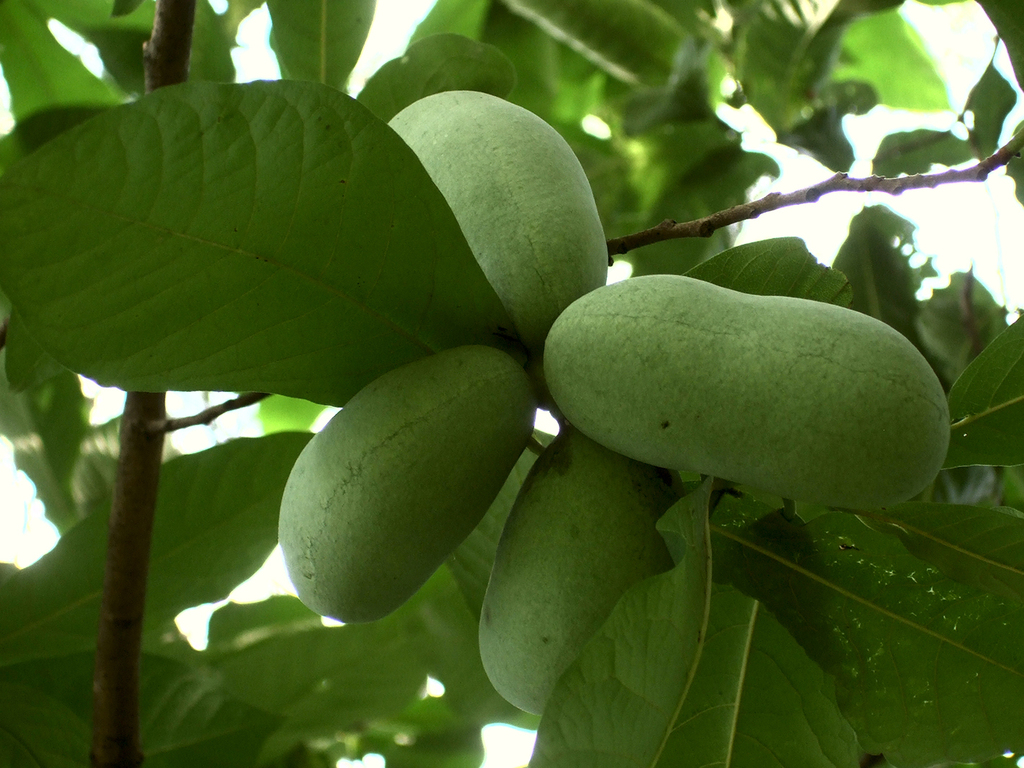
The pawpaw is a unique North American fruit tree that produces large, tropical tasting fruits. It grows as a small understory tree in its native habitat. You will love its drooping, dark green leaves and interesting purple flowers.
At a glance
- Care level
- Moderate
- Plant type
- Deciduous fruit tree
- Light
- Full sun to partial shade
- Indoor light
- Bright indirect
- Water
- Every 7 to 14 days
- Mature size
- 15 to 30 feet
- Growth rate
- Medium
- Hardiness
- USDA 5 to 9
- Bloom time
- Mid to late spring
Care
Young trees need protection from intense sun until they establish a strong root system. Keep the soil consistently moist but not waterlogged to support healthy fruit production. Watch for yellowing leaves which often signal poor drainage or nutrient deficiency.
- Watering
- Keep the soil evenly moist, especially during the first few years of growth.
- Feeding
- Apply a balanced fertilizer in early spring as new growth begins.
- Pruning
- Prune in late winter to remove dead wood and improve the tree shape.
- Repotting
- Pawpaws have a sensitive taproot, so only repot when absolutely necessary.
- Soil
- Deep, rich, well draining soil
- Soil pH
- 5.5 to 7.0
- Temperature
- -25 to 35°C
- Humidity
- 40 to 70%
- Drought tolerance
- Low
- Lifespan
- Perennial, typically 20 to 40 years.
- Fragrance
- Strong
- Deer and rabbits
- High
Signs it needs repotting
- Roots circling the bottom of the pot
- Stunted growth despite proper care
Safety
- People
- The seeds and skin contain annonacin, which is toxic if ingested in large quantities.
- Children
- The seeds are a choking hazard and should not be eaten.
- Contact allergens
- Some individuals may experience skin irritation from handling the leaves or fruit skin.
- Airborne allergens
- The pollen is not considered a significant airborne allergen.
- Edibility
- Only the ripe fruit flesh is edible, as the skin and seeds can cause digestive distress.
How to identify it
- Large, drooping, obovate leaves
- Dark purple, bell shaped flowers
- Clusters of kidney shaped fruit
- Smooth, greyish brown bark
- Height
- 3 to 9m
- Spread
- 2.5 to 6m
- Leaves
- bright green, yellow in autumn, deciduous
- Flowers
- maroon, purple, 3 to 5cm
- Fruit
- green, brown, Late summer to early autumn
Problems to watch for
- Pawpaw Peduncle BorerCommon
- Spicebush Swallowtail LarvaeCommon
- CaterpillarsUncommon
- Leaf ScorchUncommon
- Leaf SpotUncommon
- Root RotUncommon
Check your pawpaw from a photo
Pocket Botanist looks at a photo of your plant and tells you what's wrong and what to try first.
Scan with your phone's camera to get the app
Or go to pocketbotanist.app/get on your phone
Growing it
- Propagation
- seed, grafting, root suckers
- When to plant
- spring, early autumn
- Overwintering
- Young trees benefit from a layer of mulch around the base to protect roots from extreme temperature fluctuations. No special pruning is needed during the winter months.
- In containers
- It is not well suited for containers due to its deep taproot system.
Seed propagation
- 1. Collect fresh seeds in autumn and keep them moist.
- 2. Stratify seeds in the refrigerator for 90 to 120 days.
- 3. Plant seeds in deep pots to accommodate the taproot.
- 4. Keep soil consistently moist until germination occurs.
Plant pawpaws in a group to ensure cross pollination and create a mini woodland ecosystem.
Grows well with
- Spicebush · They share similar moisture and shade requirements in the understory.
- Wild Ginger · It makes a great groundcover that thrives in the same woodland conditions.
Similar species
- Persimmon · Another native fruit tree that thrives in similar woodland habitats.
Science
- Family
- Annonaceae
- Genus
- Asimina
- Order
- Magnoliales
- Class
- Magnoliopsida
- Native range
- Eastern United States and parts of southeastern Canada.
- Conservation
- This species is secure and widely distributed throughout its native range.
It grows naturally in the shady understory of moist, rich bottomland forests.
- Value to wildlife
- larval host plant for zebra swallowtail butterfly, provides fruit for small mammals
- Pollinators
- beetles, flies
- Uses
- edible fruit, ornamental tree, wildlife habitat
Through the year
Ecological indicators
- Salinity
- 1/9
- Soil reaction
- 6/9
- Light
- 5/9
- Temperature
- 5/9
- Moisture
- 7/9
- Nutrients
- 6/9
Taxonomy resolved against GBIF.
Questions people ask
- Do I need two trees to get fruit?
- Yes, you need two different genetic varieties for cross pollination.
- How do I know when the fruit is ripe?
- The fruit will soften slightly and emit a strong, sweet fragrance.
Where the name comes from
The name pawpaw likely comes from the Spanish word papaya due to a superficial resemblance in fruit appearance. The specific epithet triloba refers to the three lobed calyx of the flowers.
Good to know
- Pawpaws have a tropical flavor profile often described as a mix of banana, mango, and pineapple.
- They are the only temperate member of the custard apple family.
- The fruit has a very short shelf life once picked, making it rare in commercial markets.
- Early settlers used the fibrous inner bark to make cordage.
Also in
Keep your pawpaw growing
This page is a general guide. Save your plant in Pocket Botanist and you get care reminders timed for this plant, plus a care history that shows what worked.
Scan with your phone's camera to get the app
Or go to pocketbotanist.app/get on your phone
This guide was generated with AI on and checked against GBIF taxonomy. It is general information, not horticultural or veterinary advice. Read about how we build these guides.