 Pocket Botanist
Guide botanique
Pawpaw.
Asimina triloba
Prononciation uh-SIM-ih-nuh try-LOH-buh
Aussi appelée American paw paw, Dog-banana, Indian-banana, Indiana banana, Pawpaw, Pawpawtree, bandango, common paw paw


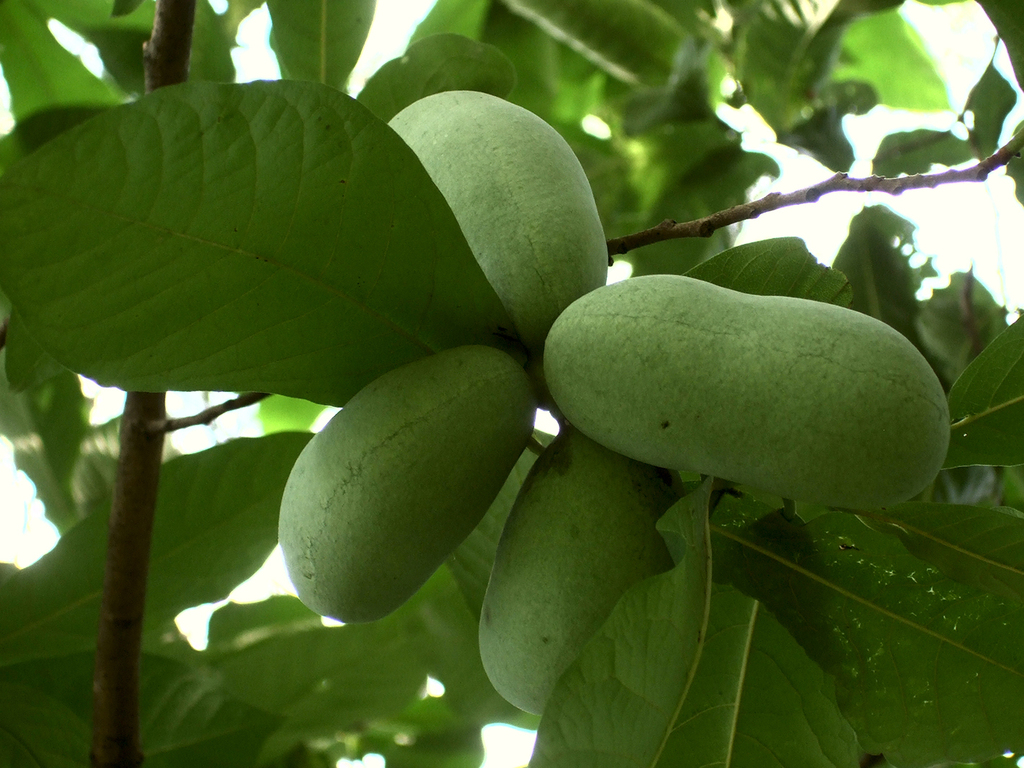
L'asimier est un arbre fruitier nord-américain unique qui produit de gros fruits au goût tropical. Il pousse comme un petit arbre de sous-étage dans son habitat naturel. Vous adorerez ses feuilles tombantes, vert foncé, et ses fleurs violettes intéressantes.
En un coup d'œil
- Niveau d'entretien
- Moyenne
- Type de plante
- Arbre fruitier à feuilles caduques
- Lumière
- Plein soleil à ombre partielle
- Lumière en intérieur
- Lumière vive indirecte
- Arrosage
- Tous les 7 à 14 jours
- Taille adulte
- 15 à 30 pieds
- Croissance
- Moyenne
- Rusticité
- USDA 5 à 9
- Floraison
- Mid to late spring
Entretien
Les jeunes arbres ont besoin d'être protégés du soleil intense jusqu'à ce qu'ils aient un système racinaire solide. Gardez le sol constamment humide mais pas gorgé d'eau pour favoriser une production fruitière saine. Surveillez le jaunissement des feuilles, qui signale souvent un mauvais drainage ou une carence en nutriments.
- Arrosage
- Keep the soil evenly moist, especially during the first few years of growth.
- Engrais
- Appliquez un engrais équilibré au début du printemps, lorsque la nouvelle croissance commence.
- Taille
- Taillez à la fin de l'hiver pour enlever le bois mort et améliorer la forme de l'arbre.
- Rempotage
- Les asimiers ont une racine pivotante sensible, donc rempotez seulement lorsque c'est absolument nécessaire.
- Sol
- Sol profond, riche et bien drainé
- pH du sol
- 5.5 à 7.0
- Température
- -25 à 35°C
- Humidité
- 40 à 70%
- Résistance à la sécheresse
- Faible
- Durée de vie
- Perennial, typically 20 to 40 years.
- Parfum
- Fort
- Résistance aux chevreuils et lapins
- Élevée
Signes qu'il faut rempoter
- Roots circling the bottom of the pot
- Stunted growth despite proper care
Sécurité
- Humains
- The seeds and skin contain annonacin, which is toxic if ingested in large quantities.
- Enfants
- The seeds are a choking hazard and should not be eaten.
- Allergènes de contact
- Some individuals may experience skin irritation from handling the leaves or fruit skin.
- Allergènes aéroportés
- The pollen is not considered a significant airborne allergen.
- Comestibilité
- Only the ripe fruit flesh is edible, as the skin and seeds can cause digestive distress.
Comment l'identifier
- Grandes feuilles obovales tombantes
- Fleurs violettes foncées en forme de cloche
- Grappes de fruits en forme de rein
- Écorce lisse, grisâtre et brune
- Hauteur
- 3 à 9m
- Envergure
- 2,5 à 6m
- Feuilles
- bright green, yellow in autumn, deciduous
- Fleurs
- maroon, purple, 3 à 5cm
- Fruits
- green, brown, Late summer to early autumn
Problèmes courants
- Pawpaw peduncle borer — A moth larva that feeds on the flower stems and can reduce fruit set.
La cultiver
- Multiplication
- seed, cuttings, root suckers
- Quand planter
- spring, early autumn
- Hivernage
- Young trees benefit from a layer of mulch around the base to protect roots from extreme temperature fluctuations. No special pruning is needed during the winter months.
- En pot
- It is not well suited for containers due to its deep taproot system.
Seed propagation
- 1. Collect fresh seeds in autumn and keep them moist.
- 2. Stratify seeds in the refrigerator for 90 to 120 days.
- 3. Plant seeds in deep pots to accommodate the taproot.
- 4. Keep soil consistently moist until germination occurs.
Plant pawpaws in a group to ensure cross pollination and create a mini woodland ecosystem.
Bonnes associations
- Northern spicebush — They share similar moisture and shade requirements in the understory.
- Asarum canadense — It makes a great groundcover that thrives in the same woodland conditions.
Espèces similaires
- American persimmon — Another native fruit tree that thrives in similar woodland habitats.
Science
- Famille
- Annonaceae
- Genre
- Asimina
- Ordre
- Magnoliales
- Classe
- Magnoliopsida
- Région d'origine
- Eastern United States and parts of southeastern Canada.
- Préservation
- This species is secure and widely distributed throughout its native range.
It grows naturally in the shady understory of moist, rich bottomland forests.
- Intérêt pour la faune
- larval host plant for zebra swallowtail butterfly, provides fruit for small mammals
- Pollinisateurs
- coléoptères, flies
- Utilisations
- edible fruit, ornamental tree, wildlife habitat
Au fil des saisons
Repères écologiques
- Salinité
- 1/9
- Réaction du sol
- 6/9
- Lumière
- 5/9
- Température
- 5/9
- Humidité
- 7/9
- Nutriments
- 6/9
Taxonomie vérifiée avec le GBIF.
Ce qu'on demande souvent
- Do I need two trees to get fruit?
- Yes, you need two different genetic varieties for cross pollination.
- How do I know when the fruit is ripe?
- The fruit will soften slightly and emit a strong, sweet fragrance.
D'où vient le nom
The name pawpaw likely comes from the Spanish word papaya due to a superficial resemblance in fruit appearance. The specific epithet triloba refers to the three lobed calyx of the flowers.
Bon à savoir
- Pawpaws have a tropical flavor profile often described as a mix of banana, mango, and pineapple.
- They are the only temperate member of the custard apple family.
- The fruit has a very short shelf life once picked, making it rare in commercial markets.
- Early settlers used the fibrous inner bark to make cordage.
Aussi dans
Ta plante a mauvaise mine ?
Cette page est un guide général. Pocket Botanist diagnostique les problèmes directement à partir d'une photo de ta plante, adapte l'arrosage à sa luminosité et te prévient quand il faut t'en occuper.
Ce guide a été généré par IA et vérifié avec la taxonomie du GBIF. Il s'agit d'informations générales, et non de conseils horticoles ou vétérinaires. Découvre comment nous concevons ces guides.