 Pocket Botanist
Pflanzenratgeber
Pawpaw.
Asimina triloba
Aussprache uh-SIM-ih-nuh try-LOH-buh
Auch bekannt als Americanischer Pawpaw, Hundsbanane, Indianerbanane, Indiana-Banane, Pawpaw, Pawpawbaum, Bandango, gewöhnliche Pawpaw


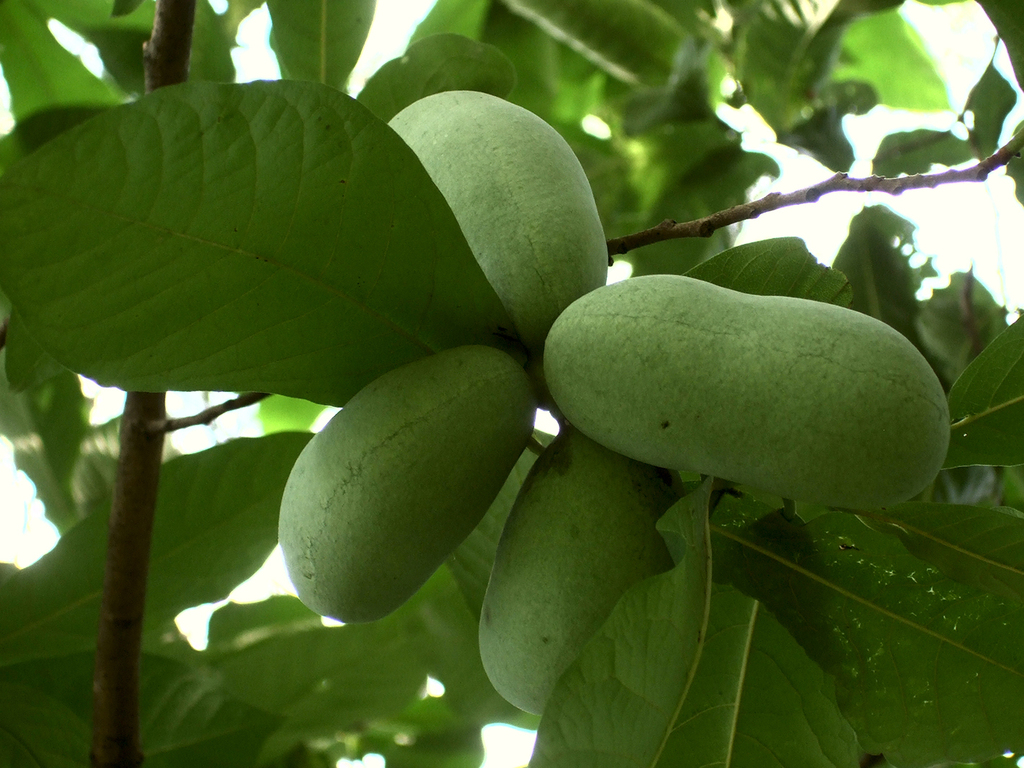
Der Pawpaw ist ein einzigartiger nordamerikanischer Obstbaum, der große Früchte mit tropischem Geschmack hervorbringt. In seinem natürlichen Lebensraum wächst er als kleiner Baum im Unterholz. Sie werden seine hängenden, dunkelgrünen Blätter und interessanten lila Blüten lieben.
Auf einen Blick
- Pflegestufe
- Mittel
- Pflanzenart
- Laubabwerfender Obstbaum
- Licht
- Volle Sonne bis Halbschatten
- Licht im Innenraum
- Hell, indirekt
- Gießen
- Alle 7 bis 14 Tage
- Endgröße
- 4,5 bis 9 Meter
- Wachstum
- Mittel
- Winterhärte
- USDA 5 bis 9
- Blütezeit
- Mid to late spring
Pflege
Junge Bäume brauchen Schutz vor intensiver Sonne, bis sie ein starkes Wurzelsystem entwickelt haben. Halten Sie den Boden gleichmäßig feucht, aber nicht staunass, um eine gesunde Fruchtproduktion zu unterstützen. Achten Sie auf gelbe Blätter, die oft auf schlechte Drainage oder Nährstoffmangel hinweisen.
- Gießen
- Halten Sie den Boden gleichmäßig feucht, besonders in den ersten Wachstumsjahren.
- Düngen
- Geben Sie im frühen Frühling, wenn das neue Wachstum beginnt, einen ausgewogenen Dünger.
- Schneiden
- Schneiden Sie im späten Winter, um totes Holz zu entfernen und die Baumform zu verbessern.
- Umtopfen
- Pawpaws haben eine empfindliche Pfahlwurzel, daher sollten sie nur bei unbedingt notwendigen Fällen umgetopft werden.
- Boden
- Tiefer, reicher, gut durchlässiger Boden
- Boden-pH
- 5,5 bis 7,0
- Temperatur
- -25 bis 35°C
- Luftfeuchtigkeit
- 40 bis 70%
- Trockenheitstoleranz
- Gering
- Lebensdauer
- Perennial, typically 20 to 40 years.
- Duft
- Stark
- Wildverbiss-Resistenz
- Hoch
Anzeichen fürs Umtopfen
- Roots circling the bottom of the pot
- Stunted growth despite proper care
Sicherheit
- Menschen
- The seeds and skin contain annonacin, which is toxic if ingested in large quantities.
- Kinder
- The seeds are a choking hazard and should not be eaten.
- Kontaktallergene
- Some individuals may experience skin irritation from handling the leaves or fruit skin.
- Allergene in der Luft
- The pollen is not considered a significant airborne allergen.
- Essbarkeit
- Only the ripe fruit flesh is edible, as the skin and seeds can cause digestive distress.
So erkennst du die Pflanze
- Große, hängende, obovate Blätter
- Dunkelviolette, glockenförmige Blüten
- Büschel von nierenförmigen Früchten
- Glatte, gräulich-braune Rinde
- Höhe
- 3 bis 9m
- Breite
- 2,5 bis 6m
- Blätter
- bright green, yellow in autumn, deciduous
- Blüten
- maroon, purple, 3 bis 5cm
- Früchte
- green, brown, Late summer to early autumn
Häufige Probleme
- Pawpaw peduncle borer — A moth larva that feeds on the flower stems and can reduce fruit set.
Standort und Pflege
- Vermehrung
- seed, cuttings, root suckers
- Pflanzzeit
- spring, early autumn
- Überwinterung
- Young trees benefit from a layer of mulch around the base to protect roots from extreme temperature fluctuations. No special pruning is needed during the winter months.
- Im Kübel
- It is not well suited for containers due to its deep taproot system.
Seed propagation
- 1. Collect fresh seeds in autumn and keep them moist.
- 2. Stratify seeds in the refrigerator for 90 to 120 days.
- 3. Plant seeds in deep pots to accommodate the taproot.
- 4. Keep soil consistently moist until germination occurs.
Plant pawpaws in a group to ensure cross pollination and create a mini woodland ecosystem.
Gute Pflanzpartner
- Northern spicebush — They share similar moisture and shade requirements in the understory.
- Asarum canadense — It makes a great groundcover that thrives in the same woodland conditions.
Ähnliche Arten
- American persimmon — Another native fruit tree that thrives in similar woodland habitats.
Botanisches
- Familie
- Annonaceae
- Gattung
- Asimina
- Ordnung
- Magnoliales
- Klasse
- Magnoliopsida
- Ursprüngliche Heimat
- Eastern United States and parts of southeastern Canada.
- Artenschutz
- This species is secure and widely distributed throughout its native range.
It grows naturally in the shady understory of moist, rich bottomland forests.
- Nutzen für Wildtiere
- larval host plant for zebra swallowtail butterfly, provides fruit for small mammals
- Bestäuber
- Käfer, flies
- Verwendung
- edible fruit, ornamental tree, wildlife habitat
Im Jahresverlauf
Ökologische Zeigerwerte
- Salzgehalt
- 1/9
- Bodenreaktion
- 6/9
- Licht
- 5/9
- Temperatur
- 5/9
- Feuchtigkeit
- 7/9
- Nährstoffe
- 6/9
Taxonomie abgeglichen mit GBIF.
Häufige Fragen
- Do I need two trees to get fruit?
- Yes, you need two different genetic varieties for cross pollination.
- How do I know when the fruit is ripe?
- The fruit will soften slightly and emit a strong, sweet fragrance.
Woher der Name kommt
The name pawpaw likely comes from the Spanish word papaya due to a superficial resemblance in fruit appearance. The specific epithet triloba refers to the three lobed calyx of the flowers.
Gut zu wissen
- Pawpaws have a tropical flavor profile often described as a mix of banana, mango, and pineapple.
- They are the only temperate member of the custard apple family.
- The fruit has a very short shelf life once picked, making it rare in commercial markets.
- Early settlers used the fibrous inner bark to make cordage.
Auch in
Probleme mit Pawpaw?
Diese Seite bietet allgemeine Infos. Pocket Botanist erkennt Probleme anhand eines Fotos deiner echten Pflanze, passt das Gießen an dein Licht und deinen Standort an und erinnert dich an die Pflege.
Dieser Ratgeber wurde mit KI erstellt und mit der GBIF-Taxonomie abgeglichen. Er dient zur allgemeinen Information und ersetzt keine gärtnerische oder tierärztliche Beratung. Hier erfährst du, wie wir diese Ratgeber erstellen.