 Pocket Botanist
Symptoms by part
Leaves
You may see small, yellow, or brown spots where the bugs have pierced the tissue to feed on sap.
Stems
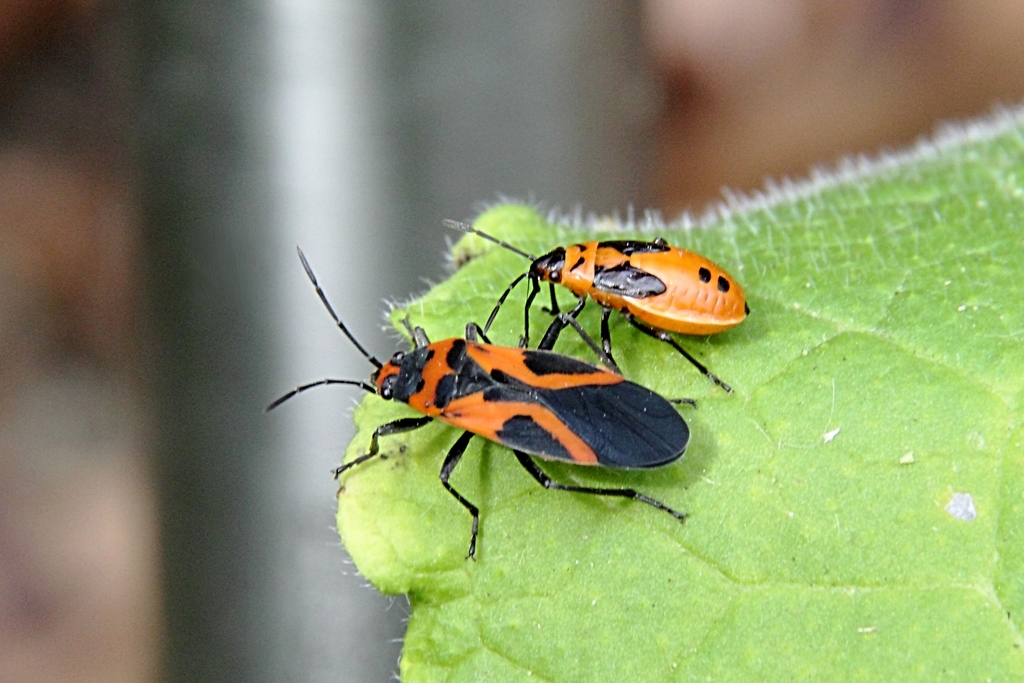
Clusters of orange and black nymphs or adults congregating on the stems, sometimes causing minor wilting or stunted growth if the infestation is heavy.
Causes
- The presence of milkweed plants which serve as their primary food source.
- Warm temperatures that encourage rapid breeding and population growth.
- High density of seed pods which provide a concentrated food supply for the bugs.
Could be confused with
- Boxelder bugs · Boxelder bugs are generally darker with red markings rather than bright orange and are typically found on boxelder or maple trees rather than milkweed.
- Large milkweed bug versus small milkweed bug · The large milkweed bug has a distinct black band across its orange wings, while the small milkweed bug has two large black spots on its back.
Find out what's really wrong with your plant
Problems that look alike are easy to mix up. Pocket Botanist looks at a photo of your actual plant and tells you what's going on, how serious it is, and what to try first. Identification and a health check are free.



Scan with your phone's camera to get the app
Or go to pocketbotanist.app/get on your phone
Treatment
- Handpick the bugs off the stems and leaves during the cool morning hours when they are less active.
- Drop the collected bugs into a bucket of soapy water to dispose of them.
- Prune away heavily infested seed pods to remove the primary food source and reduce the local population.
Without chemicals
- Handpicking and removing bugs manually.
- Pruning and disposing of infested seed pods.
- Encouraging natural predators like spiders and assassin bugs in the garden.
Chemical options
- Fatty acids, spray directly on the bugs when they are visible on the plant, follow the label.
Preventing it
- Clean up plant debris around the base of milkweed plants at the end of the season to remove overwintering sites.
- Plant a diverse range of flowers to attract beneficial insects that prey on milkweed bugs.
- Avoid over-fertilizing, as lush growth can attract more pests.
Season
The warm growing season.
Spread risk
Moderate
Severity
Low
When to act
Act as soon as you notice large clusters of bugs damaging the seed pods or causing visible wilting. You rarely need to remove the plant entirely unless it is severely stunted or diseased beyond recovery.
Keep your plants healthy from here
Save your plants in Pocket Botanist and you get care reminders timed for each one, plus a care history that shows what worked. Identification and a health check are free.
Questions people ask
- Are milkweed bugs harmful to my other garden plants?
- Generally, no. They are highly specialized feeders that prefer milkweed and rarely bother other types of flowers or vegetables.
- Should I kill all the milkweed bugs I see?
- Not necessarily. They are a natural part of the milkweed life cycle. Only intervene if the population is so large that it is destroying the plant or preventing it from producing seeds.
- Do milkweed bugs bite humans?
- They are not aggressive and do not bite humans, though they may emit a mild odor if handled roughly.
Plants it affects
Answers plant by plant
This guide was generated with AI on and is general information, not horticultural advice. Read about how we build these guides.