 Pocket Botanist
Plant guide
Sodom Apple.
Calotropis procera
Pronounced ka-LOT-ro-pis pro-SEER-uh
Also known as Apple of Sodom, French-cotton, Liberty Tree, Mudar, Prince-of-Wales crown, Roostertree, Seto / Gedla Akonda, Sodom's-milkweed



Scan with your phone's camera to get the app
Or go to pocketbotanist.app/get on your phone

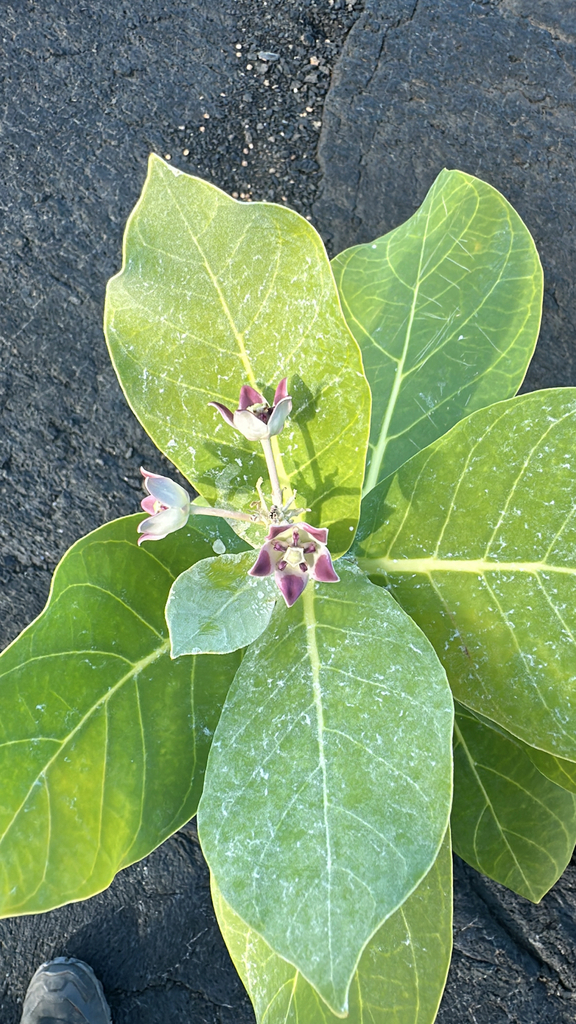
The Sodom Apple is a hardy shrub known for its unique, inflated fruit and milky sap. It thrives in arid environments and is quite resilient once established. You will find it produces clusters of star shaped flowers throughout the year.
At a glance
- Care level
- Easy
- Plant type
- Shrub
- Light
- Full sun
- Indoor light
- Direct sun
- Water
- Every 10 to 20 days
- Mature size
- 3 to 5 meters
- Growth rate
- Fast
- Hardiness
- USDA 10 to 12
- Bloom time
- Year round in warm climates
Care
This plant prefers full sun and well draining soil to prevent root rot. Watch for yellowing leaves which may indicate overwatering or poor drainage. Handle with care due to the irritating sap.
- Watering
- Allow the soil to dry out completely between waterings.
- Feeding
- Apply a balanced fertilizer sparingly during the growing season.
- Pruning
- Trim back occasionally to maintain shape and remove dead branches.
- Repotting
- Repot only when the plant becomes root bound in its container.
- Soil
- Sandy or rocky, well draining
- Soil pH
- 6.0 to 8.5
- Temperature
- 5 to 45°C
- Humidity
- 10 to 50%
- Drought tolerance
- High
- Lifespan
- Perennial, typically 5 to 10 years
- Fragrance
- Light
- Deer and rabbits
- High
Signs it needs repotting
- Roots growing out of drainage holes
- Stunted growth despite proper care
Safety
- People
- All parts of the plant are toxic if ingested and the sap can cause severe eye irritation.
- Pets
- The milky sap is highly toxic to cats and dogs if ingested or if it contacts their skin.
- Children
- Keep children away from this plant as the toxic sap and irritating hairs pose a significant risk.
- Contact allergens
- The milky latex sap is a potent skin irritant and can cause blistering.
- Airborne allergens
- The fine hairs on the seeds can cause irritation if inhaled.
- Edibility
- The plant contains cardiac glycosides and is considered toxic if ingested.
How to identify it
- Large, thick, waxy gray green leaves
- Inflated, apple shaped green fruit
- Star shaped white and purple flowers
- Milky white sap in stems
- Soft, corky bark texture
- Height
- 2 to 5m
- Spread
- 1.5 to 3m
- Leaves
- gray-green, evergreen
- Flowers
- white, purple, 2 to 3cm
- Fruit
- green, yellow, Year round
Problems to watch for
- AphidsCommon
- Milkweed BugsCommon
- Root RotUncommon
- Sooty MoldUncommon
Check your sodom apple from a photo
Pocket Botanist looks at a photo of your plant and tells you what's wrong and what to try first.
Scan with your phone's camera to get the app
Or go to pocketbotanist.app/get on your phone
Growing it
- Propagation
- seed, cuttings
- When to plant
- spring, summer
- Overwintering
- Move to a frost free location if temperatures drop below freezing. Keep the soil on the drier side during the winter months.
- In containers
- It grows well in large containers, but ensure the pot is at least 40 liters to accommodate its root system.
Seed
- 1. Collect mature pods.
- 2. Sow seeds in sandy, well draining soil.
- 3. Keep warm and lightly moist until germination.
Plant in areas with full sun and well draining soil to mimic its natural arid habitat.
Grows well with
- Desert Rose · They share similar water and light requirements.
Similar species
- Giant Milkweed · It is a closely related species with larger, more intense purple flowers.
Science
- Family
- Apocynaceae
- Genus
- Calotropis
- Order
- Gentianales
- Class
- Magnoliopsida
- Native range
- Northern Africa, Western Asia, and the Indian subcontinent.
- Conservation
- Not of conservation concern, often considered an invasive weed in some regions.
It is a pioneer species that colonizes disturbed, arid, and saline environments.
- Value to wildlife
- larval host plant, nectar source
- Pollinators
- bees, butterflies
- Uses
- ornamental, fiber production, traditional medicine
Through the year
Ecological indicators
- Soil reaction
- 7/9
- Light
- 8/9
- Temperature
- 8/9
- Nutrients
- 2/9
- Salinity
- 6/9
- Moisture
- 2/9
Taxonomy resolved against GBIF.
Questions people ask
- Is this plant safe for pets?
- No, it is toxic to animals and humans alike.
- Can I grow it in a pot?
- Yes, but it requires a very large container and excellent drainage.
Where the name comes from
The name Calotropis comes from the Greek words for beautiful and keel, referring to the flower shape.
Good to know
- The stems produce a strong fiber used for making ropes.
- It is commonly known as the Sodom apple.
- The plant is highly drought tolerant.
- It thrives in poor, sandy soils.
Also in
Keep your sodom apple growing
This page is a general guide. Save your plant in Pocket Botanist and you get care reminders timed for this plant, plus a care history that shows what worked.
Scan with your phone's camera to get the app
Or go to pocketbotanist.app/get on your phone
This guide was generated with AI on and checked against GBIF taxonomy. It is general information, not horticultural or veterinary advice. Read about how we build these guides.