 Pocket Botanist
Pflanzenratgeber
Broad Bean.
Vicia faba
Aussprache VIH-see-uh FAH-buh
Auch bekannt als Broad Bean, Fava bean, Field Bean


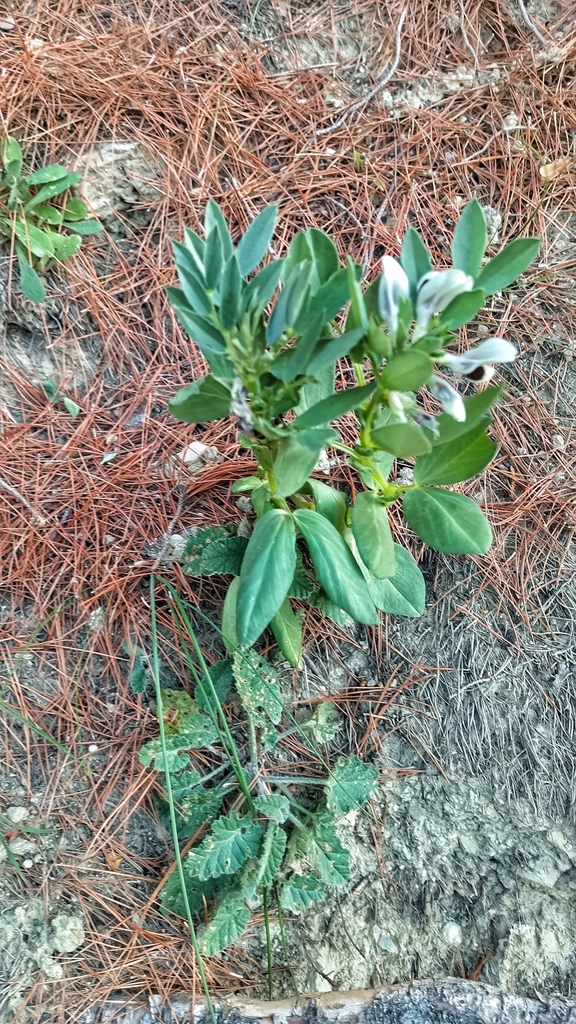
Broad beans are cool season crops that produce delicious, protein-rich pods. They thrive in temperate climates and are quite hardy against light frost. You will love how easy they are to grow in your garden.

Auf einen Blick
- Pflegestufe
- Einfach
- Pflanzenart
- Annual vegetable
- Licht
- Full sun
- Licht im Innenraum
- Direkte Sonne
- Gießen
- Alle 5 bis 7 Tage
- Endgröße
- 3 to 4 feet
- Wachstum
- Schnell
- Winterhärte
- USDA 7 bis 10
- Blütezeit
- Late winter to late spring
Pflege
Plant these in well-draining soil and keep the area weed-free as they establish. Watch for aphids on the tender new growth during the spring. Provide support for taller varieties to keep the heavy pods off the ground.
- Gießen
- Keep the soil consistently moist but never waterlogged during the flowering and pod-filling stages.
- Düngen
- Apply a balanced organic fertilizer once when the plants start to flower.
- Schneiden
- Pinch off the growing tips once the first pods have set to encourage energy into the beans.
- Umtopfen
- These are annuals and are typically grown directly in the garden soil.
- Boden
- Loamy, fertile soil
- Boden-pH
- 6.0 to 7.5
- Temperatur
- 5 bis 25°C
- Luftfeuchtigkeit
- 40 bis 70%
- Trockenheitstoleranz
- Mittel
- Lebensdauer
- Annual, typically 6 to 9 months
- Duft
- Leicht
- Wildverbiss-Resistenz
- Mittel
Anzeichen fürs Umtopfen
- Roots growing out of drainage holes
- Stunted growth despite regular feeding
Sicherheit
- Menschen
- The plant is generally safe to eat when cooked, but raw beans contain compounds that are toxic to those with a specific genetic enzyme deficiency.
- Kinder
- The large, smooth seeds can be a choking hazard for small children if left unattended.
- Kontaktallergene
- Handling the foliage may cause mild skin irritation in sensitive individuals.
- Allergene in der Luft
- Pollen from the flowers can trigger seasonal allergies in some people.
- Essbarkeit
- Raw fava beans can cause severe illness in individuals with G6PD deficiency, a condition known as favism.
So erkennst du die Pflanze
- Sturdy upright square stems
- Compound leaves with oval leaflets
- White flowers with black spots
- Large green edible pods
- Höhe
- 0,3 bis 1,2m
- Breite
- 0,2 bis 0,45m
- Blätter
- green, blue-green, deciduous
- Blüten
- white, black, 2 bis 3cm
- Früchte
- green, Late spring to early summer
Häufige Probleme
- Aphids — Small insects that cluster on tender new growth and suck plant sap.
- Chocolate spot — A fungal infection causing brown spots on leaves and stems during wet weather.
Standort und Pflege
- Vermehrung
- seed
- Pflanzzeit
- fall, late winter, early spring
- Überwinterung
- In mild climates, they can remain in the garden through winter. In colder areas, provide a light mulch to protect the roots from deep freezes.
- Im Kübel
- They grow well in large containers, provided the pot is at least 30 centimeters deep.
Direct Sowing
- 1. Prepare soil with compost.
- 2. Plant seeds 5 centimeters deep.
- 3. Space seeds 15 centimeters apart.
- 4. Water thoroughly after planting.
Plant fava beans alongside leafy greens to make the most of your garden space while enriching the soil.
Gute Pflanzpartner
Fernhalten von
- Zwiebel — Onions may inhibit the growth of legumes when planted in close proximity.
Ähnliche Arten
- Duftwicke — They share a similar growth habit and legume family characteristics.
Botanisches
- Familie
- Fabaceae
- Gattung
- Vicia
- Ordnung
- Fabales
- Klasse
- Magnoliopsida
- Ursprüngliche Heimat
- Mediterranean and Southwest Asia
- Artenschutz
- This species is widely cultivated and not of conservation concern.
It thrives in cool, moist conditions and improves soil fertility through symbiotic nitrogen fixation.
- Nutzen für Wildtiere
- nectar source
- Bestäuber
- Bienen
- Verwendung
- culinary vegetable, cover crop, nitrogen fixer
Im Jahresverlauf
Ökologische Zeigerwerte
- Salzgehalt
- 2/9
- Bodenreaktion
- 6/9
- Licht
- 7/9
- Temperatur
- 4/9
- Feuchtigkeit
- 5/9
- Nährstoffe
- 6/9
Taxonomie abgeglichen mit GBIF.
Häufige Fragen
- When should I plant fava beans?
- Plant them in the fall for winter harvest or in late winter for a spring harvest.
- Do I need to stake them?
- Taller varieties often benefit from support to keep them upright.
Woher der Name kommt
Vicia is the classical Latin name for vetch, while faba simply means bean in Latin.
Gut zu wissen
- Fava beans are one of the oldest domesticated crops in the world.
- They are excellent at fixing nitrogen in the soil.
- The flowers have a lovely, subtle fragrance.
Probleme mit Broad Bean?
Diese Seite bietet allgemeine Infos. Pocket Botanist erkennt Probleme anhand eines Fotos deiner echten Pflanze, passt das Gießen an dein Licht und deinen Standort an und erinnert dich an die Pflege.
Dieser Ratgeber wurde mit KI erstellt und mit der GBIF-Taxonomie abgeglichen. Er dient zur allgemeinen Information und ersetzt keine gärtnerische oder tierärztliche Beratung. Hier erfährst du, wie wir diese Ratgeber erstellen.