 Pocket Botanist
Plant guide
Sweet Pea.
Lathyrus odoratus L.
Pronounced LAY-thur-us oh-doh-RAY-tus
Also known as Guisante de Olor, Sweet Pea, Sweetpea


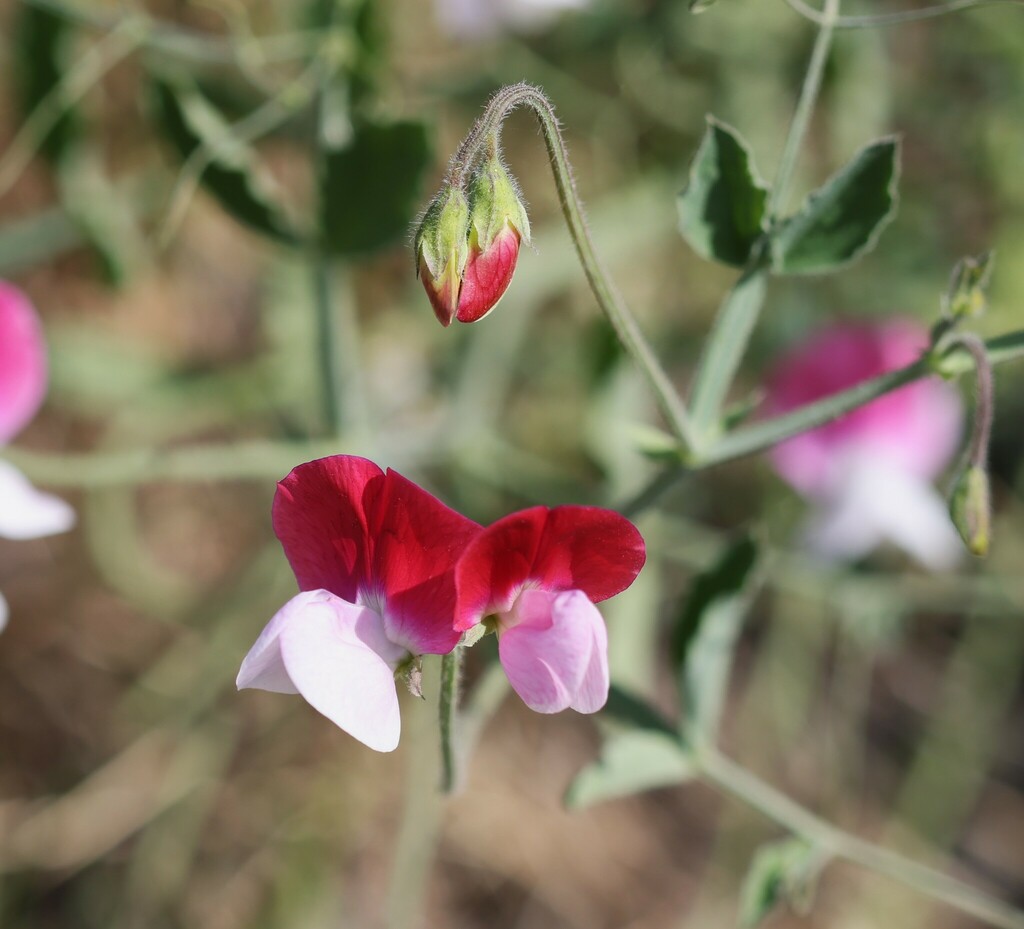
Sweet peas are beloved for their stunning, fragrant blooms that bring a touch of classic cottage garden charm to any space. These climbing annuals thrive in cooler weather and are perfect for training up trellises or fences. You will love how their delicate flowers fill the air with a sweet, honeyed scent.

At a glance
- Care level
- Moderate
- Plant type
- Annual vine
- Light
- Full sun
- Indoor light
- Direct sun
- Water
- Every 2 to 4 days
- Mature size
- 6 to 8 feet
- Growth rate
- Fast
- Hardiness
- USDA 7 to 10
- Bloom time
- Late spring to early summer
Care
Provide a sturdy trellis early on so they have something to climb as they grow. Keep an eye out for aphids and powdery mildew, which can be common in humid or crowded conditions. Deadhead spent flowers regularly to encourage a longer blooming season.
- Watering
- Keep the soil consistently moist but never soggy.
- Feeding
- Use a balanced liquid fertilizer once the plants start to flower.
- Pruning
- Regularly pinch off faded blooms to keep the plant producing new flowers.
- Repotting
- As annuals, these plants complete their life cycle in one season and do not require repotting.
- Soil
- Rich, well draining, organic soil
- Soil pH
- 6.0 to 7.5
- Temperature
- -5 to 25°C
- Humidity
- 40 to 60%
Safety
- People
- All parts of the plant are mildly toxic if ingested.
- Pets
- This plant is toxic to cats and dogs if ingested, as it contains lathyrism causing compounds.
- Children
- Keep seeds away from small children as they can be a choking hazard and are toxic if eaten.
- Contact allergens
- Handling the foliage may cause mild skin irritation in sensitive individuals.
- Airborne allergens
- The strong fragrance can sometimes trigger reactions in those with severe floral sensitivities.
- Edibility
- The seeds of sweet peas contain lathyrogens and are considered toxic if ingested in quantity.
How to identify it
- Delicate, papery, fragrant flowers
- Tendrils for climbing support
- Compound leaves with two leaflets
- Winged stems
- Height
- 1.5 to 2.5m
- Spread
- 0.3 to 0.6m
- Leaves
- green, deciduous
- Flowers
- pink, purple, white, red, blue, 3 to 5cm
- Fruit
- brown, Late summer
Problems to watch for
- AphidsCommon
- Powdery MildewCommon
- Slugs and SnailsCommon
- Botrytis BlightUncommon
- Root RotUncommon
- ThripsUncommon
Check your sweet pea from a photo
Pocket Botanist looks at a photo of your plant and tells you what's wrong and what to try first.
Growing it
- Propagation
- seed
- When to plant
- early spring, late autumn
Plant sweet peas near low growing annuals to shade their roots, which helps keep them cool during warmer days.
Grows well with
- Cornflower — They share similar light and water needs while providing a nice color contrast.
- Lavender — Lavender provides a sturdy base for the sweet peas to climb.
Similar species
- Everlasting Pea — A perennial relative that is much hardier but lacks the strong fragrance.
Science
- Family
- Fabaceae
- Genus
- Lathyrus
- Order
- Fabales
- Class
- Magnoliopsida
- Native range
- Southern Italy and Sicily
- Conservation
- Not of conservation concern.
It grows as a climbing vine in Mediterranean scrublands, using tendrils to scale surrounding vegetation.
- Value to wildlife
- nectar source
- Pollinators
- bees, butterflies
- Uses
- cut flowers, vertical garden interest, fragrant borders
Through the year
Ecological indicators
- Light
- 7/9
- Moisture
- 5/9
- Nutrients
- 6/9
- Salinity
- 2/9
- Soil reaction
- 6/9
- Temperature
- 5/9
Taxonomy resolved against GBIF.
Questions people ask
- Why aren't my sweet peas blooming?
- They often stop blooming once the weather becomes too hot.
- Should I deadhead them?
- Yes, removing spent flowers prevents seed pod formation and encourages more blooms.
Where the name comes from
The genus name Lathyrus comes from the Greek word for a type of pea, while odoratus refers to its sweet scent.
Good to know
- Sweet peas are not related to the edible garden pea.
- The flowers were famously used by Gregor Mendel in his early genetic experiments.
- They require a trellis or support to climb effectively.
Also in
Keep your sweet pea growing
This page is a general guide. Save your plant in Pocket Botanist and you get care reminders timed for this plant, plus a care history that shows what worked.
This guide was generated with AI and checked against GBIF taxonomy. It is general information, not horticultural or veterinary advice. Read about how we build these guides.