 Pocket Botanist
Plant guide
Bitter Bolete.
Tylopilus felleus
Pronounced ty-lo-PI-lus FEL-le-us
Also known as Bitter Bolete


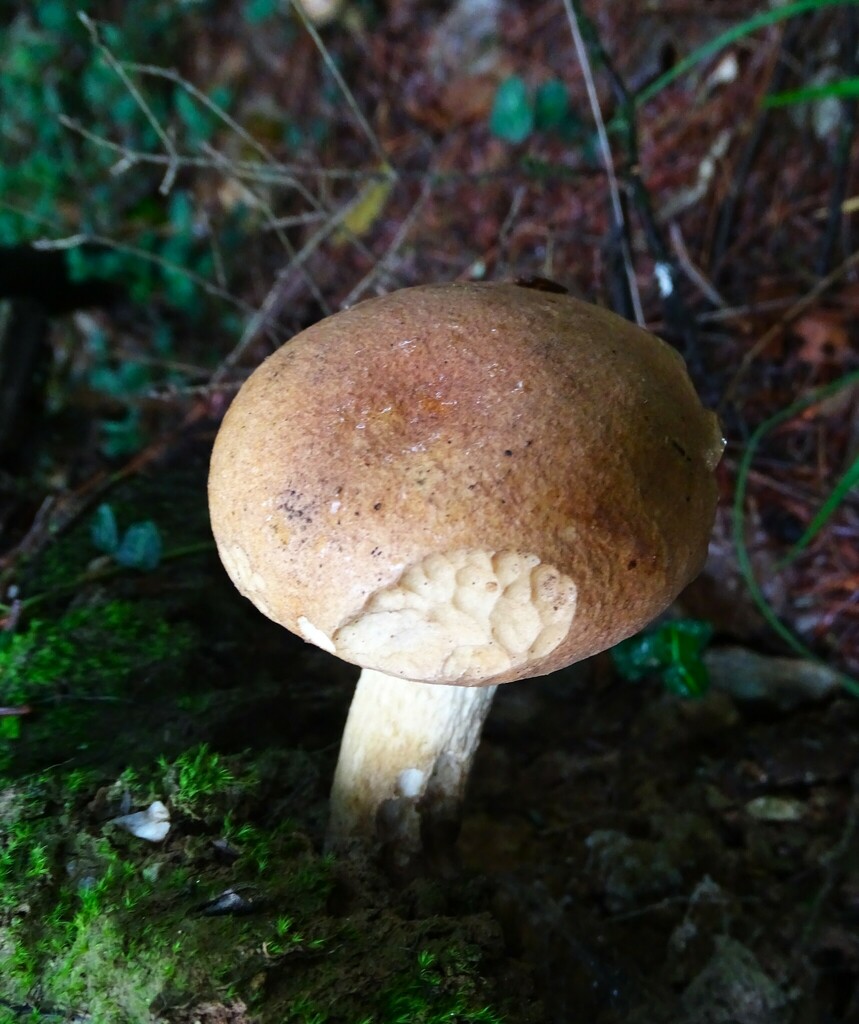
The Bitter Bolete is a common woodland fungus known for its striking resemblance to edible porcini mushrooms. It is easily identified by its bitter taste, which makes it inedible despite not being toxic. You will typically find these growing near deciduous or coniferous trees.
At a glance
- Plant type
- fungus
- Water
- Every 0 days
- Hardiness
- USDA 3 to 9
- Bloom time
- Summer to autumn
Care
This is a wild fungus that cannot be cultivated in a home garden setting. It relies on a symbiotic relationship with tree roots in forest ecosystems. Do not attempt to harvest for consumption due to its intense bitterness.
- Watering
- This species is a wild fungus and requires natural rainfall in forest habitats.
- Feeding
- Do not fertilize this wild fungus.
- Pruning
- Pruning is not applicable to wild fungi.
- Repotting
- This species cannot be repotted as it is a wild woodland fungus.
- Temperature
- 5 to 25°C
- Humidity
- 60 to 90%
Safety
- People
- It is not poisonous, but the intense bitterness makes it inedible.
- Children
- Keep children from eating this mushroom as it is not food and may cause digestive upset due to its extreme bitterness.
- Contact allergens
- No known contact allergies.
- Airborne allergens
- Spore release can cause respiratory irritation in sensitive individuals.
- Edibility
- This mushroom is not toxic but is extremely bitter and will ruin any dish it is added to.
How to identify it
- Convex brown cap
- Pinkish pore surface
- Dark brown reticulated stalk
- Extremely bitter taste
- White flesh does not stain
- Height
- 0.05 to 0.15m
- Spread
- 0.05 to 0.15m
- Leaves
- deciduous
- Flowers
- 0cm
- Fruit
- brown, tan, Summer to autumn
Problems to watch for
- CaterpillarsCommon
- Slugs and SnailsCommon
- DehydrationUncommon
- Mechanical DamageUncommon
Check your bitter bolete from a photo
Pocket Botanist looks at a photo of your plant and tells you what's wrong and what to try first.
Growing it
- Propagation
- spores
Look for this fungus in the leaf litter beneath mature trees where it helps cycle nutrients.
Grows well with
- Oak — This mushroom frequently forms mycorrhizal associations with oak trees.
- Pine — It is commonly found growing in the soil near pine trees.
- Spruce — Spruce forests provide the necessary habitat and root systems for this fungus.
Similar species
- Porcini — They look similar but the porcini has white to yellow pores and lacks the dark stalk netting.
Science
- Family
- Boletaceae
- Genus
- Tylopilus
- Order
- Boletales
- Class
- Agaricomycetes
- Native range
- Widely distributed across the Northern Hemisphere in temperate forests.
- Conservation
- This species is common and not of conservation concern.
It lives in a symbiotic mycorrhizal relationship with tree roots, exchanging nutrients for carbohydrates.
- Value to wildlife
- mycorrhizal partner for trees
- Uses
- ecological study, mycorrhizal research
Through the year
Ecological indicators
- Salinity
- 0/9
- Moisture
- 5/9
- Soil reaction
- 3/9
- Light
- 0/9
- Temperature
- 4/9
- Nutrients
- 3/9
Taxonomy resolved against GBIF.
Questions people ask
- Is the bitter bolete poisonous?
- No, it is not toxic, but it is considered inedible because of its unpleasant taste.
- How do I tell it apart from a porcini?
- Look for the dark, raised network pattern on the stalk and the pinkish color of the pores as it matures.
Where the name comes from
The genus name Tylopilus comes from Greek for knob and cap, while the species name felleus refers to its gall like bitterness.
Good to know
- The bitterness is so strong that a single specimen can ruin an entire pot of soup.
- It forms a symbiotic relationship with the roots of coniferous and deciduous trees.
- The scientific name felleus means bitter as gall.
Keep your bitter bolete growing
This page is a general guide. Save your plant in Pocket Botanist and you get care reminders timed for this plant, plus a care history that shows what worked.
This guide was generated with AI and checked against GBIF taxonomy. It is general information, not horticultural or veterinary advice. Read about how we build these guides.