 Pocket Botanist
Guide botanique
Cèpe amer.
Tylopilus felleus
Prononciation ty-lo-PI-lus FEL-le-us
Aussi appelée Cèpe amer


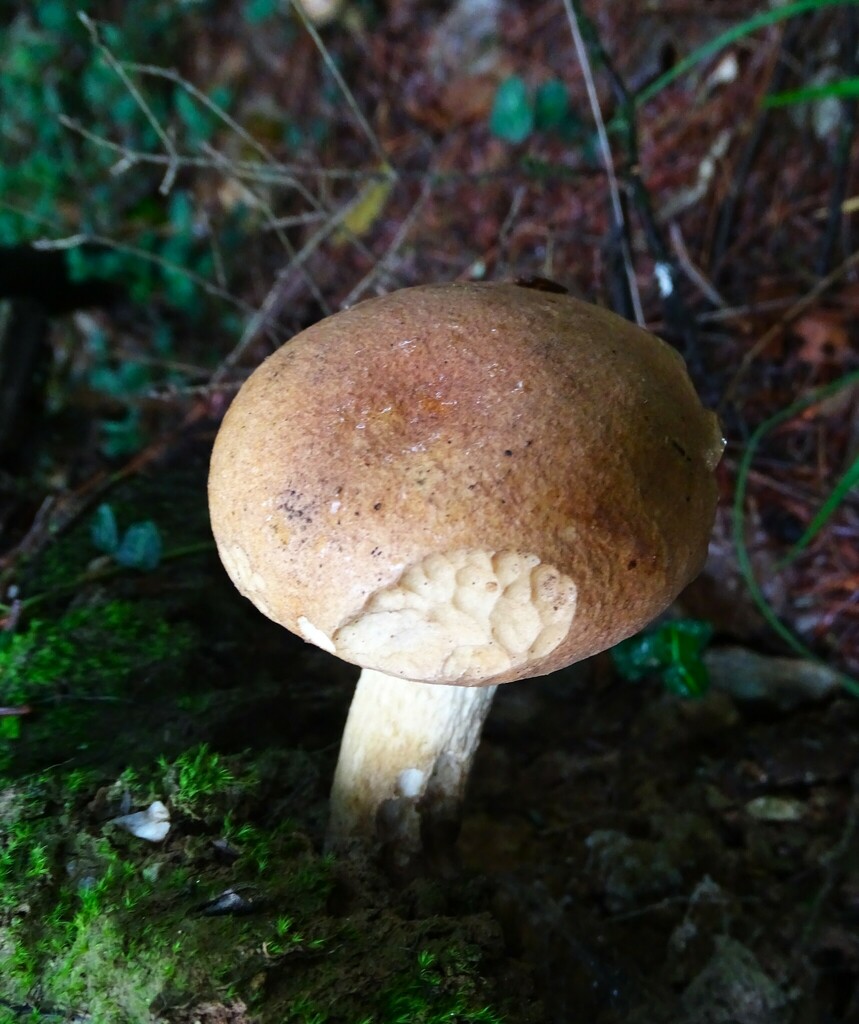
Le Cèpe amer est un champignon forestier commun, frappant par sa ressemblance avec les cèpes comestibles. On le reconnaît facilement à son goût amer, qui le rend immangeable bien qu'il ne soit pas toxique. On le trouve généralement près des arbres à feuilles caduques ou des conifères.
En un coup d'œil
- Type de plante
- champignon
- Arrosage
- Tous les 0 jours
- Rusticité
- USDA 3 à 9
- Floraison
- Milieu à fin d'été jusqu'en automne
Entretien
Ceci est un champignon sauvage qui ne peut pas être cultivé dans un jardin. Il dépend d'une relation symbiotique avec les racines des arbres dans les écosystèmes forestiers. N'essayez pas de le récolter pour la consommation en raison de son amertume intense.
- Arrosage
- Cette espèce est un champignon sauvage et nécessite les pluies naturelles dans les habitats forestiers.
- Engrais
- Ne fertilisez pas ce champignon sauvage.
- Taille
- La taille n'est pas applicable aux champignons sauvages.
- Rempotage
- Cette espèce ne peut pas être rempotée car c'est un champignon forestier sauvage.
- Température
- 5 à 25°C
- Humidité
- 60 à 90%
Sécurité
- Humains
- Il n'est pas toxique, mais l'amertume intense le rend immangeable.
- Enfants
- Bien que non vénéneux, le goût amer est désagréable et peut amener un enfant à le recracher immédiatement.
- Allergènes de contact
- Aucun irritant cutané connu n'est associé à cette espèce.
- Allergènes aéroportés
- La poussière de spores peut parfois causer une légère irritation si elle est inhalée en grande quantité.
- Comestibilité
- Ce champignon est extrêmement amer et gâchera tout plat dans lequel il est ajouté, bien qu'il ne soit pas considéré comme toxique.
Comment l'identifier
- Chapeau brun convexe
- Surface des pores rosâtre
- Pied réticulé brun foncé
- Goût extrêmement amer
- Chair blanche qui ne tache pas
- Hauteur
- 0,05 à 0,15m
- Envergure
- 0,05 à 0,15m
- Fleurs
- brun, beige, 0cm
Problèmes à surveiller
- ChenillesCourant
- Limaces et escargotsCourant
- Dégâts mécaniquesPeu courant
- DéshydratationPeu courant
- Hypomyces chrysospermus — Une moisissure parasite qui recouvre le champignon d'une poudre blanche ou dorée.
Par symptôme
Vérifie la santé de ta plante en photo
Pocket Botanist analyse une photo de ta plante et te dit ce qui ne va pas et quoi essayer en premier.
La cultiver
- Multiplication
- spores
Recherchez ce champignon dans les zones à sol acide où des arbres comme le chêne et le pin sont déjà établis.
Bonnes associations
- Chêne — Ce champignon forme fréquemment des associations mycorhiziennes avec les racines de chêne.
- Pinus — On le trouve couramment près des pins dans les environnements forestiers.
- Picea — Spruce forests provide the necessary habitat and root systems for this fungus.
Espèces similaires
- Boletus edulis — Il ressemble mais n'a pas la réticulation sombre et en relief sur le pied et est délicieux.
Science
- Famille
- Boletaceae
- Genre
- Tylopilus
- Ordre
- Boletales
- Classe
- Agaricomycetes
- Région d'origine
- Largement réparti en Amérique du Nord et en Europe dans les forêts de feuillus et de conifères.
- Préservation
- Cette espèce est commune et répandue, ne nécessitant aucun statut de conservation spécial.
Il vit dans une relation symbiotique mycorhizienne avec les racines de divers arbres, les aidant à absorber les nutriments.
- Intérêt pour la faune
- partenaire mycorhizien, recycleur de nutriments
- Utilisations
- étude écologique, recherche mycorhizienne
Au fil des saisons
Repères écologiques
- Salinité
- 0/9
- Humidité
- 5/9
- Réaction du sol
- 3/9
- Lumière
- 0/9
- Température
- 4/9
- Nutriments
- 3/9
Taxonomie vérifiée avec le GBIF.
Ce qu'on demande souvent
- Est-il vénéneux?
- Non, il n'est pas vénéneux, mais il est considéré comme immangeable en raison de son amertume extrême.
- Comment le distinguer du cèpe de Bordeaux?
- Vérifiez la réticulation sur le pied ; cette espèce a un réseau sombre et en relief sur un fond plus clair.
D'où vient le nom
Le nom Tylopilus vient des mots grecs signifiant bouton et feutre, tandis que felleus est un mot latin signifiant amer comme la bile.
Bon à savoir
- Il est souvent confondu avec le cèpe de Bordeaux.
- Le goût amer ne disparaît pas, même après une cuisson prolongée.
- Il forme une relation symbiotique avec les racines des arbres.
- La surface des pores devient rosâtre à mesure que le champignon mûrit.
Garde ta plante en pleine forme
Cette page est un guide général. Enregistre ta plante dans Pocket Botanist et tu reçois des rappels d'entretien adaptés à cette plante, ainsi qu'un historique d'entretien qui montre ce qui a marché.
Ce guide a été généré par IA et vérifié avec la taxonomie du GBIF. Il s'agit d'informations générales, et non de conseils horticoles ou vétérinaires. Découvre comment nous concevons ces guides.