 Pocket Botanist
Guide botanique
Chêne.
Quercus
Prononciation KWER-kus
Aussi appelée Gland, Chêne, Arbre de chêne, Chênes


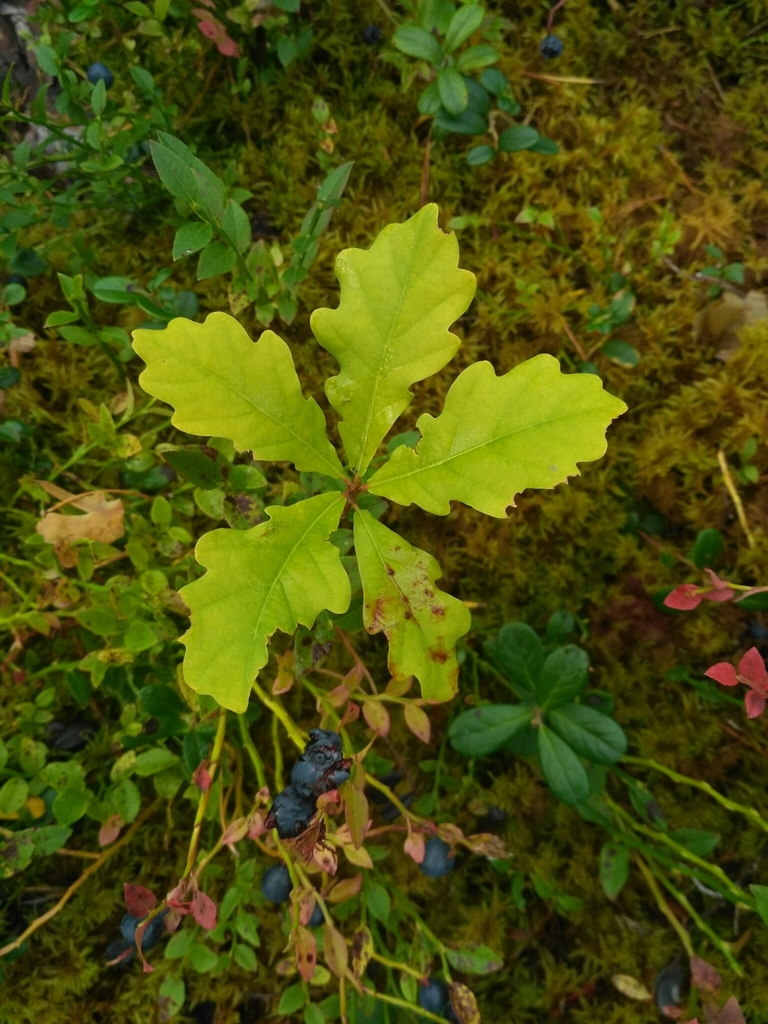
Les chênes sont des arbres emblématiques et à longue durée de vie qui constituent la pierre angulaire de nombreux écosystèmes. Ils se présentent sous une grande variété de formes et de tailles, allant de massifs géants de forêt à de plus petites espèces arbustives. La plupart sont caducs, bien que certaines espèces des climats plus chauds conservent leurs feuilles toute l'année.

En un coup d'œil
- Niveau d'entretien
- Moyenne
- Type de plante
- Arbre
- Lumière
- Plein soleil
- Lumière en intérieur
- Soleil direct
- Arrosage
- Tous les 7 à 14 jours
- Taille adulte
- Varie considérablement selon l'espèce, atteignant souvent 20 à 30 mètres.
- Croissance
- Moyenne
- Rusticité
- USDA 3 à 9
- Floraison
- Mi à fin du printemps
Entretien
Les chênes prospèrent dans un sol profond et bien drainé, avec beaucoup d'espace pour étendre leurs racines. Surveillez les signes de parasites ou de problèmes fongiques tels que la tache foliaire, et assurez-vous qu'ils reçoivent une humidité constante lorsqu'ils sont jeunes. Une fois établis, ils sont assez résilients et nécessitent très peu d'intervention.
- Arrosage
- Arrosez profondément pendant les périodes sèches, surtout pour les jeunes arbres.
- Engrais
- Appliquez un engrais équilibré à libération lente au début du printemps si la croissance est lente.
- Taille
- Taille pendant la dormance à la fin de l'hiver pour enlever les branches mortes ou qui se croisent.
- Rempotage
- Le rempotage n'est généralement nécessaire que pour les jeunes spécimens en conteneur.
- Sol
- Sol limoneux et bien drainé
- pH du sol
- Légèrement acide à neutre
- Température
- -30 à 40°C
- Humidité
- 30 à 70%
- Résistance à la sécheresse
- Élevée
- Durée de vie
- Vivace, généralement 100 à 500 ans.
- Résistance aux chevreuils et lapins
- Moyenne
Signes qu'il faut rempoter
- Les racines sortent des trous de drainage.
- Croissance ralentie malgré des soins appropriés.
- Le sol sèche beaucoup plus vite que d'habitude.
Sécurité
- Humains
- Les feuilles et les glands contiennent des tanins qui peuvent provoquer des maux d'estomac s'ils sont ingérés en grandes quantités.
- Animaux
- Les glands contiennent des tanins toxiques pour les chats et les chiens s'ils sont ingérés en grandes quantités.
- Enfants
- Les glands présentent un risque d'étouffement pour les jeunes enfants et doivent être tenus hors de leur portée.
- Allergènes de contact
- L'écorce et les feuilles sont généralement sans danger, mais certaines personnes peuvent ressentir une légère irritation cutanée au contact de textures rugueuses.
- Allergènes aéroportés
- Les chênes produisent une quantité importante de pollen transporté par le vent au printemps, ce qui est une cause fréquente d'allergies saisonnières.
- Comestibilité
- Les glands contiennent des tanins qui doivent être éliminés par trempage avant d'être sans danger pour la consommation humaine.
Comment l'identifier
- Feuilles lobées ou dentées distinctives
- Produit des glands comme fruit
- Écorce profondément furrowed ou écailleuse
- Structure de branches robuste et étalée
- Hauteur
- 10 à 30m
- Envergure
- 8 à 25m
- Feuilles
- vert, bronze, jaune, rouge, caduc
- Fleurs
- jaune, vert, 0,5 à 2cm
- Fruits
- brun, Automne
Problèmes à surveiller
- CynipsCourant
- Flétrissement du chêneCourant
- Oïdium du chêneCourant
- Agrile du chêne à deux lignesPeu courant
- Brûlures du feuillagePeu courant
- ChlorosePeu courant
- Cloque du chênePeu courant
- Mort subite du chênePeu courant
- Cynips du chêne — De petits insectes qui provoquent des excroissances anormales sur les feuilles ou les brindilles.
Par symptôme
Vérifie la santé de ta plante en photo
Pocket Botanist analyse une photo de ta plante et te dit ce qui ne va pas et quoi essayer en premier.
La cultiver
- Multiplication
- semis, greffage
- Quand planter
- Printemps, Automne
- Hivernage
- Aucun soin hivernal spécial n'est nécessaire pour les arbres établis car ils sont complètement dormants et rustiques.
- En pot
- Les chênes ne conviennent généralement pas à la croissance en conteneur à long terme en raison de leurs racines pivotantes massives.
Semis de glands
- 1. Collectez des glands frais en automne.
- 2. Testez-les dans l'eau et jetez ceux qui flottent.
- 3. Plantez immédiatement ceux qui sont sains dans des pots profonds ou directement en terre.
Plantez des vivaces tolérantes à l'ombre sous la canopée pour créer une strate forestière naturelle.
Bonnes associations
- Vaccinium — They share similar acidic soil preferences.
- Polystic à feuilles de sabre — They thrive in the dappled shade provided by the oak canopy.
À éloigner de
- Juglans nigra — It produces juglone which can inhibit the growth of nearby trees.
Espèces similaires
- hêtre d'Amérique — Ils partagent des habitats forestiers similaires et offrent des avantages écologiques comparables.
Science
- Famille
- Fagaceae
- Genre
- Quercus
- Ordre
- Fagales
- Classe
- Magnoliopsida
- Région d'origine
- Régions tempérées de l'hémisphère Nord.
- Préservation
- De nombreuses espèces de chênes sont menacées par la perte d'habitat et les maladies, il faut donc toujours s'approvisionner en plantes auprès de pépiniéristes réputés.
Les chênes établissent des relations symbiotiques avec des champignons mycorhiziens pour absorber les nutriments du sol.
- Intérêt pour la faune
- plante hôte des larves, source de nourriture pour les oiseaux et les mammifères
- Pollinisateurs
- abeilles, coléoptères
- Utilisations
- arbre d'ombrage, bois d'œuvre, habitat pour la faune, spécimen paysager
Au fil des saisons
Repères écologiques
- Salinité
- 2/9
- Lumière
- 7/9
- Température
- 5/9
- Nutriments
- 5/9
- Réaction du sol
- 5/9
- Humidité
- 5/9
Taxonomie vérifiée avec le GBIF.
Ce qu'on demande souvent
- Quelle est la vitesse de croissance des chênes ?
- La plupart des chênes ont une croissance lente à modérée, prenant souvent des décennies pour atteindre leur pleine maturité.
- Puis-je planter un chêne près de ma maison ?
- Il est préférable de les planter à au moins 6 à 9 mètres des fondations en raison de leurs systèmes racinaires étendus.
D'où vient le nom
Quercus est le nom latin classique du chêne. Le nom commun chêne vient du mot proto-indo-européen désignant cet arbre.
Bon à savoir
- Les chênes peuvent vivre des centaines d'années.
- Il existe plus de 500 espèces de chênes dans le monde.
- Le bois de chêne est très apprécié pour sa solidité et sa durabilité dans la fabrication de meubles.
Aussi dans
Garde ta plante en pleine forme
Cette page est un guide général. Enregistre ta plante dans Pocket Botanist et tu reçois des rappels d'entretien adaptés à cette plante, ainsi qu'un historique d'entretien qui montre ce qui a marché.
Ce guide a été généré par IA et vérifié avec la taxonomie du GBIF. Il s'agit d'informations générales, et non de conseils horticoles ou vétérinaires. Découvre comment nous concevons ces guides.