 Pocket Botanist
Guía de plantas
Boleta amarga.
Tylopilus felleus
Pronunciación ty-lo-PI-lus FEL-le-us
También se conoce como Boleta amarga


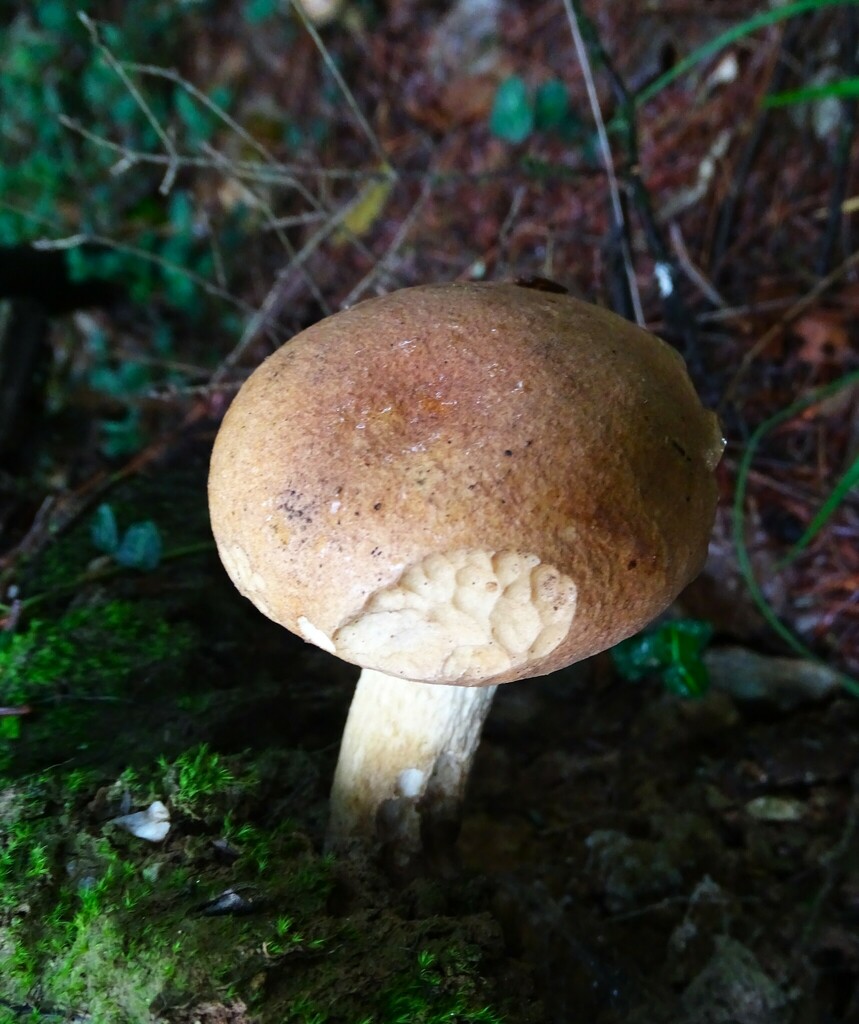
La boleta amarga es un hongo común de los bosques conocido por su llamativo parecido con los champiñones porcini comestibles. Se identifica fácilmente por su sabor amargo, que la hace incomestible a pesar de no ser tóxica. Normalmente encontrarás estas creciendo cerca de árboles de hoja caduca o coníferos.
De un vistazo
- Tipo de planta
- hongo
- Riego
- Cada 0 días
- Rusticidad
- USDA 3 a 9
- Floración
- Mediados a finales de verano hasta otoño
Cuidados
Este es un hongo silvestre que no se puede cultivar en un jardín doméstico. Depende de una relación simbiótica con las raíces de los árboles en los ecosistemas forestales. No intentes cosechar para el consumo debido a su intenso amargor.
- Riego
- Esta especie es un hongo silvestre y requiere lluvia natural en hábitats forestales.
- Abonado
- No fertilices este hongo silvestre.
- Poda
- La poda no es aplicable a los hongos silvestres.
- Trasplante
- Esta especie no se puede trasplantar ya que es un hongo silvestre de los bosques.
- Temperatura
- 5 a 25°C
- Humedad
- 60 a 90%
Seguridad
- Personas
- No es tóxico, pero el intenso amargor lo hace incomestible.
- Niños
- Aunque no es venenoso, el sabor amargo es desagradable y puede hacer que un niño lo escupa inmediatamente.
- Alérgenos por contacto
- No se conocen irritantes cutáneos asociados con esta especie.
- Alérgenos en el aire
- El polvo de esporas puede causar ocasionalmente una leve irritación si se inhala en grandes cantidades.
- Comestibilidad
- Este hongo es extremadamente amargo y arruinará cualquier plato al que se añada, aunque no se considera tóxico.
Cómo identificarla
- Sombrero convexo marrón
- Superficie de poros rosada
- Tallo reticulado marrón oscuro
- Sabor extremadamente amargo
- La carne blanca no se tiñe
- Altura
- 0,05 a 0,15m
- Anchura
- 0,05 a 0,15m
- Flores
- marrón, marrón claro, 0cm
Problemas a vigilar
- Babosas y caracolesComún
- OrugasComún
- Daños mecánicosPoco común
- DeshidrataciónPoco común
- Hypomyces chrysospermus — Un moho parásito que cubre el hongo con un polvo blanco o dorado.
Por síntoma
Revisa tu boleta amarga con una foto
Pocket Botanist mira una foto de tu planta y te dice qué le pasa y qué probar primero.
Cómo cultivarla
- Propagación
- esporas
Busca este hongo en áreas con suelo ácido donde árboles como el roble y el pino ya estén establecidos.
Buenas compañeras
- Roble — Este hongo forma frecuentemente asociaciones micorrízicas con las raíces del roble.
- Pinus — Se encuentra comúnmente creciendo cerca de pinos en entornos forestales.
- Picea — Spruce forests provide the necessary habitat and root systems for this fungus.
Especies parecidas
- Boletus edulis — Se parece pero carece de la reticulación oscura y elevada en el tallo y es delicioso.
Ciencia
- Familia
- Boletaceae
- Género
- Tylopilus
- Orden
- Boletales
- Clase
- Agaricomycetes
- Distribución natural
- Amplia distribución en América del Norte y Europa en bosques caducifolios y de coníferas.
- Conservación
- Esta especie es común y está muy extendida, por lo que no requiere un estado de conservación especial.
Vive en una relación micorrízica simbiótica con las raíces de varios árboles, ayudándoles a absorber nutrientes.
- Valor para la fauna
- socio micorrízico, reciclador de nutrientes
- Usos
- estudio ecológico, investigación micorrízica
A lo largo del año
Indicadores ecológicos
- Salinidad
- 0/9
- Humedad
- 5/9
- Reacción del suelo
- 3/9
- Luz
- 0/9
- Temperatura
- 4/9
- Nutrientes
- 3/9
Taxonomía cotejada con GBIF.
Lo que más preguntan
- ¿Es venenoso?
- No es venenoso, pero se considera incomestible debido a su extremo amargor.
- ¿Cómo puedo distinguirlo del boletus edulis?
- Revisa la reticulación en el tallo; esta especie tiene una red oscura y elevada sobre un fondo más claro.
De dónde viene el nombre
El nombre Tylopilus proviene de las palabras griegas que significan "nudo" y "fieltro", mientras que felleus es latín para "amargo como la hiel".
Bueno saberlo
- A menudo se confunde con el boletus edulis comestible.
- El sabor amargo no desaparece ni siquiera con una cocción exhaustiva.
- Forma una relación simbiótica con las raíces de los árboles.
- La superficie de los poros se vuelve rosada a medida que el hongo madura.
Que tu boleta amarga siga creciendo
Esta página es una guía general. Guarda tu planta en Pocket Botanist y tendrás recordatorios de cuidado pensados para esta planta, además de un historial de cuidados que muestra qué ha funcionado.
Esta guía se ha generado con IA y se ha cotejado con la taxonomía de GBIF. Es información general, no asesoramiento botánico ni veterinario. Descubre cómo elaboramos estas guías.