 Pocket Botanist
Plant guide
New England aster.
Symphyotrichum novae-angliae
Pronounced sim-fih-oh-TRY-kum no-vee-ANG-lee-ee
Also known as Hairy Michaelmas Daisy, Hairy Michaelmas-daisy, Michaelmas Daisy, New England Aster, New England Daisy, New England Or Michaelmas Daisy, Wild Prairie Aster



Scan with your phone's camera to get the app
Or go to pocketbotanist.app/get on your phone
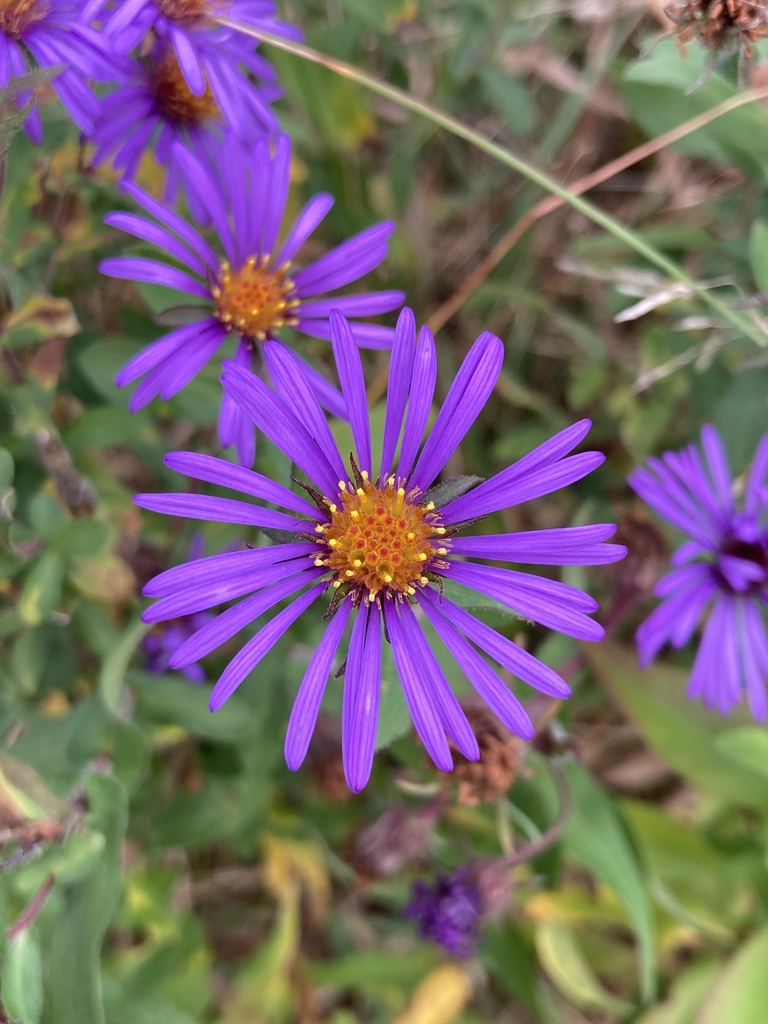
The New England aster is a stunning perennial that brings vibrant color to late summer and autumn gardens. It is a favorite among pollinators, especially bees and migrating butterflies. You will love how its deep purple blooms brighten up the landscape just as other plants begin to fade.
At a glance
- Care level
- Easy
- Plant type
- Herbaceous perennial
- Light
- Full sun
- Indoor light
- Direct sun
- Water
- Every 3 to 7 days
- Mature size
- 3 to 6 feet tall
- Growth rate
- Fast
- Hardiness
- USDA 3 to 8
- Bloom time
- Late summer to mid autumn
Care
Plant these in a sunny spot with good air circulation to keep powdery mildew at bay. Pinch back the stems in early summer to encourage a bushier habit and more flowers. Watch for wilting during dry spells, as they prefer consistent moisture.
- Watering
- Keep the soil consistently moist but not waterlogged throughout the growing season.
- Feeding
- Apply a balanced compost or organic fertilizer once in early spring to support healthy growth.
- Pruning
- Cut the stems back to the ground in late winter or early spring after the foliage dies back.
- Repotting
- Divide the root clumps every few years in spring to maintain vigor and prevent overcrowding.
- Soil
- Moist, fertile, well draining soil
- Soil pH
- 6.0 to 7.5
- Temperature
- -35 to 30°C
- Humidity
- 40 to 70%
- Drought tolerance
- Moderate
- Lifespan
- Perennial, typically 5 to 10 years.
- Deer and rabbits
- Moderate
Signs it needs repotting
- Roots growing out of the drainage holes.
- Stunted growth despite regular feeding.
- Soil drying out very quickly.
Safety
- People
- This plant is generally considered non-toxic to humans.
- Children
- The stems are somewhat coarse and may scratch delicate skin, but there is no significant ingestion risk.
- Contact allergens
- The rough, hairy stems can cause mild skin irritation in sensitive individuals.
- Airborne allergens
- The pollen may trigger hay fever symptoms in susceptible people during the late summer bloom.
- Edibility
- While not considered toxic, this plant is not typically consumed by humans.
How to identify it
- Daisy like purple flower heads
- Yellow centers on flower heads
- Lance shaped hairy leaves
- Sturdy upright branching stems
- Height
- 0.9 to 1.8m
- Spread
- 0.6 to 0.9m
- Leaves
- green, deciduous
- Flowers
- purple, pink, white, 3 to 5cm
Problems to watch for
- Powdery MildewCommon
- RustCommon
- AphidsUncommon
- Aster YellowsUncommon
Check your new england aster from a photo
Pocket Botanist looks at a photo of your plant and tells you what's wrong and what to try first.
Scan with your phone's camera to get the app
Or go to pocketbotanist.app/get on your phone
Growing it
- Propagation
- division, seed, cuttings
- When to plant
- spring, autumn
- Overwintering
- Cut the dead stems back to the ground in late winter. The crown will remain dormant until spring.
- In containers
- It can grow in large containers, but it prefers the consistent moisture of the ground.
Division
- 1. Dig up the clump in early spring.
- 2. Use a sharp spade to divide the root ball into smaller sections.
- 3. Replant the divisions immediately.
Plant with tall grasses to help support the stems and prevent them from leaning.
Grows well with
- Goldenrod · They bloom at the same time and create a classic late season color contrast.
- Little Bluestem · The grass provides a structural backdrop that complements the aster flowers.
Similar species
- Smooth Aster · It has similar flowers but features smooth, hairless foliage.
Science
- Family
- Asteraceae
- Genus
- Symphyotrichum
- Order
- Asterales
- Class
- Magnoliopsida
- Native range
- Eastern and central North America.
- Conservation
- It is widespread and secure across its native range.
It naturally colonizes moist meadows and thickets where it provides essential late season resources for pollinators.
- Value to wildlife
- late season nectar source, larval host plant
- Pollinators
- bees, butterflies, moths
- Uses
- pollinator gardens, prairie restoration, late season color, cut flowers
Through the year
Ecological indicators
- Salinity
- 2/9
- Soil reaction
- 6/9
- Light
- 7/9
- Temperature
- 5/9
- Moisture
- 6/9
- Nutrients
- 6/9
Taxonomy resolved against GBIF.
Questions people ask
- Does it need staking?
- Yes, in rich soil it can get tall and flop over without support.
- When should I cut it back?
- Cut the stems down to the ground in late winter or early spring.
Where the name comes from
The name Symphyotrichum comes from Greek words meaning joined hair, referring to the pappus bristles, while novae-angliae means of New England.
Good to know
- It is commonly known as the New England aster.
- The flowers are famous for their intense, deep purple color.
- It thrives in moist, rich soils often found in meadows.
- The plant can grow quite tall and may require staking in windy gardens.
Keep your new england aster growing
This page is a general guide. Save your plant in Pocket Botanist and you get care reminders timed for this plant, plus a care history that shows what worked.
Scan with your phone's camera to get the app
Or go to pocketbotanist.app/get on your phone
This guide was generated with AI on and checked against GBIF taxonomy. It is general information, not horticultural or veterinary advice. Read about how we build these guides.