 Pocket Botanist
Guide botanique
New England aster.
Symphyotrichum novae-angliae
Prononciation sim-fih-oh-TRY-kum no-vee-ANG-lee-ee
Aussi appelée Hairy Michaelmas Daisy, Hairy Michaelmas-daisy, Michaelmas Daisy, New England Aster, New England Daisy, New England Or Michaelmas Daisy, Wild Prairie Aster


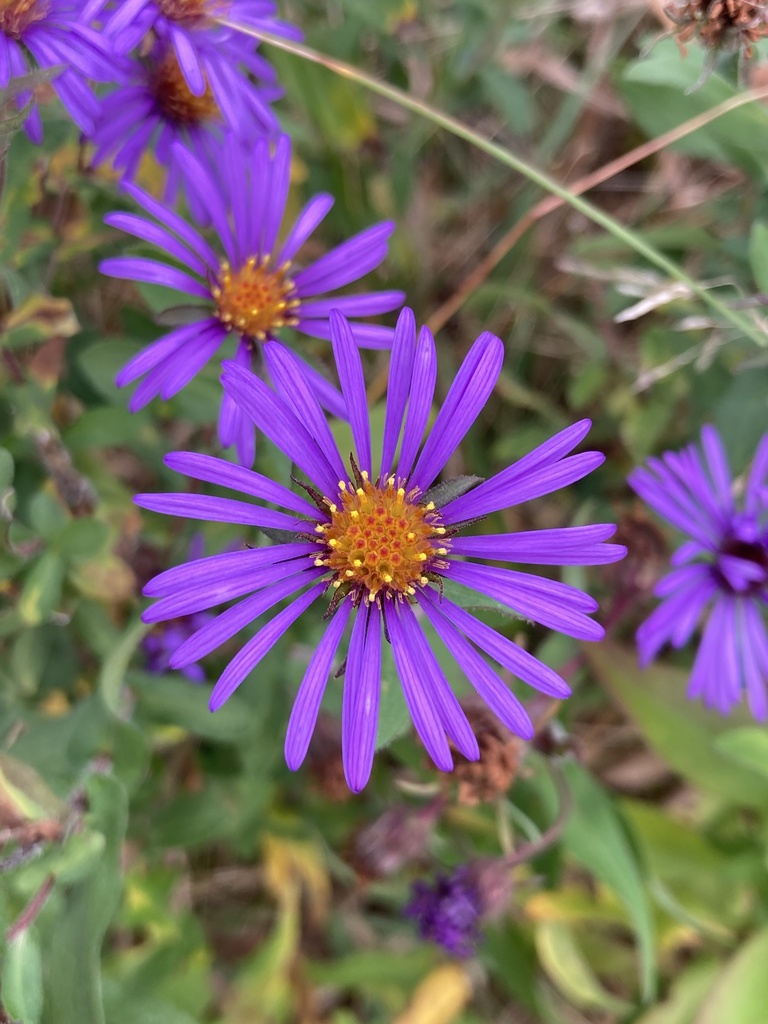
The New England aster is a stunning perennial that brings vibrant color to late summer and autumn gardens. It is a favorite among pollinators, especially bees and migrating butterflies. You will love how its deep purple blooms brighten up the landscape just as other plants begin to fade.
En un coup d'œil
- Niveau d'entretien
- Facile
- Type de plante
- Herbaceous perennial
- Lumière
- Full sun
- Lumière en intérieur
- Soleil direct
- Arrosage
- Tous les 3 à 7 jours
- Taille adulte
- 3 to 6 feet tall
- Croissance
- Rapide
- Rusticité
- USDA 3 à 8
- Floraison
- Late summer to mid autumn
Entretien
Plant these in a sunny spot with good air circulation to keep powdery mildew at bay. Pinch back the stems in early summer to encourage a bushier habit and more flowers. Watch for wilting during dry spells, as they prefer consistent moisture.
- Arrosage
- Keep the soil consistently moist but not waterlogged throughout the growing season.
- Engrais
- Apply a balanced compost or organic fertilizer once in early spring to support healthy growth.
- Taille
- Cut the stems back to the ground in late winter or early spring after the foliage dies back.
- Rempotage
- Divide the root clumps every few years in spring to maintain vigor and prevent overcrowding.
- Sol
- Moist, fertile, well draining soil
- pH du sol
- 6.0 to 7.5
- Température
- -35 à 30°C
- Humidité
- 40 à 70%
- Résistance à la sécheresse
- Moyenne
- Durée de vie
- Perennial, typically 5 to 10 years.
- Résistance aux chevreuils et lapins
- Moyenne
Signes qu'il faut rempoter
- Roots growing out of the drainage holes.
- Stunted growth despite regular feeding.
- Soil drying out very quickly.
Sécurité
- Humains
- This plant is generally considered non-toxic to humans.
- Enfants
- The stems are somewhat coarse and may scratch delicate skin, but there is no significant ingestion risk.
- Allergènes de contact
- The rough, hairy stems can cause mild skin irritation in sensitive individuals.
- Allergènes aéroportés
- The pollen may trigger hay fever symptoms in susceptible people during the late summer bloom.
- Comestibilité
- While not considered toxic, this plant is not typically consumed by humans.
Comment l'identifier
- Daisy like purple flower heads
- Yellow centers on flower heads
- Lance shaped hairy leaves
- Sturdy upright branching stems
- Hauteur
- 0,9 à 1,8m
- Envergure
- 0,6 à 0,9m
- Feuilles
- green, deciduous
- Fleurs
- purple, pink, white, 3 à 5cm
Problèmes à surveiller
- Powdery mildew — A white fungal growth on leaves often caused by poor air circulation or humidity.
- Rust — Small orange or brown pustules appearing on the undersides of leaves.
Par symptôme
Vérifie la santé de ta plante en photo
Pocket Botanist analyse une photo de ta plante et te dit ce qui ne va pas et quoi essayer en premier.
La cultiver
- Multiplication
- division, seed, cuttings
- Quand planter
- spring, autumn
- Hivernage
- Cut the dead stems back to the ground in late winter. The crown will remain dormant until spring.
- En pot
- It can grow in large containers, but it prefers the consistent moisture of the ground.
Division
- 1. Dig up the clump in early spring.
- 2. Use a sharp spade to divide the root ball into smaller sections.
- 3. Replant the divisions immediately.
Plant with tall grasses to help support the stems and prevent them from leaning.
Bonnes associations
- Verge d'or — They bloom at the same time and create a classic late season color contrast.
- Schizachyrium scoparium — The grass provides a structural backdrop that complements the aster flowers.
Espèces similaires
- Aster bleu lisse — It has similar flowers but features smooth, hairless foliage.
Science
- Famille
- Asteraceae
- Genre
- Symphyotrichum
- Ordre
- Asterales
- Classe
- Magnoliopsida
- Région d'origine
- Eastern and central North America.
- Préservation
- It is widespread and secure across its native range.
It naturally colonizes moist meadows and thickets where it provides essential late season resources for pollinators.
- Intérêt pour la faune
- late season nectar source, larval host plant
- Pollinisateurs
- abeilles, papillons, papillons de nuit
- Utilisations
- pollinator gardens, prairie restoration, late season color, cut flowers
Au fil des saisons
Repères écologiques
- Salinité
- 2/9
- Réaction du sol
- 6/9
- Lumière
- 7/9
- Température
- 5/9
- Humidité
- 6/9
- Nutriments
- 6/9
Taxonomie vérifiée avec le GBIF.
Ce qu'on demande souvent
- Does it need staking?
- Yes, in rich soil it can get tall and flop over without support.
- When should I cut it back?
- Cut the stems down to the ground in late winter or early spring.
D'où vient le nom
The name Symphyotrichum comes from Greek words meaning joined hair, referring to the pappus bristles, while novae-angliae means of New England.
Bon à savoir
- It is commonly known as the New England aster.
- The flowers are famous for their intense, deep purple color.
- It thrives in moist, rich soils often found in meadows.
- The plant can grow quite tall and may require staking in windy gardens.
Garde ta plante en pleine forme
Cette page est un guide général. Enregistre ta plante dans Pocket Botanist et tu reçois des rappels d'entretien adaptés à cette plante, ainsi qu'un historique d'entretien qui montre ce qui a marché.
Ce guide a été généré par IA et vérifié avec la taxonomie du GBIF. Il s'agit d'informations générales, et non de conseils horticoles ou vétérinaires. Découvre comment nous concevons ces guides.