 Pocket Botanist
Plant guide
North American pitcher plant.
Sarracenia
Pronounced sar-uh-SEE-nee-uh
Also known as American pitcher plants, North American pitcher plants, Trumpet Pitchers, pitcher plant, pitcherplant


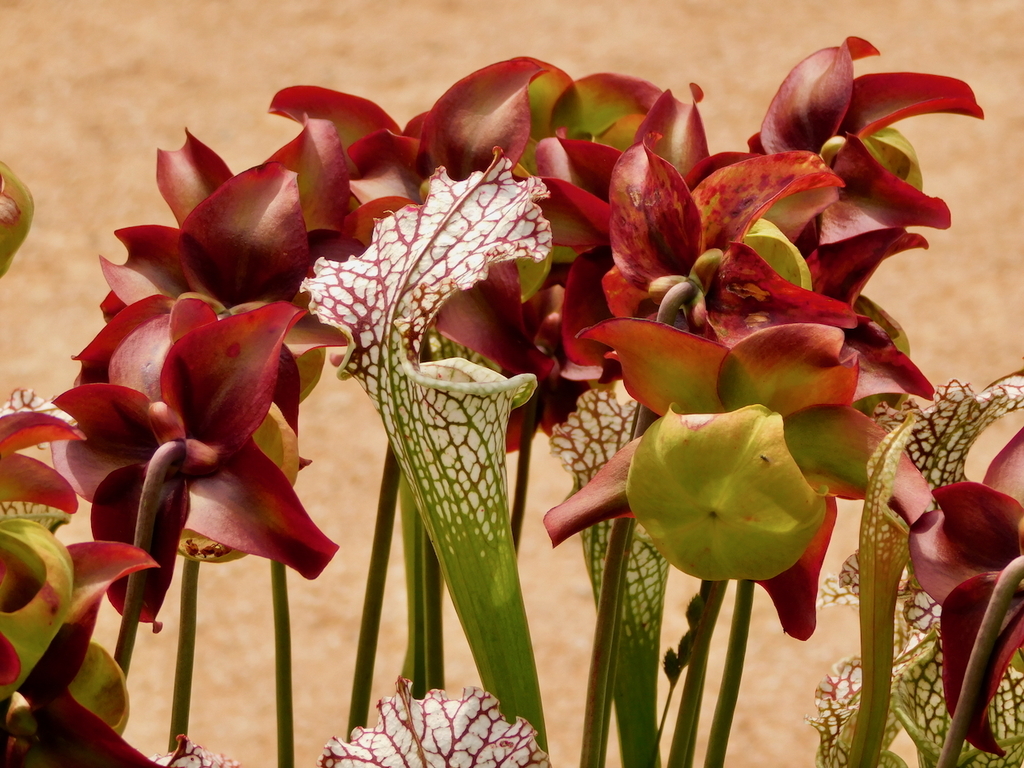
These fascinating carnivorous plants capture insects in their tubular, nectar-lined leaves. They are native to boggy areas across North America. You will love watching them thrive in your sunny garden.

At a glance
- Care level
- Moderate
- Plant type
- Carnivorous perennial
- Light
- Full sun
- Indoor light
- Direct sun
- Water
- Every 1 to 3 days
- Mature size
- 2 to 3 feet
- Growth rate
- Medium
- Hardiness
- USDA 5 to 9
- Bloom time
- Mid to late spring
Care
Always keep the soil consistently moist using distilled or rainwater. Watch for browning leaf edges which often signal low humidity or mineral buildup in the water. Ensure they get plenty of sun to maintain their vibrant colors.
- Watering
- Keep the soil constantly damp by sitting the pot in a shallow tray of distilled water.
- Feeding
- Do not fertilize these plants, as they get their nutrients from the insects they catch.
- Pruning
- Trim away dead or brown pitchers in late winter before new growth starts.
- Repotting
- Repot in early spring using a fresh, nutrient-poor peat mix.
- Soil
- Peat moss and perlite mix
- Soil pH
- Acidic
- Temperature
- -15 to 35°C
- Humidity
- 60 to 90%
- Drought tolerance
- Low
- Lifespan
- Perennial, typically 10 to 20 years
- Fragrance
- Light
- Deer and rabbits
- High
Signs it needs repotting
- Roots growing out of the drainage holes
- The plant has outgrown the pot size
- The soil medium has broken down
Safety
- People
- The plant is not considered toxic, but it is not meant for consumption.
- Pets
- This plant is non-toxic to cats and dogs.
- Children
- The pitchers contain digestive fluids that should not be ingested or handled by small children.
- Contact allergens
- The stiff hairs on some species can cause mild irritation to sensitive skin.
- Airborne allergens
- The pollen is not typically considered a significant airborne allergen.
- Edibility
- These plants are not edible and should never be consumed by humans or pets.
How to identify it
- Hollow pitcher shaped leaves
- Hooded lids over pitcher openings
- Brightly colored veins on foliage
- Unique umbrella shaped flowers
- Height
- 0.2 to 0.9m
- Spread
- 0.15 to 0.45m
- Leaves
- green, red, veined, deciduous
- Flowers
- yellow, red, purple, 5 to 10cm
- Fruit
- brown, Late summer
Problems to watch for
- AphidsCommon
- Root RotCommon
- Brown Leaf EdgesUncommon
- DehydrationUncommon
By symptom
Check your north american pitcher plant from a photo
Pocket Botanist looks at a photo of your plant and tells you what's wrong and what to try first.
Growing it
- Propagation
- division, seed
- When to plant
- spring
- Overwintering
- They require a cold dormant period to survive long term. Keep them in a cool, unheated garage or porch where temperatures stay above freezing but below 10 Celsius.
- In containers
- They grow well in plastic pots sitting in a tray of water, with a minimum diameter of 15 cm.
Division
- 1. Gently remove the plant from its pot during late winter dormancy.
- 2. Carefully pull the rhizome apart into sections with roots attached.
- 3. Repot each section into fresh, moist peat moss and perlite.
Group carnivorous plants together to create a microclimate that maintains high humidity.
Grows well with
- Sundew — They share similar requirements for wet, acidic soil.
- Bog Orchid — These orchids thrive in the same boggy conditions.
Similar species
- Cobra Lily — Another carnivorous plant with a unique hooded structure.
- Venus Flytrap — Often grown in the same bog garden collections.
Science
- Family
- Sarraceniaceae
- Genus
- Sarracenia
- Order
- Ericales
- Class
- Magnoliopsida
- Native range
- Wetlands and bogs across North America.
- Conservation
- Many species are threatened in the wild due to habitat loss and illegal poaching.
They thrive in acidic, nutrient poor bogs where they rely on insect prey to survive.
- Value to wildlife
- nectar source, prey control
- Pollinators
- bees, beetles
- Uses
- bog gardens, carnivorous plant collections, educational displays
Through the year
Ecological indicators
- Salinity
- 1/9
- Soil reaction
- 2/9
- Light
- 8/9
- Temperature
- 5/9
- Moisture
- 9/9
- Nutrients
- 1/9
Taxonomy resolved against GBIF.
Questions people ask
- Do I need to feed my pitcher plant?
- No, they will catch their own insects if kept outdoors.
- Can I use regular potting soil?
- Absolutely not, as standard soil will kill them; use a mix of peat moss and perlite.
Where the name comes from
The genus name honors Michel Sarrazin, a French physician who sent specimens to Europe, while the common name refers to the pitcher shaped leaves.
Good to know
- Pitcher plants are native to North America.
- They require mineral free water like rainwater or distilled water.
- The flowers are uniquely shaped to prevent pollinators from becoming prey.
- Some species can live for decades with proper care.
Also in
Keep your north american pitcher plant growing
This page is a general guide. Save your plant in Pocket Botanist and you get care reminders timed for this plant, plus a care history that shows what worked.
This guide was generated with AI and checked against GBIF taxonomy. It is general information, not horticultural or veterinary advice. Read about how we build these guides.