 Pocket Botanist
Guía de plantas
Planta jarra norteamericana.
Sarracenia
Pronunciación sar-uh-SEE-nee-uh
También se conoce como Plantas jarra americanas, Plantas jarra norteamericanas, Jarras trompeta, Planta jarra, Planta jarra


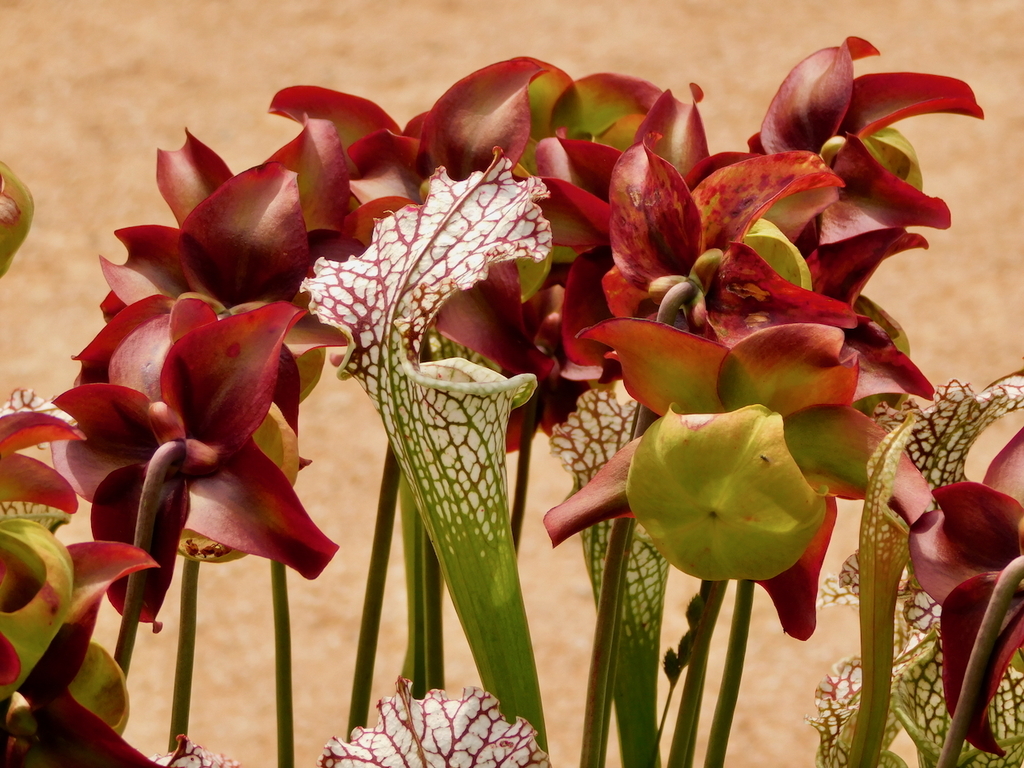
Estas fascinantes plantas carnívoras atrapan insectos en sus hojas tubulares revestidas de néctar. Son nativas de zonas pantanosas de toda Norteamérica. Te encantará verlas prosperar en tu jardín soleado.

De un vistazo
- Nivel de cuidados
- Media
- Tipo de planta
- Perenne carnívora
- Luz
- Sol pleno
- Luz en interior
- Sol directo
- Riego
- Cada 1 a 3 días
- Tamaño adulto
- 2 a 3 pies
- Ritmo de crecimiento
- Medio
- Rusticidad
- USDA 5 a 9
- Floración
- Mediados a finales de primavera
Cuidados
Mantén siempre la tierra constantemente húmeda usando agua destilada o de lluvia. Observa los bordes marrones de las hojas, que a menudo señalan baja humedad o acumulación de minerales en el agua. Asegúrate de que reciban mucho sol para mantener sus colores vibrantes.
- Riego
- Mantén la tierra constantemente húmeda colocando la maceta en una bandeja poco profunda con agua destilada.
- Abonado
- No fertilices estas plantas, ya que obtienen sus nutrientes de los insectos que atrapan.
- Poda
- Recorta las jarras muertas o marrones a finales de invierno, antes de que comience el nuevo crecimiento.
- Trasplante
- Trasplanta a principios de primavera usando una mezcla fresca de turba pobre en nutrientes.
- Suelo
- Mezcla de turba y perlita
- pH del suelo
- Ácido
- Temperatura
- -15 a 35°C
- Humedad
- 60 a 90%
- Tolerancia a la sequía
- Baja
- Longevidad
- Perenne, típicamente de 10 a 20 años
- Fragancia
- Suave
- Resistencia a ciervos y conejos
- Alta
Señales de que necesita trasplante
- Las raíces crecen fuera de los agujeros de drenaje
- La planta ha superado el tamaño de la maceta
- El medio de tierra se ha descompuesto
Seguridad
- Personas
- La planta no se considera tóxica, pero no está destinada al consumo.
- Mascotas
- Esta planta no es tóxica para gatos y perros.
- Niños
- Las jarras contienen fluidos digestivos que no deben ser ingeridos ni manipulados por niños pequeños.
- Alérgenos por contacto
- Los pelos rígidos de algunas especies pueden causar irritación leve en pieles sensibles.
- Alérgenos en el aire
- El polen no se considera típicamente un alérgeno aéreo significativo.
- Comestibilidad
- Estas plantas no son comestibles y nunca deben ser consumidas por humanos o mascotas.
Cómo identificarla
- Hojas huecas en forma de jarra
- Tapas con capucha sobre las aberturas de la jarra
- Venas de colores brillantes en el follaje
- Flores únicas en forma de paraguas
- Altura
- 0,2 a 0,9m
- Anchura
- 0,15 a 0,45m
- Hojas
- verde, rojo, veteado, caducifolio
- Flores
- amarillo, rojo, púrpura, 5 a 10cm
- Frutos
- marrón, Finales de verano
Problemas a vigilar
- Podredumbre radicularComún
- PulgonesComún
- Bordes marrones en las hojasPoco común
- DeshidrataciónPoco común
- Pudrición de raíz — Ocurre si el medio de tierra se permite que se seque o se estanque.
Revisa tu planta jarra norteamericana con una foto
Pocket Botanist mira una foto de tu planta y te dice qué le pasa y qué probar primero.
Cómo cultivarla
- Propagación
- división, semilla
- Cuándo plantar
- primavera
- Cuidados en invierno
- Requieren un período de dormancia fría para sobrevivir a largo plazo. Manténgalas en un garaje o porche fresco y sin calefacción donde las temperaturas se mantengan por encima de la congelación pero por debajo de 10 grados Celsius.
- En maceta
- Crecen bien en macetas de plástico colocadas en una bandeja de agua, con un diámetro mínimo de 15 cm.
División
- 1. Retire suavemente la planta de su maceta durante la dormancia de finales de invierno.
- 2. Separe con cuidado el rizoma en secciones con raíces adheridas.
- 3. Replante cada sección en turba y perlita frescas y húmedas.
Agrupe plantas carnívoras para crear un microclima que mantenga una alta humedad.
Buenas compañeras
- Drosera — Comparten requisitos similares de suelo húmedo y ácido.
- Pogonia ophioglossoides — Estas orquídeas prosperan en las mismas condiciones de pantano.
Especies parecidas
- lirio cobra — Otra planta carnívora con una estructura única en forma de capucha.
- mosca — A menudo se cultiva en las mismas colecciones de jardines de pantano.
Ciencia
- Familia
- Sarraceniaceae
- Género
- Sarracenia
- Orden
- Ericales
- Clase
- Magnoliopsida
- Distribución natural
- Humedales y pantanos en toda América del Norte.
- Conservación
- Muchas especies están amenazadas en la naturaleza debido a la pérdida de hábitat y la caza furtiva ilegal.
Prosperan en pantanos ácidos y pobres en nutrientes donde dependen de insectos presa para sobrevivir.
- Valor para la fauna
- fuente de néctar, control de presas
- Polinizadores
- abejas, escarabajos
- Usos
- jardines de pantano, colecciones de plantas carnívoras, exhibiciones educativas
A lo largo del año
Indicadores ecológicos
- Salinidad
- 1/9
- Reacción del suelo
- 2/9
- Luz
- 8/9
- Temperatura
- 5/9
- Humedad
- 9/9
- Nutrientes
- 1/9
Taxonomía cotejada con GBIF.
Lo que más preguntan
- ¿Necesito alimentar a mi planta jarro?
- No, atraparán sus propios insectos si se mantienen al aire libre.
- ¿Puedo usar tierra para macetas normal?
- Absolutamente no, ya que la tierra estándar las matará; usa una mezcla de turba y perlita.
De dónde viene el nombre
El nombre del género honra a Michel Sarrazin, un médico francés que envió especímenes a Europa, mientras que el nombre común se refiere a las hojas con forma de jarra.
Bueno saberlo
- Las plantas jarro son nativas de América del Norte.
- Requieren agua libre de minerales como agua de lluvia o destilada.
- Las flores tienen una forma única para evitar que los polinizadores se conviertan en presas.
- Algunas especies pueden vivir durante décadas con el cuidado adecuado.
También en
Que tu planta jarra norteamericana siga creciendo
Esta página es una guía general. Guarda tu planta en Pocket Botanist y tendrás recordatorios de cuidado pensados para esta planta, además de un historial de cuidados que muestra qué ha funcionado.
Esta guía se ha generado con IA y se ha cotejado con la taxonomía de GBIF. Es información general, no asesoramiento botánico ni veterinario. Descubre cómo elaboramos estas guías.