 Pocket Botanist
Plant guide
Sheep sorrel.
Rumex acetosella
Pronounced ROO-mex a-see-toe-SEL-la
Also known as Common Sheep Sorrel, Field Dock, Sheep-sorrel, Red-sorrel, Field Sorrel, Red Sorrel, Sheep Sorrel, Sheep's Sorrel, Sheep's Sorrel agg., Sorrel



Scan with your phone's camera to get the app
Or go to pocketbotanist.app/get on your phone
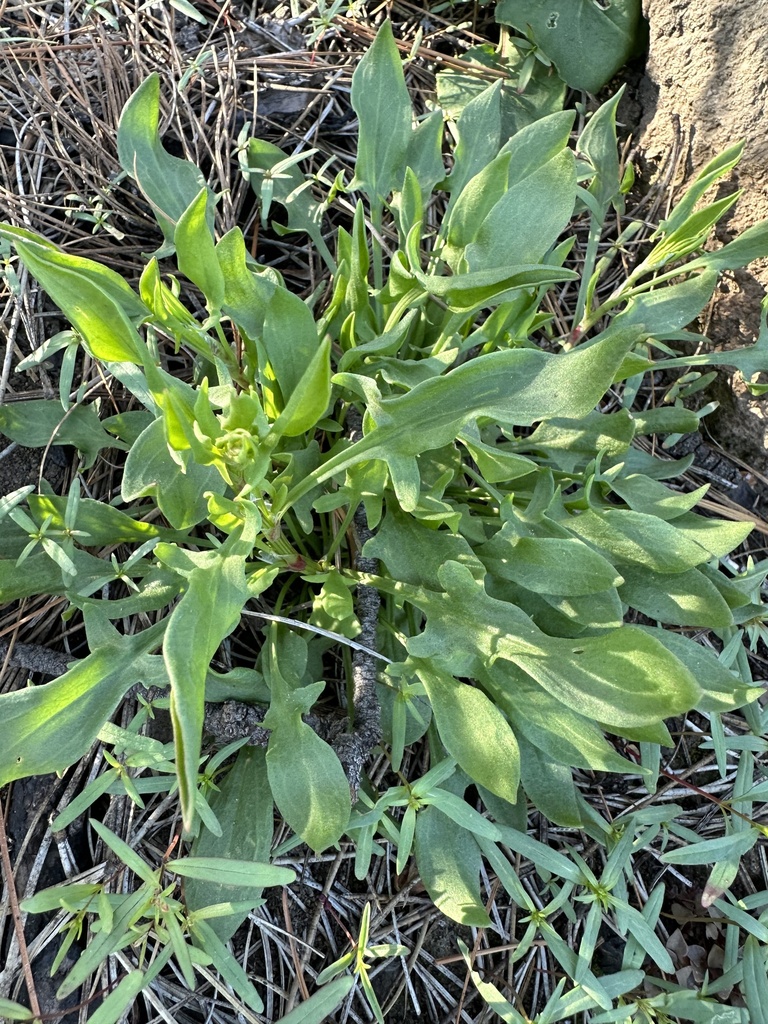
Sheep sorrel is a hardy perennial often found in meadows and disturbed soil. It is well known for its tangy, lemon flavored leaves that add a nice zing to salads. You will find it spreads easily through underground runners.

At a glance
- Care level
- Easy
- Plant type
- Perennial herb
- Light
- Full sun
- Indoor light
- Direct sun
- Water
- Every 3 to 7 days
- Mature size
- 1 to 1.5 feet
- Growth rate
- Fast
- Hardiness
- USDA 3 to 9
- Bloom time
- Late spring to mid summer
Care
Give this plant plenty of sun and keep the soil slightly acidic for the best results. Watch for yellowing leaves which can indicate the soil is too alkaline. It is a vigorous grower so keep an eye on it to make sure it does not take over your garden.
- Watering
- Let the top of the soil dry out between waterings. Established plants tolerate drought well, but never leave the soil waterlogged.
- Feeding
- Use a balanced liquid fertilizer during the active growing season.
- Pruning
- Trim back flower stalks to encourage more leaf growth and prevent unwanted seeding.
- Repotting
- Repot when the roots start to crowd the container or emerge from drainage holes.
- Soil
- Well draining acidic soil
- Soil pH
- 4.5 to 6.5
- Temperature
- -30 to 35°C
- Humidity
- 30 to 70%
- Drought tolerance
- High
- Lifespan
- Perennial, typically 3 to 5 years
- Deer and rabbits
- Moderate
Signs it needs repotting
- Roots growing out of the drainage holes
- Stunted growth
- Soil drying out too quickly
Safety
- People
- The leaves contain oxalic acid, which may cause irritation or health issues if eaten in significant amounts.
- Pets
- This plant contains oxalates which can be harmful to cats and dogs if ingested in large quantities.
- Children
- Keep children away from consuming large amounts of the leaves due to the high oxalic acid content.
- Contact allergens
- The sap can cause mild skin irritation in sensitive individuals.
- Airborne allergens
- The windborne pollen is a common cause of seasonal hay fever.
- Edibility
- This plant contains high levels of oxalic acid, which can be harmful if consumed in large quantities or by individuals with kidney issues.
How to identify it
- Arrow shaped leaves with basal lobes
- Small reddish green flower clusters
- Spreads via extensive creeping rhizomes
- Low growing rosette habit
- Distinctly acidic tasting foliage
- Height
- 0.1 to 0.4m
- Spread
- 0.15 to 0.3m
- Leaves
- green, reddish, deciduous
- Flowers
- green, red, yellow, 0.1 to 0.3cm
- Fruit
- brown, Summer
Problems to watch for
- Rust · Fungal infection causing orange spots on the leaves.
Check your sheep sorrel from a photo
Pocket Botanist looks at a photo of your plant and tells you what's wrong and what to try first.
Scan with your phone's camera to get the app
Or go to pocketbotanist.app/get on your phone
Growing it
- Propagation
- seed, division, rhizome cuttings
- When to plant
- spring, autumn
- Overwintering
- The plant dies back to the ground in cold climates and regrows from its rhizomes in the spring. No special winter protection is required.
- In containers
- It grows well in containers, but use a deep pot to accommodate its extensive root system.
Division
- 1. Dig up the plant in early spring.
- 2. Separate the root mass into smaller sections.
- 3. Replant the divisions immediately in moist soil.
Seed
- 1. Sow seeds directly into the garden in spring.
- 2. Cover lightly with soil.
- 3. Keep the area moist until germination.
Grow this plant in a contained area to prevent its rhizomes from invading the rest of your garden beds.
Grows well with
- Yarrow · They share similar preferences for dry, sunny conditions.
- Wild Strawberry · Both plants tolerate similar soil conditions and provide ground cover.
Similar species
- Garden Sorrel · It is a larger, more commonly cultivated relative with similar tart leaves.
Science
- Family
- Polygonaceae
- Genus
- Rumex
- Order
- Caryophyllales
- Class
- Magnoliopsida
- Native range
- Eurasia
- Conservation
- It is considered an invasive weed in many parts of North America and is not of conservation concern.
It survives in the wild by colonizing disturbed, acidic soils where it outcompetes other plants using its deep, spreading root system.
- Value to wildlife
- larval host plant, nectar source
- Pollinators
- bees, butterflies
- Uses
- culinary herb, ground cover, soil stabilizer
Through the year
Ecological indicators
- Salinity
- 2/9
- Soil reaction
- 3/9
- Light
- 7/9
- Temperature
- 5/9
- Moisture
- 4/9
- Nutrients
- 2/9
Taxonomy resolved against GBIF.
Questions people ask
- Is sheep sorrel a weed?
- Yes, it is widely considered a persistent weed due to its rapid spread via rhizomes.
- Can I eat it?
- Yes, it is edible in small amounts, but the high oxalic acid content makes it unsuitable for regular or large consumption.
Where the name comes from
The genus name Rumex is the ancient Latin name for sorrel, while acetosella comes from the Latin word for sour, referring to the taste of the leaves.
Good to know
- It is often called sheep sorrel because sheep enjoy grazing on it.
- The plant spreads aggressively through an extensive network of underground rhizomes.
- It is a traditional ingredient in the herbal cancer treatment known as Essiac tea.
- The leaves have a distinct lemony, tart flavor.
Also in
Keep your sheep sorrel growing
This page is a general guide. Save your plant in Pocket Botanist and you get care reminders timed for this plant, plus a care history that shows what worked.
Scan with your phone's camera to get the app
Or go to pocketbotanist.app/get on your phone
This guide was generated with AI on and checked against GBIF taxonomy. It is general information, not horticultural or veterinary advice. Read about how we build these guides.